DSO Call Management: 7 Ways to Reduce Missed Calls Across Locations
Discover 7 proven DSO call management strategies that reduce missed calls across multi-location dental organizations. Improve patient access and revenue today.
Share:
Table of contents
Introduction to DSO Call Management
Effective DSO call management is the backbone of successful multi-location dental organizations. When patients call seeking care, each missed call represents lost revenue and diminished patient trust. For Dental Service Organizations (DSOs) managing multiple practice locations, the challenge intensifies. Maintaining consistent call handling becomes exponentially more complex across all locations.
Research shows that they miss approximately 25-30% of incoming calls during peak hours. This translates to thousands of dollars in lost revenue each month. For DSOs operating across multiple locations, this problem multiplies quickly. A single missed call at each location can result in significant revenue losses. These losses add up across the entire organization as a whole.
This comprehensive guide explores seven proven strategies used by successful DSOs. They minimize missed calls and maximize patient access for growing organizations. You'll learn how to implement systematic DSO call management approaches. These approaches ensure consistent patient experiences across all practice locations. They support front desk teams with the tools they need to succeed. These strategies range from call routing systems to. Together, they transform how your organization handles patient communications.
What DSO Call Management Means in Dentistry
What Does DSO Stand For in Healthcare?
DSO stands for Dental Service Organization in healthcare contexts. Unlike traditional practices owned by individual dentists, DSOs are business entities. They provide administrative, marketing, and operational support to multiple dental practices. This model lets dentists focus on patient care. The DSO handles business operations, including comprehensive DSO call management systems.
DSOs typically manage anywhere from a few practices to hundreds of locations nationwide. Major DSOs like Heartland Dental, Pacific Dental Services, and Aspen Dental have revolutionized management. They achieved this by creating standardized operational procedures across their networks. This standardization is particularly crucial for call management. Patients expect consistent service quality regardless of which location they contact.
Defining Call Management in a DSO Environment
DSO call management encompasses all telephone communications across multiple practice locations. These include appointment scheduling, patient inquiries, emergency calls, and follow-up communications. Unlike single-practice management, DSOs must coordinate call handling across numerous locations. They must also maintain brand consistency and operational efficiency overall.
Effective DSO call management involves centralized protocols and standardized training. Integrated technology systems support performance monitoring across all locations. This includes managing call overflow between locations and ensuring HIPAA compliance. It also includes maintaining detailed call analytics to identify opportunities for improvement. The goal is to create seamless patient experiences. It also supports front desk staff with resources and training. These resources help staff handle calls efficiently.
Why Call Management Is Critical for DSOs
Impact on Patient Experience and Access
For multi-location organizations, inconsistent call handling creates additional challenges. Patients may receive different information from different locations. Others experience varying wait times or encounter staff with varying levels of training. These inconsistencies damage brand trust and can lead to negative online reviews. Such reviews affect the entire organization's reputation.
Effective DSO call management ensures patients receive prompt, professional service. This service remains consistent regardless of which location patients contact. This includes standardized greeting scripts and consistent scheduling procedures across locations. It also includes uniform policies for handling common patient inquiries. When patients experience reliable service across all touchpoints, trust and confidence grow. This consistency helps them develop stronger loyalty to the DSO brand.
Operational Consistency Across Locations
Operational consistency is essential for DSO success. Call management is a primary touchpoint where this consistency is demonstrated or compromised. Without standardized DSO call management procedures, individual locations may develop their own approaches. These differences can lead to operational fragmentation and reduced efficiency.
Consistent call management procedures enable DSOs to maintain quality standards. These procedures also help track performance metrics and implement improvements across all locations simultaneously. This standardization simplifies staff training and reduces operational complexity. It helps employees transfer between locations and supports new practices joining the DSO network.
Effective DSO call management systems provide centralized oversight. They also allow local flexibility for unique patient needs. This balance ensures. It maintains the personal touch patients expect from their dental care providers.
7 Strategic Ways DSOs Reduce Missed Calls
1. Centralized Call Management Across Locations
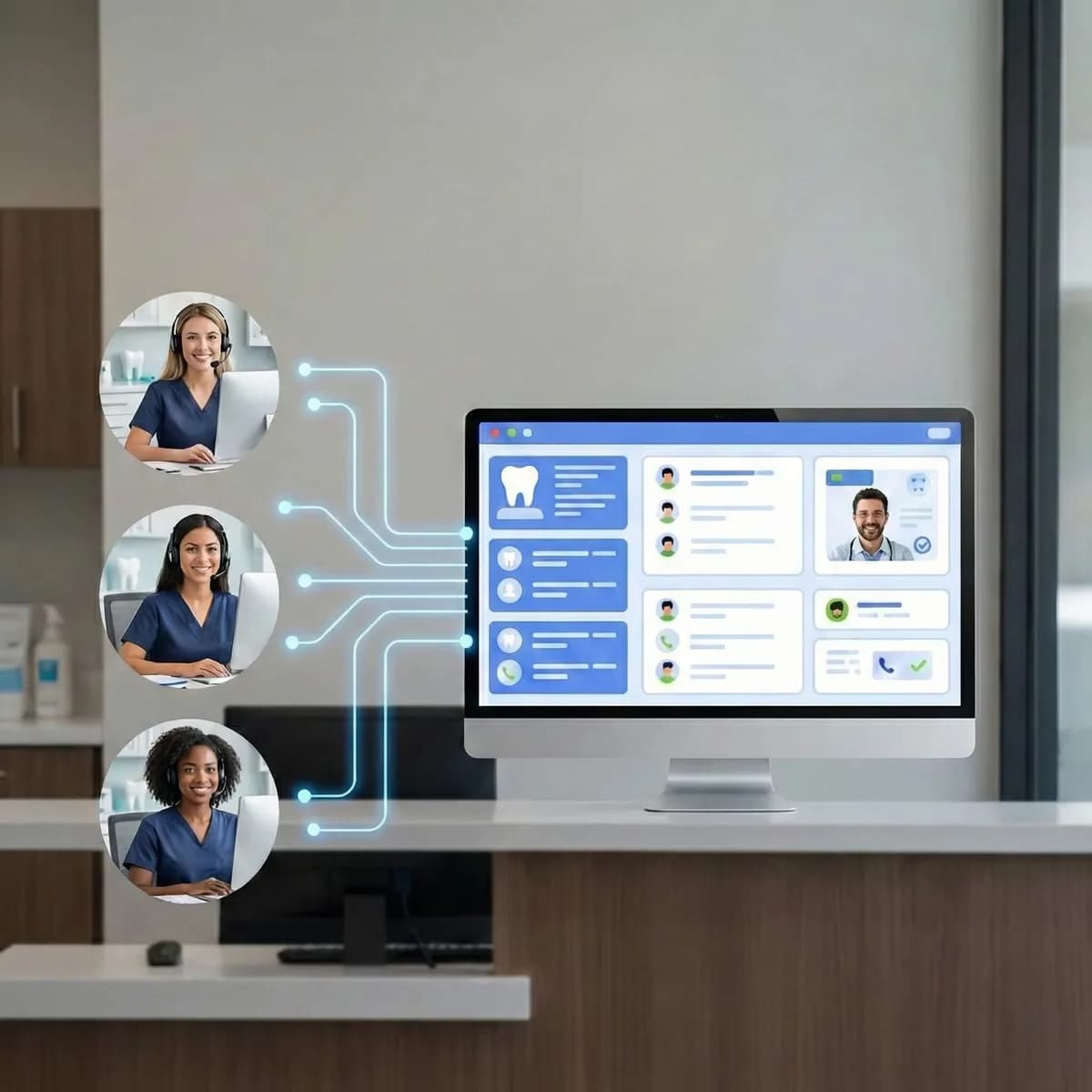
Centralized call management routes inbound calls from multiple dental locations through a single, unified system. When one office is busy, calls are automatically directed to available staff at another location, ensuring patients reach a live person instead of voicemail.
These systems integrate with practice management software, allowing staff to access patient records regardless of the originally scheduled location. This reduces call handling time, improves efficiency, and delivers a seamless patient experience across the entire organization.
2. Call Overflow & Backup Coverage
Call overflow and backup systems ensure uninterrupted coverage during peak call times, after hours, or unexpected staff shortages. When local front desk teams are unavailable, calls are automatically redirected to trained backup staff or centralized service teams.
This approach prevents call abandonment during high-volume periods and ensures patients receive timely assistance, even when individual locations are temporarily overwhelmed.
3. Standardized Call Handling Protocols
Standardized call handling protocols provide consistent scripts, triage workflows, and response guidelines for every inbound call. These protocols help staff quickly identify patient needs such as scheduling, emergencies, billing questions, or clinical concerns.
By reducing variability in call handling, DSOs shorten call durations, improve first-call resolution, and maintain a consistent patient experience across all locations.
4. AI-Assisted Call Support for Front Desk Teams
AI-assisted call support extends call coverage by handling routine inquiries such as appointment scheduling, confirmations, reminders, insurance verification, and prescription refill requests. These systems operate 24/7 and support staff during busy periods and after hours.
Importantly, AI augments front desk teams rather than replacing them. Complex calls or requests for human interaction are seamlessly transferred to live staff, ensuring efficiency without sacrificing personalized care.
5. Real-Time Call Analytics & Reporting
Real-time call analytics provide visibility into call volume, wait times, abandonment rates, and missed calls across all locations. These insights allow DSOs to identify trends, predict peak call periods, and adjust staffing proactively.
By using data to guide staffing and workflow decisions, DSOs can reduce missed calls, shorten wait times, and improve overall operational performance.
6. Staff Training & Quality Assurance
Ongoing staff training and quality assurance programs ensure call handling standards are consistently followed. Training focuses on communication skills, system proficiency, triage accuracy, and adherence to established protocols.
Quality assurance monitoring helps identify coaching opportunities, maintain high service standards, and ensure every patient interaction reflects the organization’s commitment to care and professionalism.
7. Scalable Systems for Growing DSOs
Scalable call management systems allow DSOs to maintain high call performance as they grow. As new locations are added and patient volume increases, these systems adapt without disrupting workflows or increasing missed calls.
By investing in scalable technology and processes, DSOs ensure long-term operational stability while continuing to deliver timely, accessible patient communication.
Technology Solutions for Multi-Location Call Management
Advanced Phone System Integration
Modern DSO call management relies on integrated phone systems that connect all locations through unified communications platforms. These systems enable call transfers between locations, centralized voicemail management, and real-time call monitoring across the entire organization. Integration with practice management software provides staff with instant access to patient information, scheduling systems, and treatment history.
Cloud-based phone systems offer particular advantages for DSOs, including scalability, remote management capabilities, and consistent feature sets across all locations. These systems can automatically route calls based on availability, patient preferences, or specific criteria such as insurance type or treatment needs.
Real-Time Call Monitoring and Analytics
Real-time monitoring capabilities allow DSOs to track DSO call management performance across all locations simultaneously. Supervisors can identify locations experiencing high call volumes, monitor wait times, and deploy resources as needed. Advanced analytics provide insights into call patterns, staff performance, and patient satisfaction metrics.
Call analytics help DSOs identify trends such as increased appointment requests following marketing campaigns, seasonal variations in call volume, or location-specific challenges. This data-driven approach enables proactive adjustments to staffing, training, or procedures to minimize missed calls and improve patient access.
| Technology Solution | Primary Benefit | Implementation Complexity |
|---|---|---|
| Centralized Call Routing | Reduces missed calls by 40-50% | Medium |
| AI Call Support | 24/7 availability | Low |
| Cross-Location Coverage | Flexible staffing | High |
| Call Analytics | Data-driven optimization | Medium |
Mobile and Remote Access Capabilities
DSO call management systems increasingly incorporate mobile and remote access capabilities, allowing staff to handle calls from anywhere. This flexibility proves particularly valuable during staff shortages, weather-related closures, or other disruptions that might otherwise result in missed calls.
Mobile-enabled systems allow experienced staff to provide remote support during busy periods, handle after-hours calls, or provide coverage during staff meetings or training sessions. Cloud-based platforms ensure secure access to patient information while maintaining HIPAA compliance for remote work scenarios.
Training and Quality Assurance for Call Management
Standardized Training Programs
Comprehensive training programs form the foundation of effectiveDSO call management. Standardized curricula ensure all staff members receive consistent instruction on call handling procedures, patient communication protocols, and technology systems. These programs should cover greeting scripts, appointment scheduling procedures, insurance verification processes, and emergency call protocols.
Ongoing training addresses new technology implementations, policy updates, and skill development opportunities. Regular training sessions help maintain consistency across locations and ensure staff members stay current with best practices. Training programs should include role-playing exercises, call simulation scenarios, and competency assessments to verify understanding.
Call Quality Monitoring and Feedback
Regular call monitoring provides valuable insights into DSO call management effectiveness and identifies opportunities for improvement. Quality assurance programs should include periodic call reviews, patient satisfaction surveys, and performance feedback sessions. This monitoring helps maintain service standards while identifying training needs or procedural improvements.
Effective quality assurance programs focus on constructive feedback and skill development rather than punitive measures. Staff members should receive regular coaching on call handling techniques, patient communication skills, and technology utilization. Recognition programs can highlight exceptional performance and encourage best practices across all locations.
Performance Metrics and Improvement Processes
DSO call management success requires clear performance metrics and continuous improvement processes. Key performance indicators might include call answer rates, average wait times, first-call resolution rates, and patient satisfaction scores. Regular review of these metrics helps identify trends and improvement opportunities.
Improvement processes should involve staff input and collaborative problem-solving. Front desk teams often have valuable insights into call handling challenges and potential solutions. Creating feedback mechanisms and improvement committees ensures thatDSO call managementstrategies continue evolving to meet patient needs and operational requirements.
Case Study: DSO Call Management in Practice
The Challenge
A 15-location DSO in the Southwest faced significant challenges with missed calls across their network. Individual locations were missing an average of 35% of incoming calls during peak hours, resulting in lost appointment bookings and frustrated patients. Each location operated independently with different phone systems, varying staff training levels, and inconsistent call handling procedures.
The DSO's DSO call management approach lacked centralization, making it difficult to track performance across locations or implement consistent improvements. Patient complaints increased regarding difficulty reaching locations, inconsistent information between offices, and lengthy wait times. The organization realized that its fragmented approach to call management was impacting both patient satisfaction and revenue generation.
The Solution Implementation
The DSO implemented a comprehensive DSO call management system that included centralized call routing, AI-assisted support, and standardized training programs. The new system connected all locations through a unified communications platform that could route calls between offices based on availability and patient preferences.
AI-assisted support was deployed to handle basic inquiries and appointment scheduling during busy periods and after hours. This technology worked alongside human staff, ensuring patients could always reach someone for urgent needs while routine calls were handled efficiently. The system integrated with existing practice management software to provide seamless access to patient records across all locations.
The Outcome
Within six months of implementing the newDSO call management system, the organization reduced missed calls by 60% across all locations. Patient satisfaction scores improved significantly, with particular improvements in categories related to appointment access and phone service quality. The centralized system enabled better resource allocation and staff coverage during peak periods.
Financial impact was substantial, with the DSO reporting a 25% increase in new patient appointments and improved retention rates. Staff reported higher job satisfaction due to better tools and support systems. The success of this implementation led to the DSO expanding its DSO call management approach to include additional features such as patient communication automation and advanced analytics for continuous improvement.
How Each DSO Dental Office Performs Differently
Group-level averages hide a lot. Two locations can post the same monthly booking number while one answers every call and the other leans on voicemail. The only way to see this is to measure each dso dental office on the same metrics, then compare them side by side.
Answer rate, average hold time, after-hours capture, and booked-from-call rate are the four that matter most. Track them per site, not just per group. A single dso dental office that misses a third of its calls will quietly drag down the whole portfolio, and a blended average will never show you which one it is.
Here is the practical move. Rank every location on answer rate, fix the bottom three first, and recheck in 30 days. Small change, big payoff. When each dso dental office reports into one shared dashboard, leadership stops guessing and starts directing attention where the lost revenue actually sits.
Conclusion: Building a Scalable DSO Call Strategy
Effective DSO call management represents a critical success factor for multi-location dental organizations. The seven strategies outlined in this guide provide a comprehensive framework for reducing missed calls while improving patient access and satisfaction. From centralized call routing to AI-assisted support, these approaches enable DSOs to maintain consistent service quality across all locations.
Implementing these DSO call management strategies requires careful planning, staff training, and ongoing monitoring to ensure success. Organizations that invest in comprehensive call management systems typically see significant returns through increased patient acquisition, improved retention rates, and enhanced operational efficiency. The key is selecting solutions that support rather than replace front desk teams while providing the scalability needed for multi-location operations.
As the dental industry continues evolving, DSOs that prioritize patient communication and access will maintain competitive advantages. Building robust DSO call management systems today creates the foundation for future growth and success. Consider evaluating your current call management procedures and implementing these proven strategies to transform patient communications across your organization.
Ready to improve your DSO's call management performance? Start by assessing your current missed call rates and identifying which of these seven strategies would provide the greatest impact for your organization. With the right approach and technology partners, your DSO can significantly reduce missed calls while enhancing patient experiences across all locations.
For the fundamentals behind this model, see what a dental support organization is and how DSOs scale growth.
Frequently Asked Questions
DSO call management is the system DSOs use to handle all inbound and outbound phone calls across multiple dental locations, including appointment scheduling, new patient inquiries, emergencies, billing questions, and follow-ups. It combines people, processes, and technology to create a consistent patient experience across every practice site.
For DSOs, the phone is often the first and most frequent patient touchpoint, and every missed call can mean lost production, fewer booked appointments, and reduced trust. Many practices miss a significant share of calls during peak hours; across multiple locations, that lost opportunity multiplies quickly, impacting revenue and online reputation.
Centralized call routing connects all locations through one unified phone system so calls can automatically flow to available team members when a front desk is busy. Instead of sending patients to voicemail, calls can be handled by a shared service team or another location, improving answer rates and maintaining a consistent brand experience.
AI-assisted call support helps DSOs by answering routine requests, like appointment scheduling, confirmations/reminders, basic FAQs, and insurance-related intake, often with 24/7 coverage. The best setups escalate seamlessly to a live person for complex needs (clinical concerns, upset patients, unusual cases), so AI supports the front desk without replacing human care.
High-performing DSOs monitor call performance using real-time analytics, including: answer rate, missed/abandoned calls, average speed to answer, call volume by location/hour, first-call resolution, and appointment conversion rate. Tracking these KPIs consistently across all locations helps DSOs spot peak-time gaps, adjust staffing, refine scripts, and improve patient access.
A single dso dental office can track missed calls manually, but the group needs one shared view across every location. Centralized call management lets leadership compare each dso dental office on the same metrics and fix the weakest sites first.
Sources & References
- 1
Was this article helpful?
Written by
DentalBase Team
Expert dental industry content from the DentalBase team. We provide insights on practice management, marketing, compliance, and growth strategies for dental professionals.