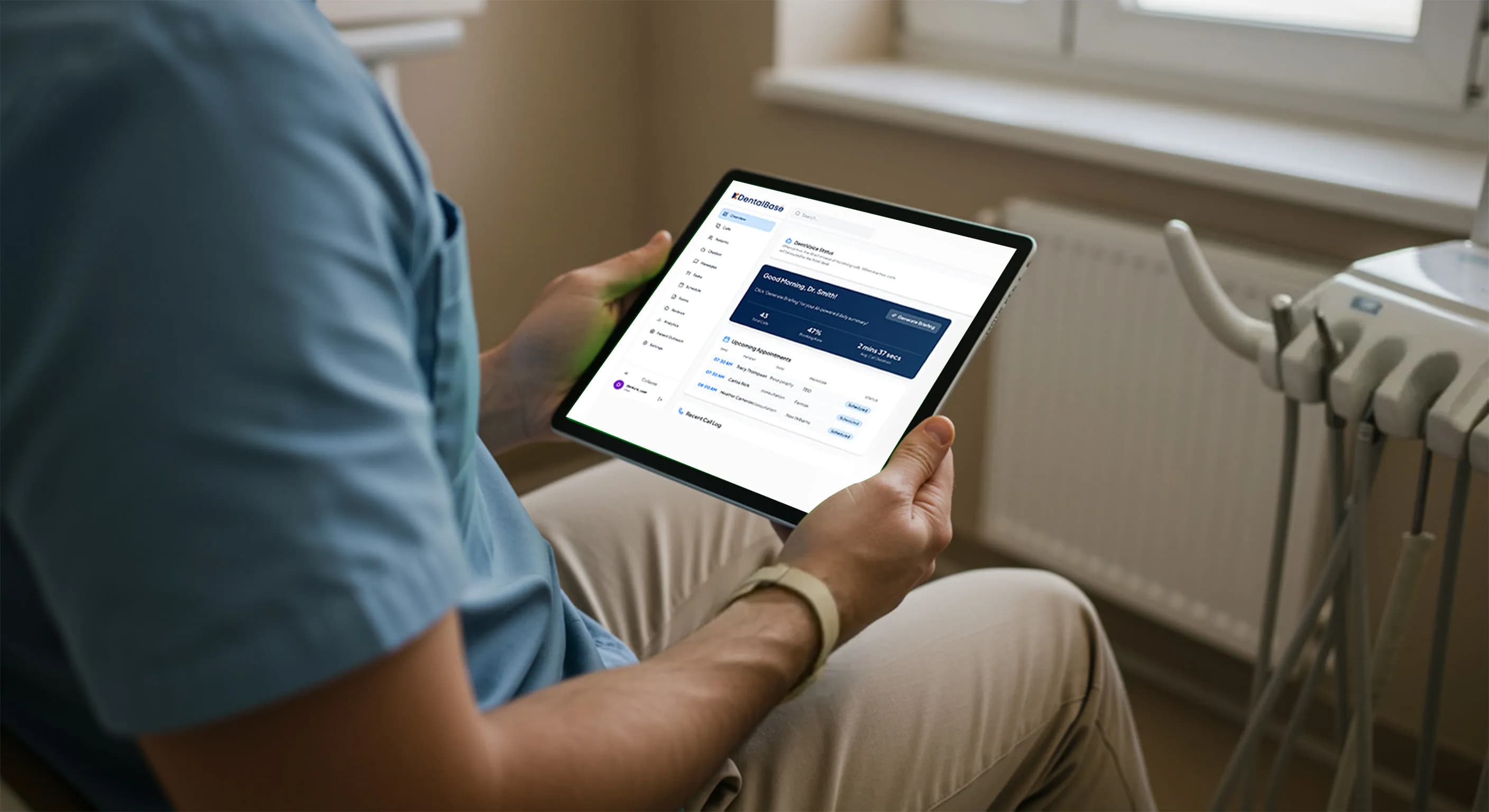
Why 24/7 Dental Call Answering Matters for Your Practice
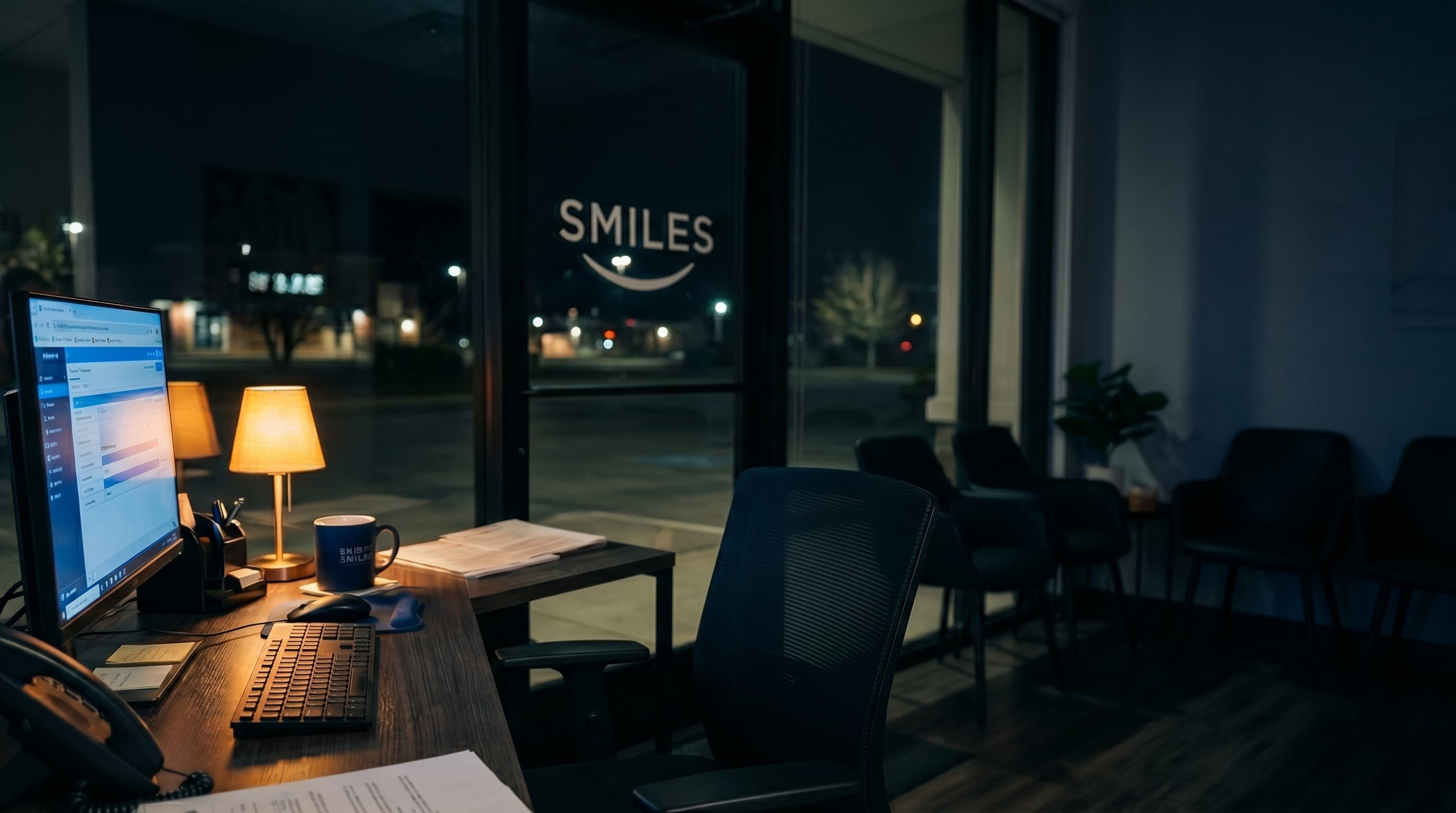
24/7 dental call answering helps practices capture after-hours leads, triage emergencies fast, cut front-desk burnout, and build lasting patient trust.
Share:
Table of contents
In today’s always-on world, patients expect dental practices to be accessible beyond standard office hours, which is exactly where 24/7 dental call answering proves its worth. Whether it’s a dental emergency at midnight or a busy parent calling after work, missed calls often mean missed patients.
That’s why round-the-clock call coverage is no longer a luxury, it’s a competitive necessity. In this article, we’ll explore why it matters and how it helps dental practices grow, retain patients, and protect their reputation.
35%
of inbound patient calls go unanswered at the average practice
15–30%
more new-patient calls captured with 24/7 coverage
<60s
to triage an emergency and route it to the on-call dentist
How many calls do dental practices actually miss?
Dental offices miss far more calls than owners expect — industry estimates suggest roughly a third of inbound calls go unanswered at the average practice. Each one is a patient who needed you and didn’t get through.
Most missed calls cluster around predictable gaps in the day:
- Lunch breaks — the front desk steps away and the phone keeps ringing.
- Evenings and weekends — when working patients finally have time to call.
- Peak chairside hours — when your team is focused on patients in the chair.
Here is the part that hurts: when phones go unanswered, patients rarely leave a voicemail. Instead, they call the next dentist on Google. The result is simple and expensive.
Missed calls = lost revenue + lost trust.
A professional 24/7 dental call answering service ensures every call is handled by a live, trained agent — no matter the time. To see exactly where the gaps open up during a typical day, it helps to understand why a dental office phone is always busy in the first place.
The financial impact adds up quickly. A single new patient can represent thousands of dollars in lifetime value once you account for routine cleanings, restorative work, and family referrals. When even a handful of those calls slip away each week, the lost revenue dwarfs the monthly cost of coverage. Worse, the patient who couldn’t reach you rarely tries twice — the next office that picks up keeps them for good.
What a missed call actually costs you
Step 1 — The phone rings
A patient in pain calls at 7:40 PM. Your front desk has gone home.
Step 2 — Voicemail picks up
Most callers hang up. Few leave a message when they are hurting.
Step 3 — They call the next office
A competitor answers, books the visit, and keeps the patient for years.
Step 4 — The loss compounds
One missed call can mean a lost lifetime value of several thousand dollars.
Related: Voicemail quietly loses more patients than most owners realize → Why dental voicemail loses patients
Why is 24/7 dental call answering essential?
24/7 dental call answering is essential because patients judge your practice the moment they call, and most calls now arrive outside of business hours. Round-the-clock coverage protects three things at once: new revenue, emergency care, and patient trust.
The breakdown below shows how each benefit plays out in a real practice.
Can after-hours coverage capture more appointments?
Yes — many patients can only call outside working hours, and that window is where new-patient leads quietly disappear. With round-the-clock coverage, your practice can turn that downtime into a steady source of booked visits.
- Book appointments after hours instead of losing the caller to a competitor.
- Collect patient details for fast next-morning follow-up.
- Never miss a new-patient opportunity, even at 9 PM on a Sunday.
This is exactly how practices answer dental calls after hours without hiring extra staff — the calls get answered and booked while the office is dark.
Stop sending after-hours callers to voicemail
See how DentiVoice answers every call live, day or night, in your practice name.
Book a Demo →How are dental emergencies handled professionally?
Dental emergencies don’t wait for office hours. Severe pain, broken teeth, or swelling all require an immediate, calm response — and a trained agent delivers that in under a minute.
With round-the-clock call answering, every urgent call follows a clear path:
- Patients speak to a real person, not a voicemail box.
- Urgent cases are triaged correctly using dental-specific criteria.
- On-call dentists receive accurate, timely messages with the details that matter.
This level of responsiveness builds confidence and patient loyalty. The mechanics behind it — sorting the truly urgent from the routine — are covered in our guide to how AI triages urgent vs. routine dental calls.
Handling emergencies well also protects your reputation in a way few owners measure. A patient who reaches a calm, capable voice during a painful night becomes one of your strongest advocates — the kind who leaves a five-star review and refers their family. A patient who hits voicemail mid-crisis remembers that too, and shares it just as widely. After-hours moments are where loyalty is won or lost.
Does it improve patient trust and experience?
Yes. Patients judge your practice by their first interaction — and that is almost always a phone call. A calm, knowledgeable voice at the other end sets the tone for the entire relationship.
Consistent round-the-clock answering helps you:
- Sound professional and reliable on every call.
- Reduce patient frustration from rings that go nowhere.
- Create a welcoming first impression when patients need it most.
Knowing what patients actually call about makes it easier to script those moments so every caller feels heard.
Which option should you compare it against?
Before committing, it helps to see how 24/7 dental answering stacks up against the two alternatives most practices fall back on: plain voicemail and a generic, non-dental call center. The difference shows up fastest in emergencies.
| After-hours option | Live answer | Emergency triage | Books appointments |
|---|---|---|---|
| Voicemail | No | No | No |
| Generic call center | Yes | Limited | Rarely |
| 24/7 dental answering | Yes | Yes — dental-trained | Yes, into your software |
Voicemail captures almost nothing after hours, and a generic center can answer but rarely triages a dental emergency or books into your software correctly. A dental-trained 24/7 service does all three — which is why it consistently outperforms the cheaper-looking options on actual recovered revenue.
The hidden cost of the cheaper options is the calls they mishandle. A generic agent who can’t recognize the difference between a chipped tooth and an abscess may send an urgent patient to the wrong place — or fail to escalate at all. Booking errors create double-bookings and no-shows that your team has to untangle the next morning. When you weigh the full picture, dental-specific coverage is usually the option that protects both revenue and your schedule.
Coverage that scales with your practice
DentiVoice handles after-hours calls, emergency triage, and booking — without adding headcount.
See DentiVoice in Action →What are the operational benefits for your dental team?
Beyond capturing patients, round-the-clock coverage changes how your team works. It removes off-hour pressure from the front desk and lets the practice grow without the cost and friction of new hires.
How does it reduce staff burnout?
Front-desk burnout is one of the quiet drivers of turnover in dental offices. Your team is already juggling a heavy in-office load before a single after-hours call is added on top.
On any given day, the front desk is managing:
- Check-ins and check-outs for a full schedule of patients.
- Insurance questions that take time and focus.
- Scheduling and reminders across the whole calendar.
By outsourcing calls after hours, your staff can focus on in-office patients without carrying the practice phone home. If your team is already stretched thin, our guide on reducing dental front office burnout pairs well with after-hours coverage, and the warning signs of an overwhelmed front desk are worth a quick read.
Can you scale without hiring more staff?
Yes. A dedicated dental answering service like Dentivoice scales with your practice without the overhead of recruiting, onboarding, and retaining new front-desk hires.
Compared with adding headcount, a 24/7 service means:
- No training costs — agents are dental-ready from day one.
- No sick days or turnover to scramble around.
- Consistent service quality on every call, every shift.
You get enterprise-level support at a fraction of the cost — and the math is easier than most owners assume. Hiring a single after-hours front-desk employee means salary, benefits, payroll taxes, training time, and the very real risk of turnover within a year. A 24/7 service replaces all of that with a predictable monthly fee and zero management overhead, while still answering every call in your practice name.
Does the math work?
A typical 24/7 dental answering service runs $500–$1,500/month. Here is the break-even most practices see.
2–4
captured appointments needed to cover the monthly cost
$0
training, benefits, or turnover cost vs. a new hire
24/7
coverage with no overtime or weekend premiums
Why is Dentivoice built for dental practices?
Dentivoice specializes in 24/7 dental call answering, not generic call handling. Every agent is trained for the dental context, so each call reflects your brand, your scripts, and your clinical standards.
That dental-first focus shows up in what the service is built to do:
- Use dental-specific terminology so callers feel understood.
- Follow your custom scripts for a consistent patient experience.
- Book appointments and route emergencies the way your office would.
- Protect patient data and confidentiality on every interaction.
This ensures every call reflects your brand and standards. If booking is a priority for you, it’s worth understanding how an AI receptionist books appointments in dental software and which call metrics actually drive revenue once those calls start flowing.
The dental focus matters more than it sounds. A caller asking about a crown that fell out, a child with a knocked-out tooth, or a question about pre-op instructions needs an answer that fits the clinical reality — not a generic script written for a plumber or a law office. Because Dentivoice is built around dental workflows, agents know which questions to ask, which cases to escalate, and how to capture the details your team needs to follow up cleanly the next day.
What to look for in a 24/7 dental answering service
Check each item your provider should cover.
Final Thoughts
In a competitive dental market, accessibility is everything. 24/7 dental call answering ensures no patient is ignored, no emergency is mishandled, and no opportunity is lost.
With Dentivoice, your practice stays responsive, professional, and patient focused around the clock — capturing the calls that would otherwise have gone to the office down the street.
Start by tracking how many calls you currently miss after 5 PM, on weekends, and during lunch. Most owners are surprised by the number. Once you see it written down, the case for 24/7 coverage stops being theoretical — it becomes a clear, low-risk way to protect the revenue and reputation you have already worked hard to build.
Never miss another patient call
DentiVoice answers around the clock, triages emergencies, and books appointments straight into your software — all in your practice name.
Book a Demo →Frequently Asked Questions
If your dental office uses 24/7 dental call answering, your call is answered live by a trained agent who can book an appointment, document your concern, or escalate a dental emergency to the on-call dentist immediately.
Yes. With round-the-clock answering, emergencies like severe pain, swelling, or broken teeth are triaged right away, and urgent messages reach the dentist so you get timely guidance or care when it matters most.
You will speak to a real, live agent who answers using your dental practice name and follows customized scripts, so the experience feels seamless, professional, and reassuring rather than automated or impersonal.
Yes. Many dental answering services book appointments directly into your practice software, or collect your details for next-day follow-up, saving you time and preventing delays in care.
Most practices spend roughly $500 to $1,500 per month for 24/7 dental call answering. That cost is often covered by just two to four captured after-hours appointments each month.
Sources & References
- 1
- 2
Topics
Was this article helpful?
Written by
DentalBase Team
Expert dental industry content from the DentalBase team. We provide insights on practice management, marketing, compliance, and growth strategies for dental professionals.