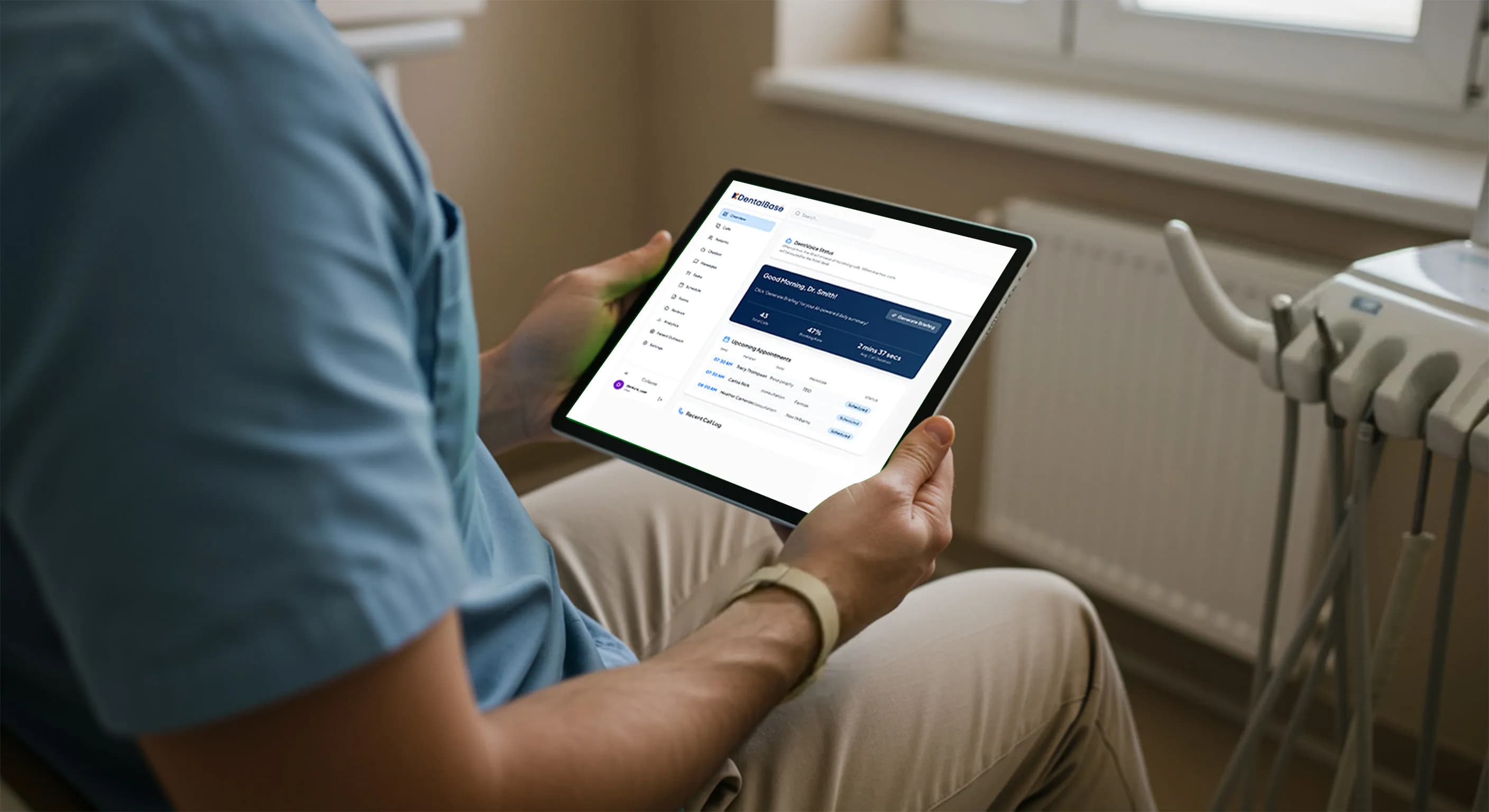
What Is an AI Dental Receptionist? Complete Guide
Learn what an AI dental receptionist is, how it works, and how dental practices use it to answer calls and book appointments 24/7.
Share:
Table of contents
In many dental practices, the front desk is under constant pressure. Phones ring while patients are checked in. Scheduling overlaps with insurance questions. After hours, calls often go unanswered. Over time, these patterns affect appointment conversion, patient trust, and staff workload.
AI dental receptionist software has emerged to address these challenges. This guide explains what an AI dental receptionist is, how it works in real practices, when it makes sense to adopt, how to roll it out responsibly, what risks to consider, and how owners can evaluate success.
What Is an AI Dental Receptionist
An AI dental receptionist is a virtual assistant that uses artificial intelligence to answer phone calls, respond to patient questions, schedule appointments, and manage routine front-desk tasks for dental practices.
In practice, an AI dental receptionist works as software that answers incoming patient calls, responds to routine questions, captures appointment requests, and routes calls based on rules defined by the dental practice.
Unlike basic phone automation, AI dental receptionist software is designed around dental workflows. It supports front desk teams by handling predictable communication while escalating complex or urgent situations to human staff.
One example of this category is Dentivoice, which allows practices to configure how calls are handled and when staff involvement is required.
What Does an AI Receptionist Do?
An AI receptionist’s role is operational support, not decision-making. In dental practices, it is typically responsible for:
-
Answering inbound calls immediately
-
Identifying caller intent through natural conversation
-
Responding to common questions about hours, location, and services
-
Capturing appointment requests and cancellations
-
Routing urgent or complex calls to staff
-
Documenting call summaries for follow-up
By handling these repeatable interactions consistently, AI receptionists reduce front desk interruptions and help prevent missed opportunities without removing human oversight.
What Problems AI Dental Receptionists Are Designed to Solve
AI dental receptionists are not intended to replace front desk staff. They are designed to remove communication bottlenecks that strain daily operations.
Common problems practices address include:
-
Missed calls during peak hours
-
After-hours appointment requests going to voicemail
-
Front desk task switching and cognitive overload
-
Inconsistent answers to common patient questions
-
Staff burnout caused by constant interruptions
By absorbing routine communication, AI receptionist software helps stabilize workflows rather than disrupt them.
How AI Dental Receptionists Improve Front Desk Operations
The value of AI reception becomes clearer when viewed through day-to-day front desk challenges.
| Front Desk Challenge | Without AI Support | With AI Dental Receptionist |
|---|---|---|
| Missed calls during peak hours | Calls roll to voicemail or hold | Calls answered immediately |
| After-hours appointment requests | Delayed until next business day | Requests captured and documented |
| Front desk interruptions | Staff pulled away from patients | Routine calls handled automatically |
| Inconsistent answers | Varies by staff member | Consistent, rule-based responses |
| Call volume spikes | Longer wait times | Multiple calls handled simultaneously |
| Staff burnout risk | High during busy periods | Reduced cognitive load |
What Is the Role of AI in Dentistry?
The role of AI in dentistry is primarily operational and analytical, not clinical replacement. AI supports dental practices by improving efficiency, consistency, and access to care-related information.
In the front office, AI is most commonly used to improve patient communication, scheduling reliability, and responsiveness. Rather than replacing human judgment, AI helps practices manage scale, reduce friction, and maintain service quality as demand increases.
AI dental receptionists are one of the earliest and most practical examples of AI adoption because they address a clear, measurable operational problem: missed and delayed communication.
How AI Dental Receptionist Software Works
Most AI dental receptionist platforms follow a structured process.
Call Intake
Incoming calls are answered immediately, and patient intent is identified through conversational prompts.
Rule-Based Handling
Calls are handled according to practice-defined rules. Routine questions are answered automatically, appointment requests are captured, and urgent situations are flagged.
Escalation
When a request falls outside defined rules, the call is routed to staff or documented for follow-up.
Integration
Many systems integrate with practice management software so schedules, hours, and policies remain aligned.
This structure gives practices control over automation boundaries.
What Skills Does an AI Receptionist Need?
While AI does not have “skills” in the human sense, effective AI dental receptionists must demonstrate several functional capabilities:
-
Strong natural language understanding for dental terminology
-
Context awareness to distinguish routine from urgent calls
-
Rule adherence to ensure consistent responses
-
Escalation recognition to protect patient experience
-
Accurate documentation for staff follow-up
When these capabilities are well configured, AI supports staff rather than creating additional cleanup work.
What an AI Dental Receptionist Typically Handles Well
AI receptionist software is well-suited for:
-
Appointment requests and confirmations
-
Office hours and location questions
-
General service inquiries
-
After-hours call coverage
-
Message capture and structured follow-up
Human staff remain essential for nuanced conversations, billing disputes, and complex clinical coordination.
When AI Dental Receptionist Software Makes Sense
AI dental receptionist software is often a good fit when:
-
Call volume exceeds staff capacity
-
Missed calls occur regularly
-
After-hours inquiries are common
-
Front desk staff experience frequent interruptions
-
Practices want to improve responsiveness without adding staff
AI Dental Receptionist vs Human Receptionists
AI dental receptionists and human receptionists serve different but complementary roles.
AI systems provide consistency, availability, and scalability. Human receptionists provide empathy, judgment, and adaptability.
Many practices adopt a hybrid model, where AI handles routine and after-hours calls while human staff focus on in-office and complex interactions.
How Practices Typically Roll Out AI Reception Support
Successful adoption is usually gradual.
Typical Rollout Pattern
-
Phase 1: After-hours call handling
-
Phase 2: High-volume routine inquiries
-
Phase 3: Expanded daytime coverage
This phased approach allows staff to adapt while preserving existing workflows.
What Practices Usually Notice First
In early adoption, owners often notice:
-
Fewer missed calls
-
Reduced front desk interruptions
-
Clearer after-hours messages
-
More predictable call handling
These changes typically stabilize operations before affecting staffing or growth decisions.
Risks and Common Pitfalls to Avoid
AI dental receptionist software is effective when configured correctly. Common pitfalls include:
-
Poorly defined escalation rules
-
Over-automation without staff awareness
-
Limited internal communication during rollout
Practices that involve staff early and review call-handling rules regularly tend to see better results.
How to Evaluate Success
Owners should evaluate AI receptionist performance using operational indicators:
-
Missed call rate
-
After-hours message quality
-
Staff interruption frequency
-
Call escalation accuracy
-
Patient follow-up timeliness
Focusing on workflow stability rather than raw volume leads to realistic expectations.
Questions to Ask During an AI Dental Receptionist Demo
When reviewing AI receptionist software, these questions help determine real-world fit:
-
How are call handling rules configured and updated?
-
What types of calls are answered automatically versus escalated?
-
How does after-hours handling differ from daytime behavior?
-
What visibility do staff have into captured messages?
-
How are unclear or unexpected requests handled?
-
How can workflows be adjusted after launch?
Ready to evaluate AI reception for your practice?
If your practice is dealing with missed calls, after-hours gaps, or front desk overload, the next step isn’t replacing staff; it’s understanding how AI call handling would fit into your existing workflows.
A DentiVoice demo walks through real call flows, escalation rules, and after-hours handling based on how your front desk operates today, so you can evaluate the impact before making any changes.
Request a DentiVoice demo to see how it would work in your practice →
Frequently Asked Questions
Sometimes yes, sometimes no. An AI dental receptionist often answers first to quickly handle scheduling or basic questions, and then transfers you to a human staff member if your concern is complex or urgent.
Yes. Most AI dental receptionists can capture appointment requests and, when integrated with scheduling systems, book appointments based on office rules and availability, even after hours.
Reputable AI dental receptionist platforms are designed with HIPAA-aware workflows, meaning they limit data collection to what’s necessary and follow security standards used by U.S. dental practices.
If your request falls outside predefined rules—such as dental emergencies or complex billing questions—the AI escalates the call or records a detailed message for staff follow-up.
Topics
Was this article helpful?
Written by
DentalBase Team
Expert dental industry content from the DentalBase team. We provide insights on practice management, marketing, compliance, and growth strategies for dental professionals.