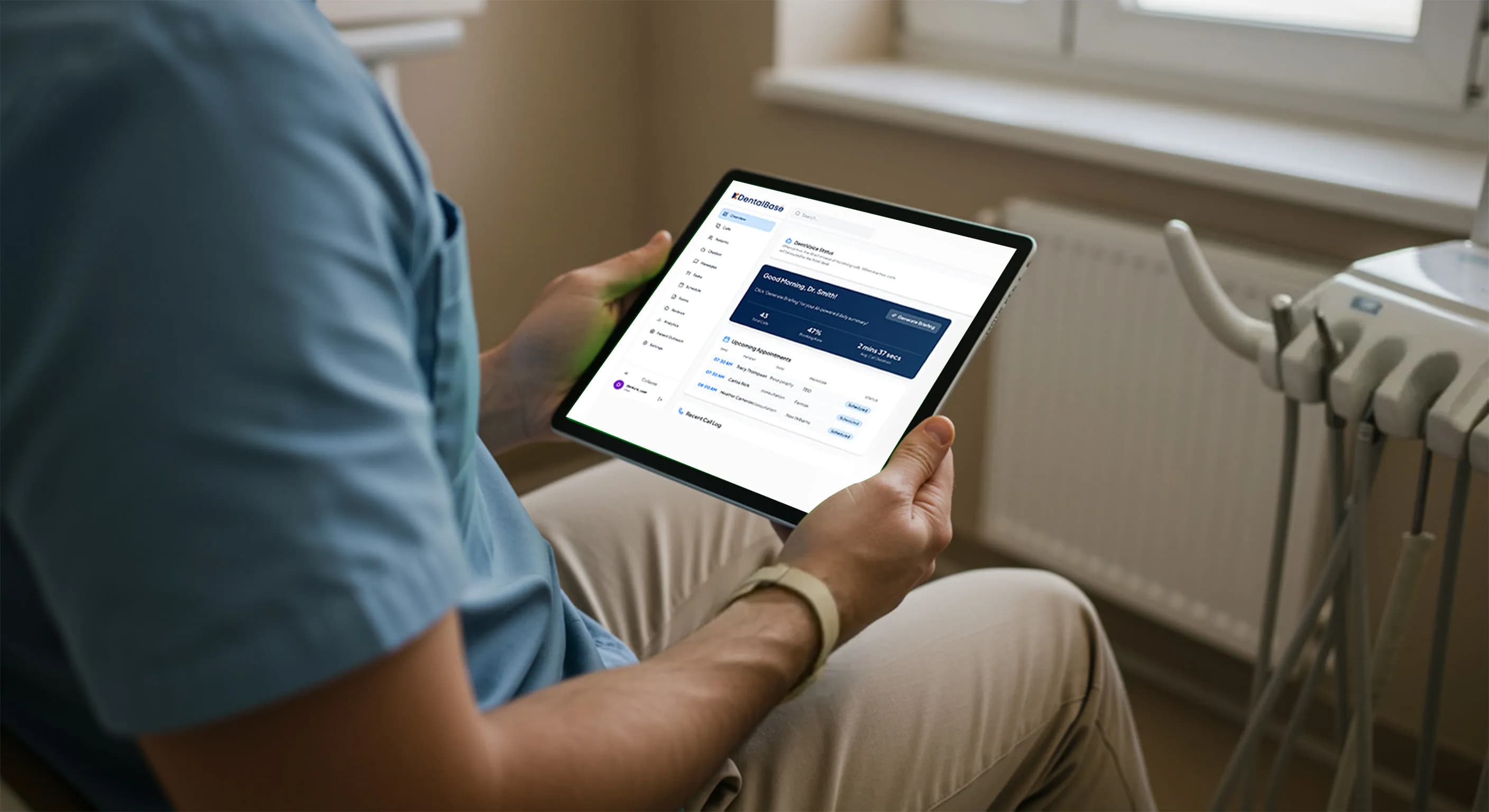
The True Cost of Missed Dental Calls and How AI Helps
Missed dental calls cost practices real revenue every week. See where the money leaks and how AI phone answering recovers calls and new patients.
Share:
Table of contents
Missed dental calls cost more than most practice owners assume. Every unanswered ring could be a new patient, a same-day emergency, or an existing patient trying to book treatment. And when nobody picks up, most callers don't leave a voicemail. They call the next practice on the list.
According to Dental Economics, practices miss 30-38% of incoming calls during business hours, and the after-hours gap is wider still. The cost compounds across lost new-patient revenue, empty same-day chairs, weaker reviews, and a front desk that's stretched thin.
Below, you'll see where the money leaks, why voicemail doesn't recover it, and how AI dental phone answering closes the gap without adding headcount. Want your own number instead of an industry average? A missed-call cost calculator turns your call volume into a dollar estimate in a couple of minutes.
Why Do Dental Practices Miss So Many Calls?
Dental practices miss calls because the front desk can't be in two places at once. The same person checking in a patient, taking a payment, or untangling an insurance claim is also expected to answer the phone. When call volume spikes, the phone loses every time.
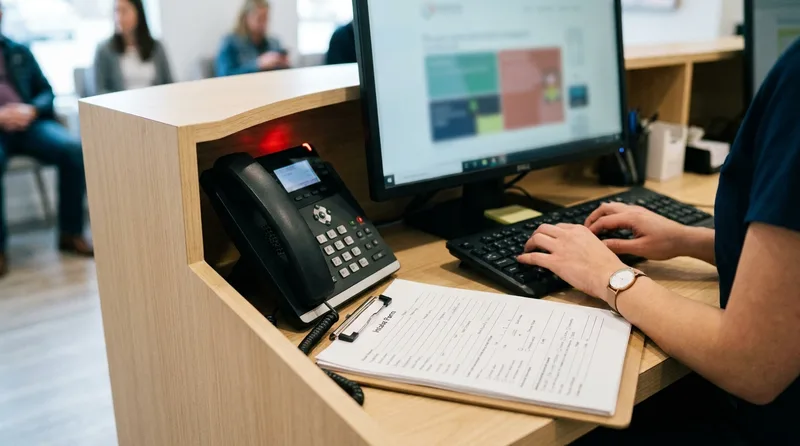
Picture a three-provider practice at 8:45 on a Monday. Two lines are ringing, a patient is waiting at the counter, and a payment is half processed. Something has to wait. Usually it's the phone.
Common Reasons Calls Go Unanswered
- Front desk tied up with in-office patients. The person standing at the counter always wins over the voice on the line.
- Peak-hour call spikes. Monday mornings, lunch hours, and late afternoons stack calls on top of check-ins.
- Understaffed teams. One coordinator covering check-in, checkout, and phones can't do all three at once.
- Long hold times. Callers who sit in a queue often hang up before anyone answers.
- After-hours calls with no coverage. Toothaches and broken crowns don't wait for opening time.
Most missed calls aren't random. They cluster around predictable pressure points: the Monday-morning rush, the lunch-hour dip while staff rotate breaks, and the late-afternoon wrap-up. Layer in the calls that arrive after the doors lock, and a large share of demand lands when nobody is free to answer. If your line regularly rings busy in those windows, the underlying causes are usually fixable.
The after-hours slice of that demand deserves its own look, and how a practice can answer, sort, and route calls while the office is closed lays out a practical approach.
The stakes of missed dental calls start with the very first call. The American Dental Association notes that a phone call is still likely to be a new patient's first contact with your practice, and it advises answering by the third ring.
What Do Missed Dental Calls Really Cost Your Practice?
Missed dental calls cost practices money in three ways: lost new-patient revenue, forfeited same-day and emergency production, and a slow erosion of reputation. Dental Economics estimates the annual impact at $100,000-$200,000 or more for many practices, which often dwarfs the marketing spend that generated those calls.
Lost New Patient Revenue
A new patient is worth far more than a first visit. Dental Economics puts first-year production at roughly $850-$1,300, with lifetime value of $8,000-$10,000 or more, depending on case mix and retention.
| Type of missed call | What it costs you | Why it hurts most |
|---|---|---|
| New patient inquiry | $850-$1,300 first-year production | They call the next practice and rarely call back |
| Same-day / emergency | High-production chair time | Empty chairs cannot be re-sold later that day |
| Treatment follow-up | Unscheduled accepted treatment | Case acceptance stalls when no one closes the loop |
| Recall / hygiene | Recurring hygiene revenue | A lapsed recall patient compounds over years |
| Reputation signal | Reviews and referrals | Callers form a first impression before they ever walk in |
Dental Economics models a midsized practice with 300-500 calls a month. At a 35% miss rate, that's 105-175 unanswered calls, and 60-65% are new-patient related.
The missed-call math, step by step
Over roughly 250 working days, that pattern puts up to $250,000 in first-year production at risk, before you count emergencies, recall, or referrals.
Treat that as a ceiling, not a forecast. Some callers do try again, and $1,000 is the conservative first-year value Dental Economics uses.
Missed Same-Day and Emergency Appointments
Patients with urgent needs want an answer now. Think of a caller with a cracked crown at 4 p.m. If your line goes to voicemail, they dial the next office. Missed emergency calls mean:
- Lost same-day production. A slot you could have filled stays empty.
- Empty chair time. Those chair hours can't be resold later that day.
- Patients going to competitors. Urgent callers book with whoever picks up first.
These are some of the highest-value appointments in dentistry, so protect that line first.
Damage to Patient Experience
Missed calls frustrate patients and erode trust. Over time that shows up as negative reviews and fewer referrals, because poor accessibility signals a practice that's too busy, or doesn't care.
See where your calls are leaking
Call analytics show your answer rate, peak-hour gaps, and lost revenue.
See the 7 metrics that matter →Why Isn't Voicemail Enough Anymore?
Voicemail isn't enough because patients expect answers in real time. When the choice is to leave a message or tap the next search result, most callers tap the next result. Voicemail doesn't recover missed dental calls. It simply documents the loss.
DenteMax reports that only about 14% of new patients leave a voicemail when their call isn't answered. The other 86% hang up and try someone else, and your team never learns they called.
Modern Patient Behavior
- Patients prefer real-time responses. People who book rides, food, and reservations in seconds won't wait on hold.
- Many won't leave a voicemail. A silent hang-up leaves you nothing to return.
- Callbacks often happen too late. By the time someone calls back, the patient has usually booked elsewhere.
Relying on voicemail means accepting preventable revenue loss. Here's how the two options compare on a typical call:
| When a call comes in | Voicemail | AI phone answering |
|---|---|---|
| Caller hears | A recording, then silence | A real conversation, instantly |
| Appointment booked | No, requires a callback | Yes, during the call |
| After-hours coverage | Message sits until morning | Handled around the clock |
| Typical outcome | Caller dials a competitor | Caller becomes a patient |
Related: The data on voicemail abandonment is worse than most owners expect. Read why dental voicemail loses patients and what to use instead.
How Does AI Dental Phone Answering Solve the Problem?
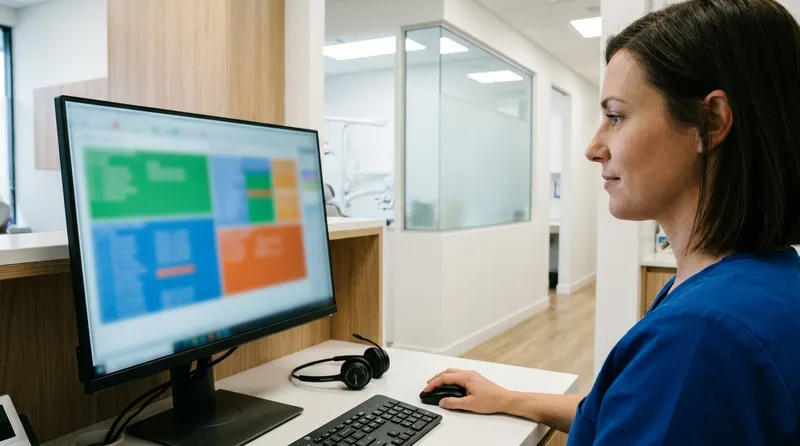
AI dental phone answering picks up every call on the first ring, finds out why the patient is calling, and acts on it by booking, routing, or answering in real time. It works as overflow during the day and full coverage after hours, so no call depends on someone being free.
What AI Can Do
- Answer calls instantly, 24/7. No hold music and no voicemail tag.
- Capture caller intent and information. Your team gets the reason for the call, not just a number.
- Schedule or route appointments. Routine bookings happen during the call.
- Handle FAQs. Hours, location, and insurance questions get an immediate answer.
- Escalate complex calls to staff. People step in when the conversation needs a human.
What happens on an AI-answered call
Crucially, this supports the front desk rather than working around it. Your team keeps the conversations that need a human touch: anxious patients, complex treatment questions, delicate financial talks. The routine, high-volume calls stop falling through the cracks. For urgent situations, smart triage decides in seconds whether a caller needs a same-day slot or a callback.
After-hours demand is the most overlooked leak of all. Toothaches, broken crowns, and lost fillings rarely respect office hours, and the patient in pain at 9 p.m. is often your highest-intent caller. Without coverage, that call goes to voicemail and, frequently, to a competitor by morning. You can answer dental calls after hours without hiring a night crew.
Why Is DentiVoice Built for Dental Practices?
DentiVoice is built for dentistry because it's designed around how dental front desks actually work, not around generic call-center scripts. It answers with dental-trained conversational AI, covers your phones around the clock, and hands your team the next action.
DentiVoice Advantages
- Dental-trained conversational AI. It understands scheduling, insurance, and emergency language.
- Always-on phone coverage. Peak overflow and after-hours calls are both covered.
- Seamless front desk support. Complex calls go to your team, not into a void.
- HIPAA-compliant communication. Patient information is protected on every call.
- Scalable for single practices or DSOs. The same setup works for one chair or many locations.
Think of it as a virtual team member that never gets overwhelmed, and works alongside your people rather than in place of them. That matters on days when the schedule is full and the phones don't stop. Your front desk can focus on the patient in front of them, knowing the caller on the line is getting a real answer.
Built for dentistry, not generic call centers
DentiVoice integrates with the practice management software your front desk already uses, so booked appointments land in the right schedule automatically.
See how AI books into your software →What Is the ROI of Never Missing a Call?
The ROI of answering every call is fast because the revenue is already trying to reach you. Marketing pays to create new demand, while capturing missed calls recovers demand you've already paid for. That makes answer rate one of the highest-leverage numbers a practice can improve.

Dental Economics reports that recovering even 50% of missed calls can deliver significant production gains, with measurable ROI often arriving within 60-90 days. For the full payback math, see how long it actually takes an AI receptionist to pay for itself.
Once phones are covered, you can measure the difference. Track these numbers before and after you start recovering missed dental calls:
- Call answer rate. The share of inbound calls a person or AI picks up.
- Appointments booked from calls you used to miss. This is the recovered revenue.
- New patients per month. Compare against the 30 days before coverage changed.
- After-hours bookings. Calls that used to hit voicemail now convert.
- Front desk interruptions. Fewer ringing phones during check-in means a calmer counter.
Stopping missed calls is one of the fastest ways to raise revenue without raising ad spend.
How Can You Tell If Your Practice Is Leaking Calls?
You can tell your practice is leaking calls if the phone rings while you're checking patients in, you don't know your answer rate, or after-hours calls go straight to voicemail. Two or more of those signs often point to a revenue leak worth measuring.
Is your practice leaking calls? A 60-second check
Check each statement that is true today.
If you checked two or more, put a number on your missed dental calls this week. Dental Economics suggests this simple routine:
- Pull your call logs and missed-call reports for the past 30-60 days.
- Calculate your answer rate, speed to answer, and call-to-appointment conversion.
- Adjust the cost math to your actual new-patient value and call volume.
- Review the numbers weekly with your team to spot peak-hour and after-hours gaps.
Related: If most of these sound familiar, your front desk may be at capacity. Spot the warning signs in 7 signs your dental front desk is overwhelmed →
What Is the Next Step for Your Practice?
The next step is to find out how many calls you're missing right now. Pull 30 days of call logs, work out your answer rate, and put a dollar value on the gap. Once you can see the leak, closing it becomes a business decision instead of a guess.
Missed dental calls are silent revenue killers, but they're also one of the most fixable problems in a practice. You don't need to overhaul your phones overnight. Start with the two windows that leak most, usually lunch and after hours, and measure again in 30 days. Write down today's answer rate first, so you have a baseline to beat.
If your answer rate climbs and bookings follow, you have your answer. For many practices, that means adding backup coverage so every call gets a response, whether your team is at the counter, in the operatory, or home for the night. Solutions like DentiVoice give your front desk that backup without adding burnout.
Frequently Asked Questions
Most callers don't wait. DenteMax reports that only about 14% of new patients leave a voicemail, so the rest try another practice. For the office, that often means a lost same-day or new-patient appointment that it never knew it missed.
Dental Economics cites industry benchmarks of 30-38% of incoming calls missed during business hours. Your own rate may run higher at peak times such as Monday mornings and lunch, and after-hours calls are usually the least covered of all.
AI dental phone answering uses artificial intelligence to answer, route, and manage incoming patient calls automatically. It collects caller details, understands the reason for the call, and books or routes appointments in real time, even after hours, while passing complex calls to your team.
Yes. Connected to your practice management software, AI dental phone answering can collect caller information, understand why the patient is calling, and schedule or route the appointment during the call, including after hours. Complex or urgent needs transfer to a team member.
No. AI supports your team by handling high-volume, repetitive calls, so people can focus on in-person patients and complex conversations. It works as backup during peak hours and after closing, and it transfers urgent or sensitive calls to a human.
It depends on the vendor, so ask. Confirm that the platform will sign a business associate agreement and explain how it protects call data. DentiVoice is built with HIPAA-compliant security and data protection for patient communication.
Yes. AI provides 24/7 call coverage, capturing leads and booking requests even when your office is closed, so a patient with a toothache at 9 p.m. reaches a response instead of a voicemail greeting.
Sources & References
- 1
- 2
- 3
- 4
Topics
Was this article helpful?
Written by
DentalBase Team
Expert dental industry content from the DentalBase team. We provide insights on practice management, marketing, compliance, and growth strategies for dental professionals.