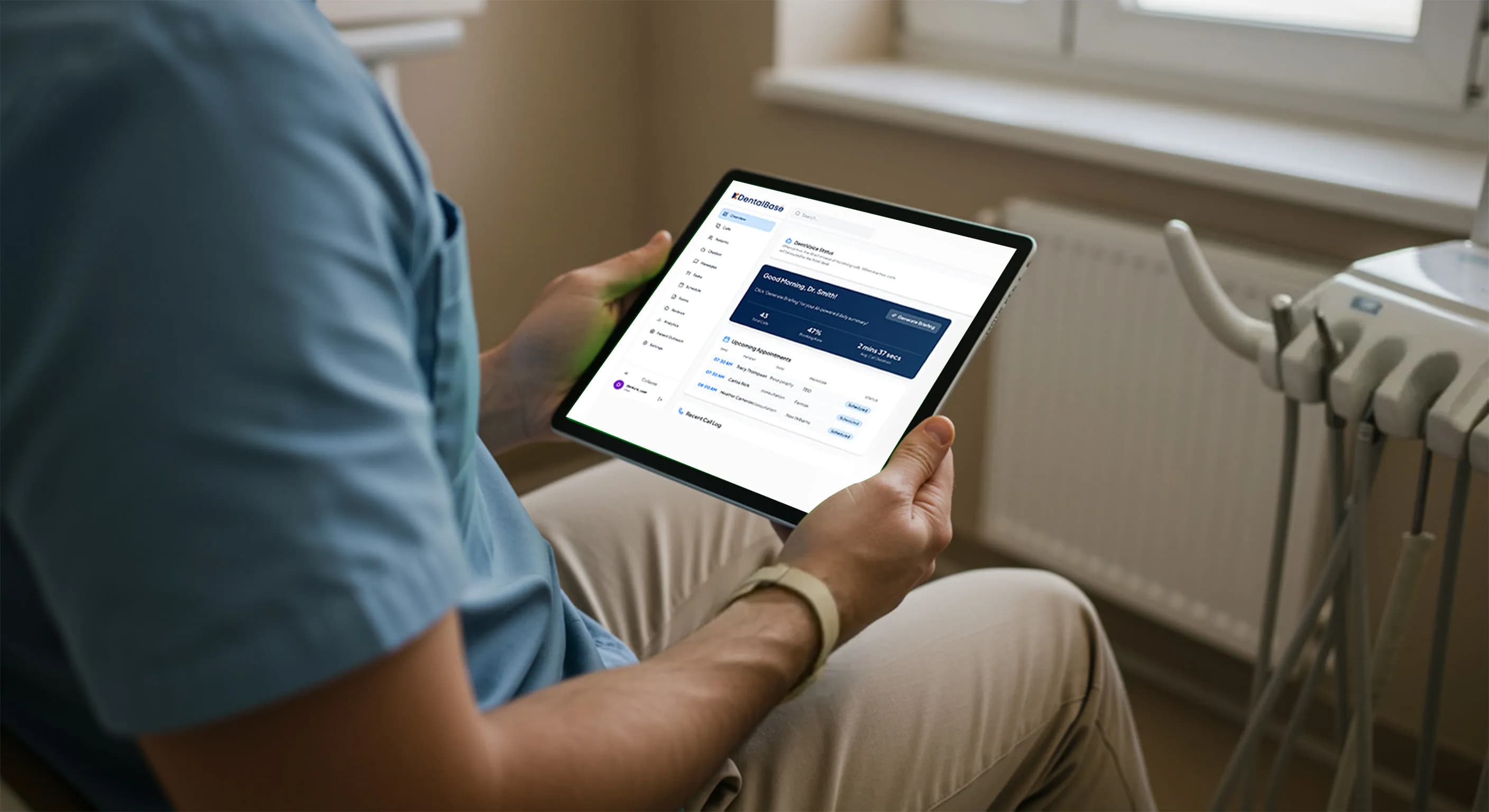
Dental Virtual Receptionist: 24/7 Call Coverage
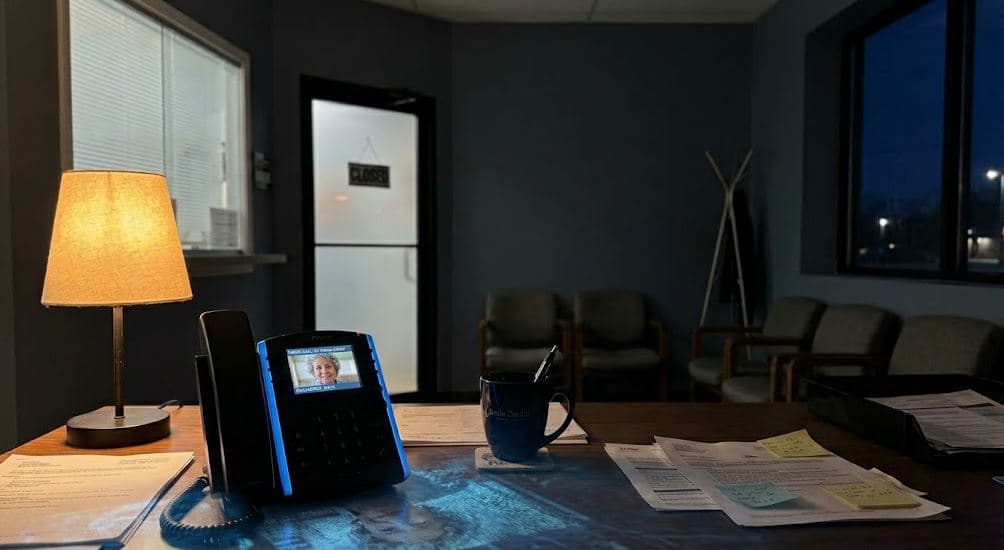
Discover how a dental virtual receptionist powered by AI ensures no patient call or message is ever missed, day or night.
Share:
Table of contents
In a busy dental practice, unanswered calls are more than an inconvenience, they’re lost appointments and lost revenue. Patients call after hours, during peak times, or when the front desk is overwhelmed. If no one answers, many simply move on to another clinic.
A dental virtual receptionist solves this challenge by providing 24/7 call coverage, ensuring every patient inquiry is handled professionally, even outside office hours.
What Is a Dental Virtual Receptionist?
A dental virtual receptionist is AI-powered software that answers your practice's phone calls, texts, and web chats around the clock, then books, reschedules, or routes each request automatically. It works alongside your front desk team rather than replacing it, covering the calls staff cannot reach during treatment, lunch, or after closing.
A dental virtual receptionist is an AI-powered call and message handling system designed specifically for dental practices. It answers incoming calls, responds to patient questions, and manages appointments without requiring human availability.
Unlike traditional voicemail or IVR systems, a virtual receptionist:
-
Understands natural speech
-
Responds conversationally
-
Guides patients smoothly through booking
Think of it as a layer that sits in front of your phone system. When a call comes in, the system greets the caller by name where possible, listens to the request in natural language, and either completes the task or hands a clean summary to your team. Because it connects to your scheduling software, it can read live openings and write a confirmed booking back without anyone at the desk lifting a finger. To see exactly which requests it can complete on its own, our guide on whether an AI receptionist can book appointments in your dental software walks through the integration in plain terms.
Why 24/7 Call Coverage Matters for Dental Clinics
24/7 call coverage matters because a large share of patient calls arrive when the front desk is busy or the office is closed, and most callers will not leave a voicemail or try again. Always-on answering captures those after-hours and overflow requests, turning calls that would have gone to a competitor into booked appointments.
Patients Expect Instant Responses
Modern patients expect immediate answers, regardless of the time. When they call a dental clinic:
-
After work
-
On weekends
-
Late at night during discomfort
They want reassurance and clear next steps. A dental virtual receptionist ensures someone always answers.
Every Missed Call Is a Lost Opportunity
Studies show that many patients won’t call back if they don’t reach a real response the first time. With 24/7 coverage, your practice:
-
Captures after-hours appointment requests
-
Converts emergency calls into booked visits
-
Stays competitive in crowded markets
The cost of a single missed new-patient call is rarely just one appointment. A new patient often represents a hygiene recall every six months, future restorative work, and referrals to family and friends. When that first call goes to voicemail and the caller dials the next office on their list, the practice loses the entire lifetime value, not one visit. We break the pattern down further in why dental voicemail quietly loses patients.
Key Benefits of a Dental Virtual Receptionist
The core benefits of a dental virtual receptionist are continuous availability, consistent call handling at any volume, automated scheduling, and reduced pressure on front desk staff. Together these protect appointment revenue and free your team to focus on patients who are already in the office.
1. Always-On Availability
A virtual receptionist never takes breaks or days off. It answers calls:
-
During lunch hours
-
After closing time
-
On holidays and weekends
This guarantees zero missed calls.
2. Professional Call Handling at Scale
No matter how many calls come in, a dental virtual receptionist:
-
Answers instantly
-
Maintains a calm, friendly tone
-
Delivers consistent messaging
This creates a reliable first impression for every patient.
3. Automated Appointment Scheduling
The virtual receptionist can:
-
Book new appointments
-
Reschedule existing ones
-
Confirm availability in real time
This reduces front desk workload while increasing booking efficiency.
4. Reduced Front Desk Pressure
By handling routine calls and questions, the system allows staff to:
-
Focus on in-office patients
-
Manage complex cases
-
Improve overall service quality
Less stress, better productivity.
How Does a Dental Virtual Receptionist Handle an After-Hours Call?
When a patient calls after hours, a dental virtual receptionist answers on the first ring, identifies what the caller needs, and completes or routes the request in real time. The whole exchange typically takes under two minutes and ends with a booked appointment or a clear next step instead of a voicemail.
The flow below shows what happens between the moment the phone rings and the moment your front desk sees the result the next morning.
Urgent calls, such as a patient in pain or with a knocked-out tooth, are flagged and escalated according to rules you set, while routine requests are simply scheduled. This triage step is what keeps genuine emergencies from sitting in an inbox overnight. For a closer look at how that prioritization works, see our breakdown of how AI triages urgent versus routine dental calls.
Is a Virtual Receptionist Better Than Voicemail?
A virtual receptionist is better than voicemail because it responds and takes action in real time instead of asking the patient to wait. Voicemail is passive and has high drop-off, while an AI receptionist answers questions, checks availability, and books the visit during the same call.
Absolutely. Voicemail asks patients to wait. A dental virtual receptionist takes action immediately.
Voicemail:
-
Passive
-
High drop-off rates
Virtual Receptionist:
-
Interactive
-
Appointment-focused
-
Patient-friendly
Virtual Receptionist vs. Voicemail vs. Answering Service: What Is the Difference?
The difference comes down to who completes the task. Voicemail records a message, a traditional answering service takes a message and passes it along, and a dental virtual receptionist actually books the appointment during the call. Only the last option turns an after-hours call into a confirmed visit without staff involvement.
| Capability | Voicemail | Answering Service | Dental Virtual Receptionist |
|---|---|---|---|
| Answers 24/7 | Records only | Sometimes, for a fee | Yes, every call |
| Books the appointment | No | Rarely | Yes, in real time |
| Knows dental terms | No | Limited | Built for dentistry |
| Handles call spikes | N/A | Callers wait on hold | Many calls at once |
| Cost as you grow | Low but loses calls | Per-minute, scales up | Flat and predictable |
Answering services still rely on a human reading from a script, so they struggle with call spikes and rarely connect to your scheduling software. A virtual receptionist removes the hold music entirely by handling several conversations at once. If your phones are constantly tied up, our article on why a dental office phone is always busy and how to fix it covers the root causes.
Who Benefits Most From a Dental Virtual Receptionist?
Practices that benefit most from a dental virtual receptionist are those with high call volume, limited front desk staff, emergency services, or multiple locations. Any clinic losing calls to voicemail during lunch, evenings, or weekends gains the most from always-on coverage.
This solution is ideal for:
-
Solo dental practices
-
High-volume clinics
-
Multi-location dental groups
-
Practices offering emergency services
Any clinic that values patient experience benefits from 24/7 coverage.
What Does It Cost to Leave Calls Unanswered?
The real cost of unanswered calls is not the phone bill, it is the booked visits that never happen. Every after-hours call that hits voicemail is a patient who may book elsewhere, and the lost revenue compounds across hygiene recalls, treatment plans, and referrals that never start.
Front desk teams already carry a heavy load, and unanswered calls are usually a symptom of that strain rather than a lack of effort. If your team is stretched thin, the signs in our guide to an overwhelmed dental front desk are worth a quick read, along with practical steps to reduce front office burnout before it drives turnover.
Quick Self-Check: Are You Losing Calls?
Use the checklist below to gauge how much after-hours coverage your practice currently has. The more boxes you leave unchecked, the more likely calls are slipping through.
Call Coverage Audit
Check each statement that is true for your practice today.
Your score: count your checks out of 5. Three or fewer means calls are likely being lost.
How Do You Add 24/7 Coverage Without Hiring More Staff?
You add 24/7 coverage by layering a virtual receptionist over your existing phone system rather than expanding your team. The AI handles overflow and after-hours calls, your staff keeps handling the in-person and complex work, and no new shifts or night staff are required.
Most practices start by pointing after-hours and overflow calls to the virtual receptionist, then expand its role as they grow comfortable. Because it connects to your scheduling software, bookings appear in the same calendar your team already uses, so there is no separate system to check each morning.
Related: Worried about staffing nights and weekends? This guide explains the no-hire path in detail. How to answer dental calls after hours without hiring
It also helps to know what callers actually want before you set up routing rules. A surprising share of calls are routine questions, confirmations, and rescheduling, all of which automate cleanly. Our look at the top dental call types patients call about shows where the easy wins are, and dental call analytics metrics help you measure the impact once coverage is live.
How Dentivoice Supports Dental Practices
Dentivoice supports dental practices by building a virtual receptionist around dental terminology, real patient behavior, and appointment-driven workflows. The goal is to make every call a booked opportunity while keeping your team in control of how calls are handled.
At Dentivoice, we design dental virtual receptionist solutions tailored to:
-
Dental terminology
-
Patient behavior
-
Appointment-driven workflows
Our focus is simple: make sure every call turns into an opportunity, not a missed chance.
The Bottom Line: Always-On Call Coverage Is the New Baseline
A dental virtual receptionist with 24/7 call coverage is no longer a luxury, it’s a necessity. By ensuring every patient call is answered promptly and professionally, dental practices can:
-
Increase appointment bookings
-
Improve patient satisfaction
-
Reduce operational strain
In today’s always-on world, your dental practice should be too.
The practices pulling ahead are not the ones with the biggest teams, they are the ones that never let a call go unanswered. Pairing your front desk with a dental virtual receptionist is the simplest way to match patient expectations without adding headcount. If you are comparing options, our roundup of the top dental AI voice receptionist platforms in 2026 is a good next stop.
Coverage and booking go hand in hand. 24/7 appointment booking that works without adding headcount pairs naturally with round-the-clock call coverage, and once the volume of booked visits grows, our step-by-step guide to automating appointment scheduling covers what to set up next.
Stop sending patients to voicemail
See how Dentivoice answers every call 24/7, books appointments in real time, and works alongside the team you already have.
Explore Dentivoice →Frequently Asked Questions
If your dental office uses a virtual receptionist, your call is answered immediately, even at night or on weekends. You can ask questions, request an appointment, or get guidance for urgent dental issues instead of leaving a voicemail.
Yes. A dental virtual receptionist can check real-time availability and book, reschedule, or confirm appointments directly, often in less than 2 minutes.
For patients, yes. Virtual receptionists respond instantly, guide you through next steps, and reduce the chance that your request is forgotten or delayed.
A virtual receptionist can triage emergency calls, provide clear instructions, and route urgent cases appropriately so you know exactly what to do right away.
Sources & References
- 1
- 2
- 3
- 4
- 5
- 6
Topics
Was this article helpful?
Written by
DentalBase Team
Expert dental industry content from the DentalBase team. We provide insights on practice management, marketing, compliance, and growth strategies for dental professionals.