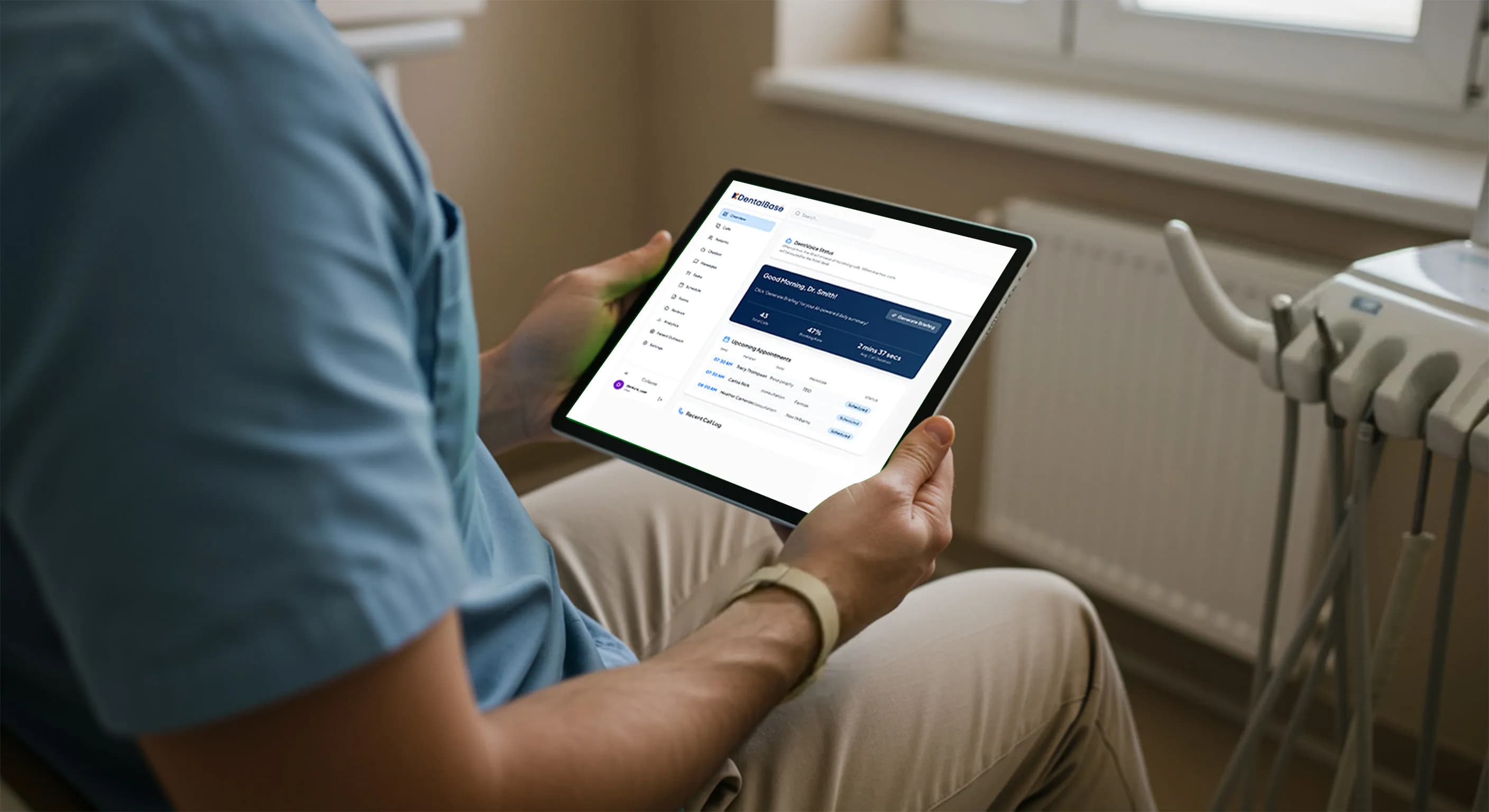
AI Receptionist Prompt Management: Version Control Basics

AI receptionist prompt management means version control: staging versus live, defined editors, and re-testing after every fee or hours change.
Share:
Table of contents
AI receptionist prompt management is the discipline of controlling changes to the instructions your voice agent runs on. It works the same way a practice already controls changes to its clinical protocols. Most offices treat the prompt like a light switch: someone opens the dashboard, edits a line, and hits save. Then a fee changes, or the hours shift for a holiday, and the agent starts quoting the old numbers to patients on the phone. Nobody flips a switch to cause that. It happens because nobody wrote down what changed, when, or who approved it. This guide walks through how the underlying prompt actually works and who should hold the keys to it. Then it covers the basic version control habits that keep an edit from turning into a Monday-morning fire drill.
Practices rarely think about prompt changes as a technical risk. They think about them as small text edits, no different from updating a sign in the waiting room. That mismatch is exactly the problem. A three-provider practice fielding 150 calls a week, updating its schedule twice a year and its fee schedule once, will still touch the agent's configuration more often than either of those events alone. Every hours change, every new provider, every insurance update touches the same file. Without a process, each edit is a small bet that nothing else breaks.
What Is AI Receptionist Prompt Management?
AI receptionist prompt management is the set of practices that governs how a voice agent's instructions are written, tested, and deployed. It exists because the prompt is not a static script. It is a living configuration file that changes every time the practice does.
The Two-Layer Prompt Structure
Most platforms build the agent on a two-layer structure. A shared base prompt handles core call logic. A per-office customization layer holds the practice's hours, fee schedule, provider names, and specific policies. The base layer rarely changes. The office layer changes constantly, and that is where nearly all the risk sits. A missed hours update means the agent tells a caller the office opens at 9 when it now opens at 8. A missed fee update means it quotes a whitening price that expired in January. Neither failure is dramatic on its own. Both erode a patient's trust in the front desk before a human even picks up.
Why the Office Layer Carries Most of the Risk
Think of the office layer the way you would think of a customized front desk script. It needs an owner, a change log, and a way to test an edit before it goes live. Skip any one of those and the agent will eventually say something it shouldn't. Interest in this kind of administrative AI tooling keeps climbing across healthcare generally. Statista's tracking of AI use cases in healthcare lists administrative and scheduling support among the categories practices reach for first. Good AI receptionist prompt management is what keeps that early enthusiasm from turning into a support headache six months in.
Version control matters most in the first weeks, when the office layer is still being tuned. Getting the whole system operational within a week only holds up if the change process is in place from day one, not bolted on after the first regression.
See the architecture behind the prompt
Before locking down a change process, it helps to know what you're actually changing. Browse the full library of AI receptionist guides for dental practices.
Browse the guides →Who Should Be Allowed to Edit the AI Receptionist's Prompt?
Only one or two named people should have edit access to the AI receptionist's prompt, not the whole front desk team. A three-editor limit keeps the change history short enough to actually review, and it matches how most practices already handle other systems of record.
A Practical Editor Structure
In practice, that usually means the office manager and one backup, often the lead treatment coordinator. Everyone else can request a change and see the log, but only the named editors push it live. This isn't about trust. It's about accountability. If four people can edit the prompt with no sign-off step, nobody owns the outcome when something breaks. The practice ends up debugging by guesswork instead of checking a log. Weak access review has real consequences: the HHS Office for Civil Rights fined Memorial Healthcare Systems $5.5 million after a terminated employee's login was used to access records almost daily for five years, affecting 80,000 patients, because nobody was reviewing who had access to what.
Governance and Access Control
The American Dental Association's standards work on AI systems in dentistry frames this the same way. Transparency and governance are prerequisites for safe use, not optional extras layered on after the fact. A simple table like this covers most practices:
- Office manager: primary editor, approves and publishes all changes.
- Backup editor: can push urgent fixes when the manager is out, logs them the same day.
- Front desk staff: can flag issues and request changes, cannot publish.
- Provider or owner: reviews the change log monthly, does not edit directly.
Compliance context matters here too, since the same access-control thinking that governs patient records applies to the system that answers your phones. If you haven't reviewed how HIPAA obligations extend to the AI receptionist, do that before assigning edit rights, not after.
What Is the Difference Between a Staging and a Live AI Receptionist Prompt Environment?
A staging environment is a copy of the prompt where you can test a change before real patients hear it. The live environment is what's actually answering calls. Most practices skip staging entirely and edit live, which means every mistake reaches a caller first.
How to Approximate a Staging Environment
Not every platform offers a formal staging mode, but you can approximate one. Draft the edit in a document first. Read it aloud, twice, the way you'd expect a caller to hear it. Then run three or four test calls. Cover the normal path, plus at least one edge case, like a caller asking about a procedure the practice just changed pricing on. Only after that does the edit move to the file that's actually live.
Staging vs. Live at a Glance
Dentaltown's guidance on practice software transitions makes a point that applies just as well here. A deliberate transition plan beats a rushed one, even for a change that feels small. The table below shows how the two environments typically differ in a dental office setting.
| Aspect | Staging | Live |
|---|---|---|
| Who hears it | Only the editor, on test calls | Every patient who calls the office |
| Purpose | Catch wording, price, or logic errors | Handle real scheduling and questions |
| Rollback cost | None, nothing was published | A support ticket and a delay while it's fixed |
This is a different problem from moving between phone systems entirely. If you're evaluating a full phone system migration without losing calls, that's about switching platforms. Version control is about safely running the one you already have.

What Should You Re-Test After a Fee Schedule or Hours Change?
After any fee schedule or hours change, re-test the four call types most likely to reference it. Think new patient booking, price questions, hours questions, and insurance verification. Skipping this step is the single most common way a small edit turns into a week of wrong answers.
Why Fee Schedules Drift Out of Sync
Fee schedules are especially easy to get wrong because they live in more than one place. The number in the practice management system, the number quoted at the front desk, and the number in the AI receptionist's prompt all need to match. They don't update themselves in sync. Open Dental's documentation on fee schedule structure illustrates the underlying complexity well. Its own interface lets staff compare up to three fee schedules side by side, because a single practice can run that many at once, tied to different providers, clinics, or insurance plans. That's exactly why a copy-paste update into the agent's prompt so often lags behind reality.
The Four-Call Retest Checklist
A short checklist keeps this manageable:
- Call and ask about the specific procedure whose price changed.
- Call outside the old hours and confirm the agent gives the new hours, not the old ones.
- Book a new patient appointment and confirm intake questions still make sense.
- Ask a question that requires the agent to check insurance participation.
If any of the four sound wrong on the test call, don't publish the change. Fix it and test again. A five-minute delay is cheaper than a week of a wrong quote to actual patients.
Why Is an Untracked Prompt Edit the Most Common Cause of a Regression?
An untracked prompt edit is the most common cause of a regression because nobody can trace a new problem back to the change that caused it. Without a log, every bug becomes a mystery that has to be solved from scratch instead of a two-minute diff review.
A Real Example: The Tool Name Drift
Here's a real-world version of how this happens. A platform migration renamed an internal tool from setup_new_patient to register_patient, but only one of two prompt layers got updated to match. Calls that touched the base layer worked fine. Calls that hit the office-specific layer, where the old tool name was still hardcoded into an instruction, quietly failed to register new patients for weeks. Nobody noticed until a provider asked why new patient volume looked soft. That's a drift problem, and it's invisible without a record of what was supposed to match what.
Keeping a Simple Change Log
This is a narrower problem than the one covered in what happens when an AI receptionist makes a mistake. That piece looks at the patient-facing side of an error. Version control is about preventing the mistake at the source, not just recovering from it gracefully once a patient is affected. A version log doesn't need to be complicated. A shared document with the date, the editor, what changed, and why is enough for most single-location practices. The point isn't the format. It's having one at all.
How Do You Roll Back a Bad Prompt Change?
Rolling back a bad prompt change means restoring the last known-good version of the file, not trying to patch the new problem on top of it. Patching under pressure is how one bug turns into two.
Save Before You Publish
This only works if you kept a copy of the previous version before publishing the new one. That's the entire argument for version control in one sentence: keep the last working copy somewhere safe, and rollback becomes a five-minute task instead of a scramble. Save a dated copy of the prompt text before every edit, even a one-line one. Store it somewhere outside the platform itself, since you may need it if the platform is unreachable. The habit costs nothing: the HIPAA Security Rule already requires six years of retained audit history for systems touching patient data, so a folder of dated prompt versions fits a discipline your practice should have in place anyway.
Restore First, Investigate Second
Once a bad edit is live, restore the saved version first and investigate the specific error second. Getting the agent back to correct behavior matters more in the moment than understanding exactly why it broke. That analysis can happen afterward, with the broken version saved for comparison instead of erased.
What Does a Basic Prompt Version Control Workflow Look Like?
A basic prompt version control workflow has four steps: draft the change, test it against real call scenarios, get a second person's sign-off, then publish and log it. Practices that skip straight from draft to publish are the ones re-testing production instead of staging.
The Four-Step Workflow
None of this requires engineering software. A shared folder with dated file names, a two-line approval message in a group chat, and five minutes of test calls covers it for most single-location practices. The habit matters more than the tooling. Governance is the whole point, not an afterthought: ADA News coverage of emerging AI standards for dentistry makes the same case at the industry level, arguing that transparency and defined process are what let a practice use AI responsibly instead of just quickly. The same logic holds at the level of a single prompt file. It just gets easier once the habit is built.
Here's what that looks like week to week:
- Draft the edit in a shared document, not directly in the live platform.
- Test it against the four call types covered earlier in this guide.
- Get sign-off from the backup editor before publishing anything affecting fees or hours.
- Log the date, the change, and the reason in the same running document.
Why the Habit Matters More Than the Tool
Staff who need a refresher on why testing matters can revisit how the practice originally trained the AI receptionist on its FAQs. The same testing instinct applies to every edit afterward, not just the initial setup.
Not sure your current setup can handle this?
Read more technology guides for running an AI receptionist day to day, not just setting one up.
See technology guides →How Often Should You Audit Your AI Receptionist's Prompt Configuration?
Audit the AI receptionist's prompt configuration quarterly at minimum, plus immediately after any fee schedule, hours, or provider change. A quarterly review catches the slow drift that individual edits miss.
What a Quarterly Audit Actually Looks Like
A quarterly audit doesn't need to take long. Read the entire office-specific layer of the prompt top to bottom, out loud, against the current fee schedule and hours posted on the website. Compare it line by line against the change log from the last three months. Anything in the live prompt that isn't accounted for in the log is a sign an edit happened outside the process. That's worth investigating on its own. The same quarterly rhythm applies to vendor and sales call routing rules, which drift just as quietly. See keeping vendor call routing rules current for how to keep that list current.

Pair It With an Escalation Review
Practices running multiple providers, or planning to add one, should pair this audit with a review of the escalation workflow that hands difficult calls to staff. A growing team usually means the prompt changes faster than a once-a-quarter check can catch on its own. Set a calendar reminder now. An audit that depends on someone remembering to run it will eventually get skipped during a busy month. Busy months are exactly when configuration drifts the most.
AI receptionist prompt management isn't a technical afterthought. It's the same discipline a practice already applies to clinical protocols, applied to the file that talks to every caller before a human does. One named editor, a saved copy before every change, and a short test call after every edit will prevent most of the regressions practices run into.
Start small. Pick one editor, create a single shared document for the change log, and commit to testing the next fee or hours update before it goes live. That one habit, repeated consistently, does more to protect patient trust than any feature the platform itself provides.
Build a change process that actually holds up
Explore more guides on running an AI receptionist day to day, from call quality reviews to staff handoff design.
Explore practice management guides →Want to see how call quality reviews tie into version control?
Read the call quality review guide →Frequently Asked Questions
AI receptionist prompt management is the practice of controlling how a voice agent's instructions are written, tested, and deployed. It covers who can edit the prompt, how changes are tested before going live, and how edits are logged for later review.
Most practices should limit edit access to one or two named people, typically the office manager and a backup. This keeps the change history short enough to review and gives every edit a clear owner.
Staging is a draft version of the prompt tested with practice calls before real patients hear it. Live is the version actually answering the phones. Testing in staging first catches wording and pricing errors before they reach a caller.
Test four call types after any fee schedule change: a price question about the specific procedure, an hours question, a new patient booking, and an insurance verification call. This catches the most common places a fee update goes wrong.
An untracked edit causes a regression because there is no record connecting a new problem to the change that caused it. Without a log, staff have to debug from scratch instead of checking what changed and when.
Restore the last saved version of the prompt rather than patching the new problem on top of it. This only works if a dated copy of the previous version was saved before the new edit went live.
Audit the full prompt configuration at least quarterly, and immediately after any fee schedule, hours, or provider change. A quarterly read-through catches slow drift that individual edits tend to miss.
Sources & References
- 1
- 2
- 3
- 4
- 5
Topics
Was this article helpful?
Written by
DentalBase Team
Expert dental industry content from the DentalBase team. We provide insights on practice management, marketing, compliance, and growth strategies for dental professionals.