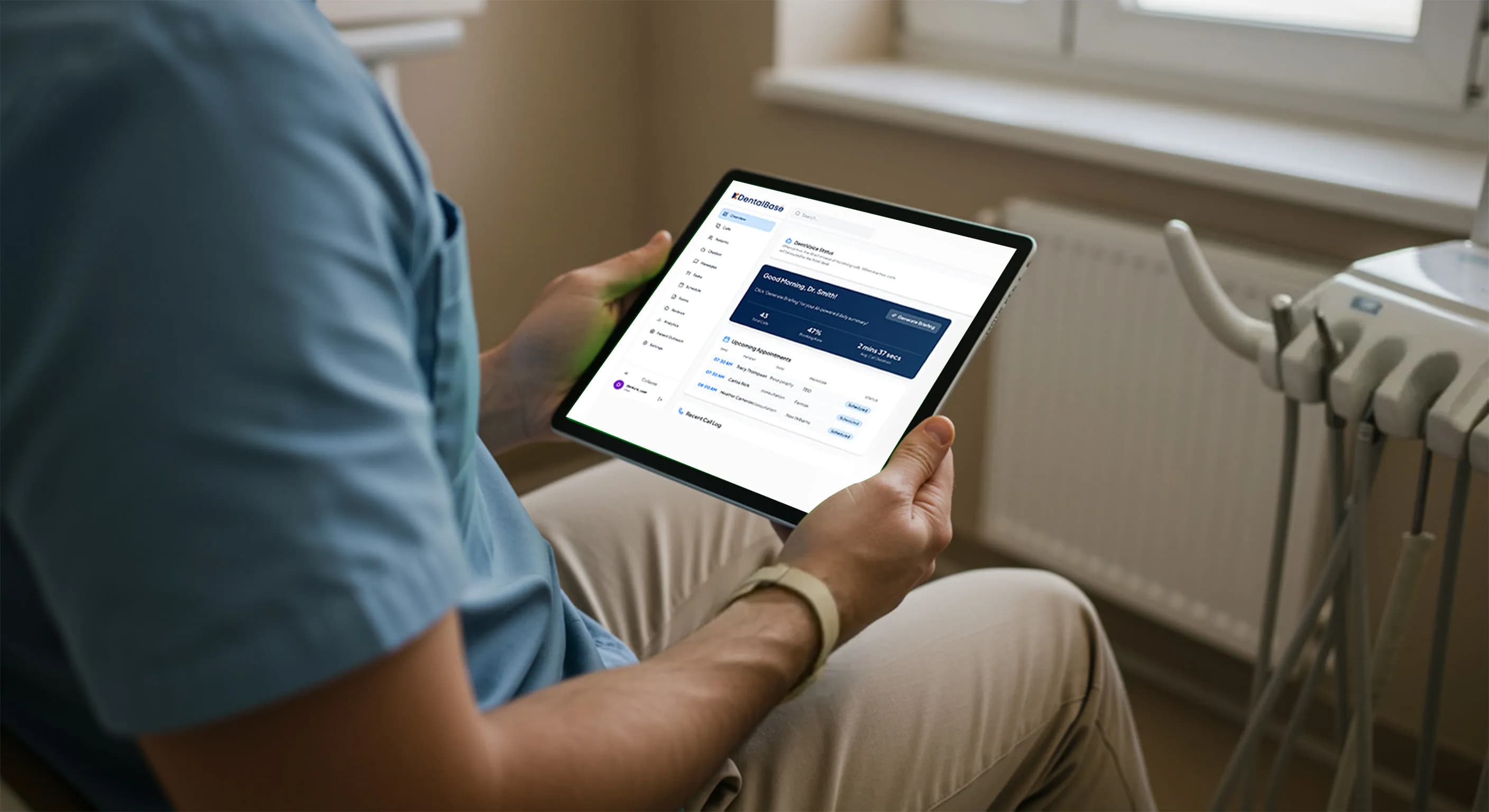
What Does an AI Dental Receptionist Do? A Complete Guide

An AI dental receptionist answers calls, books appointments, sends reminders, and handles insurance questions 24/7 while supporting your front desk.
Share:
Table of contents
Expert dental industry content covering practice management, marketing, compliance, and growth strategies for dental professionals.
Introduction
What Does an AI Dental Receptionist Do? This question is increasingly common as dental practices face rising patient communication demands and staffing challenges. Modern dental offices receive hundreds of calls weekly for appointments, insurance questions, and general inquiries. Managing this volume creates significant workload pressure on front desk teams, prompting many practices to explore smarter, automated support solutions.
An AI dental receptionist serves as an intelligent virtual assistant. It handles routine patient interactions, appointment scheduling, and administrative tasks around the clock. These systems use natural language processing to understand patient needs. They respond appropriately through phone calls, text messages, and online chat.
Unlike traditional automated systems with limited menu options, AI engages naturally. They understand conversation context and patient intent. They work alongside human staff members to ensure patients receive prompt, professional service. At the same time, they reduce administrative burden on the practice. This technology represents a significant evolution in dental practice operations. It improves how practices manage patient communication and operational efficiency.
24/7
Coverage the system can offer, including nights, weekends, and holidays.
35%
Of inbound calls to small medical and dental offices go unanswered during a typical week, industry call-tracking analyses report. Market trackers like Statista follow how practice volume keeps climbing.
<30 sec
Average answer time practices report after routing routine calls through AI reception.
What Is an AI Dental Receptionist?
An AI dental receptionist is a software-based virtual assistant. It is designed specifically for to handle patient communication. It also manages administrative tasks. These systems integrate with existing practice management software. They operate through multiple channels, including phone calls and text messaging. They also support email and website chat.
The technology combines artificial intelligence, natural language processing, and machine learning. It understands patient requests and provides appropriate responses. can access appointment schedules and patient records with proper permissions. And they use practice information to deliver personalized service.
These systems typically operate 24/7, ensuring patients can reach the practice outside business hours for urgent questions or appointment requests. They handle routine inquiries while escalating complex issues to human staff members when needed.
How AI Reception Technology Works
AI dental receptionists process incoming communications through sophisticated language models that interpret patient intent. When a patient calls or messages, the system analyzes the communication, identifies the purpose (appointment booking, insurance question, etc.), and responds using pre-programmed knowledge about the practice. The technology learns from interactions over time, improving response accuracy and effectiveness. Integration with practice management systems allows real-time access to schedules and patient information, enabling the AI to provide specific, actionable responses rather than generic automated messages.
What Channels Does an AI Dental Receptionist Cover?
The system covers the channels patients already use to reach a practice. Most systems answer phone calls first, then extend to text, web chat, and email so a single assistant handles every front-door conversation.
Coverage usually breaks down like this:
- Phone: live voice answering for new-patient calls, reschedules, and after-hours requests. This is where the biggest recovery happens, since voicemail quietly loses patients who hang up and call a competitor.
- Text (SMS): two-way messaging for confirmations, quick questions, and insurance verification follow-ups that do not need a phone call.
- Web chat: instant answers on your site, often the first touch for a patient comparing offices late at night.
- Email: slower-tempo replies for documents, forms, and non-urgent records requests.
The point is consistency. A patient gets the same answer whether they call at noon or message at midnight, and your team sees every conversation in one place. Reliable communication also supports the preventive-care reminders that CDC Oral Health emphasizes.
Not sure which calls to automate first?
See the call types most practices route through AI before anything else, and why they matter for production.
Read the call-type breakdown →What Core Tasks Does an AI Dental Receptionist Handle?
Short answer: It handles scheduling, reminders, insurance questions, intake, and after-hours calls, then hands anything sensitive or clinical to your team. It manages the routine volume so staff protect their attention for patients in the chair.
Understanding what AI reception actually covers requires examining the specific tasks these systems manage daily. AI dental receptionists handle a comprehensive range of front office operations, from basic patient communication to complex scheduling coordination.
Primary responsibilities include appointment scheduling and rescheduling, patient intake and registration, insurance verification assistance, appointment reminders and confirmations, and basic treatment information. These systems also manage cancellation requests, waiting list coordination, and follow-up communications after appointments.
Patient Communication Tasks
AI dental receptionists excel at managing routine patient communications that consume significant staff time. They handle incoming calls about office hours, location directions, and general practice information. The systems can answer frequently asked questions about procedures, insurance acceptance, and payment options. They also manage patient complaints or concerns, providing initial responses while ensuring appropriate follow-up from human staff when necessary. Text message communications are particularly effective, allowing patients to receive quick responses to simple questions without waiting on hold.
| Task category | What the AI handles | When it hands off to staff |
|---|---|---|
| Scheduling | Books, reschedules, and confirms from a live calendar | Complex multi-provider or surgical sequencing |
| Reminders | Automated call, text, and email confirmations | Repeat no-shows needing a personal conversation |
| Insurance | Collects carrier details, answers acceptance questions | Disputes and detailed benefit breakdowns |
| Triage | Sorts urgent from routine, routes emergencies fast | Clinical judgment on symptoms and pain |
| After hours | Answers nights, weekends, and holidays | Anything flagged for a callback next morning |
Notice the pattern. The AI owns volume and consistency; your team owns judgment and relationships. That split is how AI call triage separates urgent calls from routine ones without a patient feeling handed off. The the American Dental Association publishes practice-management guidance that maps closely to these front-desk categories.
Scheduling and Administrative Support
Scheduling represents the most complex task AI dental receptionists perform. These systems access real-time appointment calendars to offer available times, coordinate with patient preferences, and handle scheduling conflicts. They manage appointment modifications, including rescheduling due to emergencies or patient requests. The AI can also coordinate multiple appointment types, ensuring time allocation for procedures. Administrative support extends to collecting patient information, updating contact details, and managing appointment preparation instructions. Some systems also handle payment reminders and insurance pre-authorization coordination.
How Does an AI Dental Receptionist Integrate With Your Software?
How the Integration Works
It integrates by connecting to your practice management software through an API or a supported sync, so it reads the live schedule and writes appointments back automatically. No double entry, no separate calendar.
Integration depth varies by platform. Some systems offer two-way sync with major practice management tools like Dentrix, Eaglesoft, or Open Dental, while others operate as a layer that confirms requests for staff to finalize. Before buying, confirm exactly which fields the AI can read and write. A scheduler that can see open slots but cannot book them still leaves work on your front desk.
Three Questions to Ask Every Vendor
Three integration questions worth asking every vendor:
- Real-time or batched? Real-time sync prevents double-booking; nightly batches do not.
- Read and write, or read only? Write access is what turns a request into a booked visit.
- How does caller identity get confirmed? Matching a caller to the right chart matters for both safety and privacy, which is why phone verification that confirms caller identity should be part of the setup.
The Dental Economics has covered how front-office technology choices ripple into production. Integration is usually the deciding factor between software that saves time and software that creates a new task.
Related: Comparing in-house staff, an answering service, and AI side by side helps you see where each model fits. Read the phone coverage models comparison
How Does an AI Dental Receptionist Compare to Human Front Desk Staff?
The relationship between AI dental receptionists and human staff members is complementary rather than competitive. What sets AI reception apart from human capabilities is handling high-volume, routine tasks that free up staff for complex patient care. Mapping that out in detail shows where AI reception and human receptionists each outperform the other across availability, consistency, and judgment.
Human receptionists excel at nuanced patient interactions, complex problem-solving, and situations requiring empathy and judgment. They handle sensitive conversations about treatment plans, insurance disputes, and patient concerns that require human understanding. Staff members also manage in-person patient interactions, coordinate with clinical teams, and handle unexpected situations.
AI systems handle repetitive tasks with consistent quality, operate outside business hours, and process multiple communications simultaneously. They never experience fatigue or mood variations that can affect service quality. However, they lack the emotional intelligence and creative problem-solving abilities that human staff provide.
Task Comparison at a Glance
The division of responsibilities typically follows predictable patterns. AI handles routine scheduling, basic information requests, appointment confirmations, and simple insurance questions. Human staff manage complex scheduling conflicts, treatment planning discussions, payment arrangements, and patient education. Emergency situations, clinical questions, and sensitive patient concerns always require human intervention. The most effective practices use AI to filter and handle routine communications while ensuring human staff remain available for situations requiring personal attention and clinical expertise.
See what AI reception sounds like on a real call
DentiVoice answers, schedules, and triages while your team stays focused on patients in the operatory.
Explore phone coverage →How Much Does an AI Dental Receptionist Cost?
Short answer: Most plans run from a few hundred dollars to roughly $2,500 per month, depending on call volume, integration depth, and channels covered. Per-call and flat-rate models both exist, often with a setup fee.
Cost considerations significantly influence practice decisions about What Does an AI Dental Receptionist Do? for their specific operations. Pricing varies based on features, call volume, integration requirements, and support levels.
Typical monthly costs range from $200 to $800 per month for basic systems, while comprehensive solutions can cost $1,000 to $2,500 monthly. Setup fees, training costs, and integration expenses add to initial investment requirements. However, these costs often offset the expense of hiring additional front desk staff, particularly for practices needing extended hour coverage.
Cost factors include the number of phone lines supported, integration complexity with existing practice management systems, customization requirements, and support levels. Practices with higher call volumes typically pay more but achieve greater cost savings through reduced staffing needs.
| Tier | Typical monthly range | Best fit |
|---|---|---|
| Basic | $200-$800 | Solo or small practices, after-hours and overflow coverage |
| Comprehensive | $1,000-$2,500 | Higher call volume, full scheduling and multi-channel coverage |
| Multi-location | Custom | Groups and DSOs needing routing across offices |
| Setup (one-time) | $500-$2,000 | Onboarding, integration, and call-flow configuration |
Price alone is the wrong lens. The number that matters is what a missed call costs you. A single new-patient call can be worth hundreds or thousands in lifetime treatment, so a few recovered calls each month can cover a subscription. Run your own figures with the true cost of missed dental calls calculator. The Grand View Research dental practice management software market analysis also tracks how steadily practices are shifting budget toward automation.
Typical Pricing Models
Most providers offer subscription-based pricing with monthly fees based on usage volume. Some charge per call or interaction, while others use flat monthly rates regardless of volume. Enterprise-level solutions for multi-location practices often include custom pricing based on specific requirements. Additional costs may include setup fees ($500-$2,000), training sessions, and premium support services. Many providers offer trial periods or pilot programs allowing practices to evaluate effectiveness before committing to long-term contracts. When calculating return on investment, practices should consider reduced staffing costs, improved patient satisfaction, and increased appointment bookings through 24/7 availability.
Is an AI Dental Receptionist HIPAA Compliant?
Short answer: A compliant system protects patient information with encryption, access controls, and audit logging, and the vendor signs a Business Associate Agreement. Without a signed BAA, the system should not touch protected health information.
What HIPAA Compliance Requires
What Does an AI Dental Receptionist Do? regarding patient data protection and regulatory compliance represents a critical concern for dental practices. These systems must meet stringent healthcare privacy requirements while providing effective patient communication.
HIPAA compliance requires AI dental receptionists to protect patient health information through encryption, secure data transmission, and access controls. Providers must sign Business Associate Agreements (BAAs) accepting responsibility for protecting patient data. The systems should log all interactions for audit purposes and provide data breach notification capabilities.
Security measures include end-to-end encryption for all communications, secure cloud storage with regular backups, and role-based access controls limiting information exposure. Regular security assessments and compliance audits ensure ongoing protection of patient information.
How to Vet a Vendor's Compliance Safeguards
When you evaluate a vendor, confirm these safeguards in writing:
- Signed BAA: the vendor accepts legal responsibility for protected health information. The the U.S. Department of Health and Human Services (HHS) explains what a business associate agreement must cover.
- Encryption in transit and at rest: calls, texts, and stored records are unreadable if intercepted.
- Access controls: role-based permissions so only the right people see the right data, in line with the HIPAA Security Rule technical safeguards.
- Audit logging: every interaction is recorded for review and breach investigation.
- Caller verification: the system confirms who it is talking to before releasing any chart detail.
Key Compliance Requirements
AI dental receptionist systems must implement administrative, physical, and technical safeguards required by HIPAA. Administrative safeguards include staff training, access management, and incident response procedures. Physical safeguards protect computing systems and equipment from unauthorized access. Technical safeguards include access controls, encryption, and transmission security. Practices should verify that AI providers maintain appropriate certifications, conduct regular security assessments, and provide compliance documentation. The system should also support patient rights under HIPAA, including access to their communications and the ability to request corrections or restrictions on information use.
Which Dental Practices Benefit Most From an AI Receptionist?
Practices that miss the most calls benefit the most. High-volume offices, solo practices with a single front-desk person, multi-location groups, and any practice losing after-hours new patients see the fastest return.
Where Calls Leak Most Often
It helps to think in terms of where calls leak today:
- Solo and small practices: one person cannot answer the phone, check in patients, and verify insurance at once. The AI covers the phone while they cover the room.
- High-volume offices: when call spikes hit, overflow goes to the AI instead of voicemail. That is the core of handling dental call overflow without more staff.
- Multi-location groups: consistent answering and routing across offices, with calls sent to the right location automatically.
- Practices with long hours gaps: evenings and weekends are when working patients call, and an unanswered phone then is a booked competitor.
The common thread is simple. If the phone is a bottleneck, automation removes it without adding a salary. Keeping patients reachable and on schedule matters because, as the National Institute of Dental and Craniofacial Research notes, consistent care supports long-term oral health. For the rollout steps and vendor questions, see a practical guide to adopting an AI receptionist for a dental practice.
What Do Real-World AI Dental Receptionist Examples Look Like?
Understanding how AI reception performs becomes clearer through practical examples of how different practice types implement these systems. Real-world scenarios demonstrate the versatility and effectiveness of AI reception support across various dental practice configurations.
Successful implementations typically show significant improvements in patient satisfaction scores, reduced wait times for appointment scheduling, and decreased staff overtime related to patient communication tasks. Practices report handling 40-60% more patient inquiries without increasing staff levels.
Example: Busy Multi-Location Practice
A multi-location dental group with four offices implemented AI reception to manage over 500 weekly patient calls. The system handles appointment scheduling across all locations, manages patient transfers between offices, and provides consistent information about services and policies. During peak periods, the AI manages overflow calls while human staff focus on complex patient needs. The practice reported a 35% increase in appointment bookings and reduced average call wait times from 3 minutes to under 30 seconds. Patient satisfaction scores improved due to 24/7 availability and consistent service quality across all locations.
Example: Small Private Dental Office
A single-dentist practice serving a rural community uses AI reception to extend availability beyond office hours. The system handles appointment requests from patients who cannot call during business hours due to work schedules. It manages routine questions about services, insurance acceptance, and office policies, allowing the single front desk staff member to focus on chairside assistance and patient check-in procedures. The practice saw a 25% increase in new patient appointments and reduced staff stress levels by eliminating after-hours call management responsibilities.
Is your practice ready for an AI dental receptionist?
Check each item that describes your front desk today.
Three or more checks usually means automation would pay for itself quickly. The call analytics metrics guide shows what to measure first.
Related: Ready to compare vendors against your own checklist? Use the dental patient communication software buyer guide
Conclusion
What Does an AI Dental Receptionist Do? encompasses a wide range of patient communication and administrative tasks that support modern dental practice operations. These intelligent systems handle routine scheduling, patient inquiries, and basic administrative functions while working alongside human staff to provide comprehensive patient service.
What This Means for Your Practice
AI dental receptionists benefit practices most when implemented as complementary support rather than staff replacement. They excel at managing high-volume, routine communications while ensuring human staff remain available for complex patient needs requiring empathy and clinical expertise. The technology proves particularly valuable for practices needing extended hour coverage, managing high call volumes, or seeking to improve patient service consistency.
Cost considerations, compliance requirements, and integration complexity require careful evaluation, but many practices achieve positive returns through improved efficiency and patient satisfaction. The key to successful implementation lies in selecting systems that align with practice workflows, meet security requirements, and provide adequate support during deployment.
Next Steps
For dental practices considering AI reception support, the next step involves evaluating current communication challenges, researching compliant providers, and potentially piloting solutions to assess effectiveness.
Contact DentiVoice to explore how AI dental reception can support your practice's specific operational needs while maintaining the personal touch patients expect from their dental care providers.
Give every caller a real answer, day or night
See how the assistant books appointments, answers questions, and supports your team without replacing the people patients trust.
See how DentiVoice works →Sizing this for a one-dentist office?
Read the solo practice sizing guide →Curious where patient communication is headed next? See why AI is shaping the future of dental patient experience.
Frequently Asked Questions
An AI dental receptionist answers calls, books and reschedules appointments, sends reminders, and fields routine insurance and office questions. It covers nights and weekends and routes anything urgent or clinical to your staff.
No. It works alongside your team, handling repetitive, high-volume tasks so staff focus on in-person care, treatment conversations, and situations that need human judgment. The most effective setups pair AI volume with human relationships.
Most plans range from $200 to $2,500 per month based on call volume, integrations, and channels, plus a setup fee of roughly $500 to $2,000. Weigh the price against what unanswered new-patient calls cost your practice.
It can be when configured correctly. Look for encryption, access controls, audit logging, caller verification, and a signed Business Associate Agreement. Without a BAA, the system should not handle protected health information.
Usually yes. Many connect to tools like Dentrix, Eaglesoft, or Open Dental through an API or sync. Confirm whether the integration is real-time and whether the AI can both read open slots and write bookings back.
Offices that miss the most calls benefit most: solo practices with one front-desk person, high-volume offices, multi-location groups, and any practice losing after-hours patients. If phones are a bottleneck, automation removes it without adding a salary.
Sources & References
- 1
- 2
- 3
- 4
- 5
- 6
Topics
Was this article helpful?
Written by
DentalBase Team
Expert dental industry content from the DentalBase team. We provide insights on practice management, marketing, compliance, and growth strategies for dental professionals.