Missed After Hours Calls: How AI Reception Keeps Patients
Missed after hours calls send dental patients to competitors. Learn why it happens, what it costs, and how AI reception can cover every call.
Share:
Table of contents
Missed after hours calls can cost a dental practice new patients, because a caller who reaches voicemail often dials the next office instead of waiting. The fix is rarely longer staff hours. It is a way to answer, sort, and route every call while the office is closed.
Dental practices rely on patient calls for new appointments, rescheduling, emergencies, and basic practice information. When these calls go unanswered after business hours, practices risk losing patients to competitors who provide more timely responses. Understanding why call coverage matters, the patterns that lead to missed opportunities, and practical steps to improve responsiveness can help practice owners retain patients and improve operational efficiency.
Is an Overwhelmed Front Desk Quietly Costing You Patients?
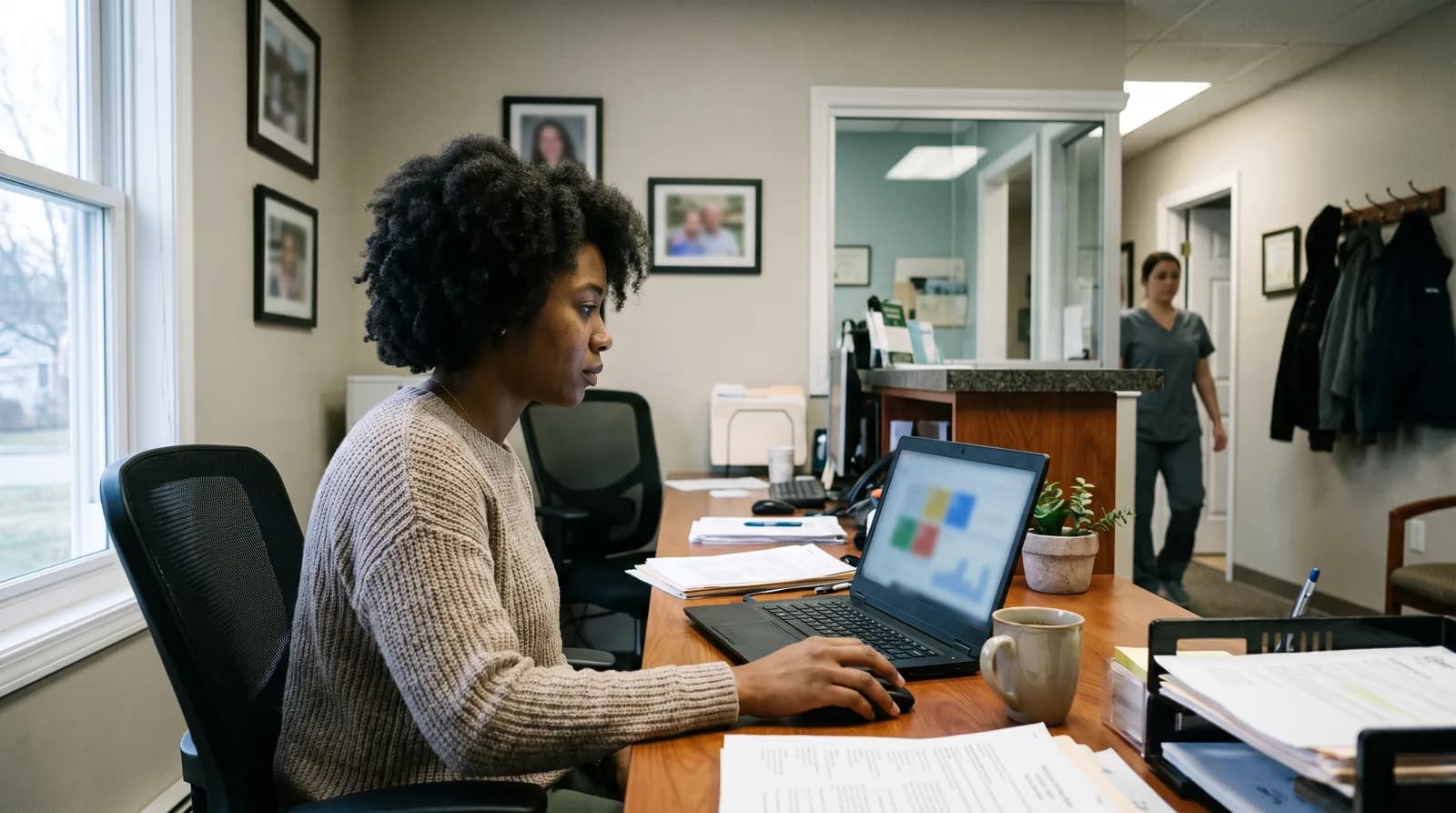
Yes. When a front desk is buried under back-to-back calls during the day and goes dark after closing, patients do not wait. They dial the next practice on their search results, and the appointment you never knew existed becomes someone else's new patient. The lost-patient problem is rarely one dramatic event; it is dozens of small, invisible misses each month.
Most practice owners picture missed calls as an after-hours problem only. In reality, the same overwhelm shows up at lunch, during morning huddles, and whenever two patients arrive at once. A phone that rings out at 1 p.m. costs you the same patient as a phone that rings out at 8 p.m. If your lines are frequently jammed, the deeper issue may be capacity rather than hours, which is why a dental office phone that is always busy and an overwhelmed front desk so often travel together.
The final step is the dangerous one. A voicemail at least leaves a trace; a silent hang-up leaves nothing. That is why missed-call loss is so easy to underestimate and why dental voicemail quietly loses patients long before anyone notices a dip in the new patient numbers.
What Does “Missed After Hours Calls” Mean in a Dental Practice?
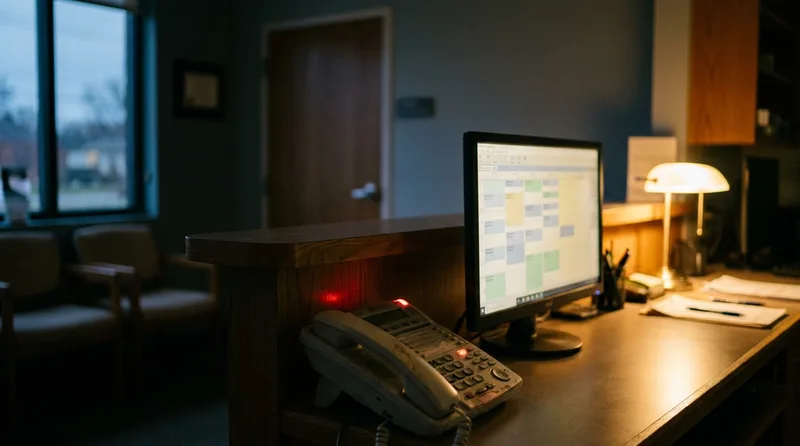
A missed after hours call is any patient or prospective patient phone call that is not answered by a live person or an automated system outside normal office hours. These include evenings, weekends, and holiday periods when the front desk team is not staffed.
Missed calls can occur even during business hours when lines are busy or staff are assisting in-office patients. Together, these missed interactions represent lost opportunities to book appointments, address patient concerns, and reinforce trust in your practice.
Where Do Calls Actually Go?
It helps to separate three situations. A call can ring out unanswered, roll to a voicemail box the patient never leaves a message in, or reach an answering service that takes a message but cannot book anything. In every case the patient waits until morning, and many do not.
In response to this operational gap, dental practices are adopting AI reception for dental offices to provide 24/7 responsiveness without needing round-the-clock staff.
Why Do After Hours Calls Matter for Patient Retention?
Patients no longer tolerate voicemail or long waits for a return call. Many prospective patients choose the first practice that answers the phone, which means unanswered calls directly translate to lost patients.
Who Calls After Hours?
After hours, callers often include:
-
People seeking emergency dental care
-
Patients wanting to schedule during their own off-work hours
-
Existing patients with billing or insurance questions
-
Rescheduling requests that they want handled immediately
When these calls are not handled promptly, patients may move on to another practice that answers more responsively.
The American Dental Association treats patient relations as a core part of practice management, and federal sources such as the CDC oral health program and NIDCR data and statistics document how common dental problems are across the country. Behind each of those problems is a person who may call at an inconvenient hour.
The compounding math of a quiet phone
A single overwhelmed afternoon rarely registers on a profit-and-loss statement. But missed calls compound: every unbooked new patient also means no recare, no referrals, and no treatment plan over the years that patient might have stayed. To translate your own ring-outs into dollars, walk through the true cost of missed dental calls and calculate yours.
What Is the Hidden Cost of Unanswered Calls?
The hidden cost of unanswered calls is lost patients, lost trust, and lost production, not just one missed conversation. Each ring-out can mean an unbooked new patient, an unresolved emergency, or a rescheduling request that goes to a competitor.
Where Does the Cost Show Up?
Every missed call has a cost beyond the immediate phone interaction:
-
Lost new patient opportunities: Prospective patients who call after hours may choose a competitor who picked up instead of leaving voicemail.
-
Reduced patient satisfaction: Repeated delays in communication can erode trust even among existing patients.
-
Operational inefficiency: Staff spend extra time catching up on call back efforts instead of focusing on in-office patients.
-
Revenue leakage: Missed calls can mean missed treatments, consultations, or follow-ups.
Dental trade media such as Dentaltown regularly treats front office staffing and phone coverage as a practice management issue, because every unanswered call is a book-or-lose decision the caller makes in seconds.
How Do You Size It?
A practical way to size the problem is to count rather than guess. Pull one month of call logs, mark the calls that went unanswered or to voicemail, and note how many were new patient inquiries.
Revenue leakage does not stop at the first missed call. Patients who fall out of recall also slip away quietly, which is why automating recall reminders that patients actually respond to closes a related gap in the same phone system.
What Patterns Cause Missed After Hours Calls?
Missed after hours calls follow three patterns: evenings and weekends when the office is closed, busy stretches when staff are with patients, and urgent problems that arrive at any hour. Knowing which dominates tells you whether you need more capacity or wider coverage.
Understanding call patterns helps in designing better coverage:
-
Peak times during business hours: Mid-morning, lunch rush, and late afternoon often see high call volumes.
-
Outside standard office hours: Patients calling after work or on weekends seek convenience and immediate answers.
-
Emergencies and urgent inquiries: Pain, injury, or sudden issues do not follow a schedule.
These patterns suggest that simply extending staff hours is not a practical solution for most practices. Instead, technology-assisted call handling systems can serve as a reliable support.
How Do You Find Your Pattern?
To see which pattern is yours, group missed calls by hour and day. A cluster between 5 p.m. and 8 p.m. points to a coverage gap, while a lunchtime spike points to a staffing and routing problem.
Post-treatment patients calling with a question or concern are another group easy to lose after hours. See why post-treatment follow-up calls matter for retention for more on this pattern.
How Does AI Reception Improve Call Handling?
AI reception improves call handling by answering every call immediately, working out why the patient called, and acting on your practice rules, such as booking a visit, capturing details, or escalating an emergency. It runs around the clock, even when the office is closed.

What Can It Handle?
AI reception technologies use natural language processing to answer phone calls, understand caller intent, and provide responses based on practice workflows. These systems can:
-
Answer calls 24/7
-
Schedule or reschedule appointments
-
Handle frequently asked questions
-
Capture caller information for staff follow-up
-
Route urgent calls based on predefined rules
A solution such as an AI dental receptionist operates continuously, ensuring that no call goes unanswered and important details are logged for later staff action.
How After-Hours Calls Get Triaged Instead of Lost
Not every after-hours call is an emergency, and not every one can wait. The value of structured call handling is that each call is sorted and acted on rather than dropped into a single next-morning voicemail queue. The table below shows how common after-hours calls map to an appropriate response.
Just how much this pattern costs a practice in lost trust and revenue is worth seeing in full, why after-hours dental calls matter more than most owners realize lays out the data behind it.
| Type of after-hours call | What the patient wants | Appropriate handling |
|---|---|---|
| Dental emergency (pain, swelling, trauma) | Immediate guidance and triage | Identify urgency from caller language and escalate per your rules |
| New patient appointment request | To book while motivated | Capture details and book or hold a slot for morning confirmation |
| Reschedule or cancellation | To adjust without waiting on hold | Log the change and free the slot for another patient |
| Billing or insurance question | A quick answer or a callback | Answer common questions and queue the rest for staff |
This is the difference between coverage and a true safety net. Sorting calls by intent is the same triage logic explored in how AI triages urgent versus routine dental calls, and it scales without asking your team to stay late. For the broader picture of keeping every line covered, a complete guide to dental phone coverage maps the full workflow.
Beyond simply answering the phone, the same conversational systems can proactively reach out. Using AI voice assistants to cut down on no-shows extends the coverage benefit past the call itself.
How Should a Dental Practice Evaluate AI Reception?
A practice should evaluate AI reception on operational fit: coverage during closed hours, accuracy with varied patient phrasing, scheduling integration, reliable escalation of urgent calls, and clear summaries for staff. Price matters, but only after those five checks are met.
What Should You Check First?
Practice owners considering call handling improvements should evaluate options based on operational fit rather than technical hype. Key criteria include:
- Coverage Scope: Does the system provide 24/7 handling or only during selected hours?
- Natural Language Understanding: Can it interpret varied patient phrasing reliably?
- Integration with Scheduling: Does it align with existing appointment systems to reduce manual work?
- Escalation Rules: Can it identify urgent calls and route them appropriately?
- Documentation and Follow-Up: Are call summaries clear for staff review and action?
Does Integration Matter?
Integration is where most evaluations get decided, because the system has to read and write to the same appointment book your team already uses, whether that is Eaglesoft or another practice management platform.
Cost is usually the deciding factor once the operational fit checks out. How long an AI receptionist takes to pay for itself walks through the payback math practices use to justify the investment.
What Does Better Call Coverage Look Like in Practice?
Better call coverage looks like fewer silent ring-outs, urgent calls reaching a person quickly, and routine requests booked or logged before morning. It shows up first in call logs and front desk workload, well before new patient numbers.
Many practices that adopt enhanced call handling systems see measurable improvements in call capture and patient satisfaction. For example, practices report fewer unanswered calls during busy periods and a smoother distribution of call responses across the day, freeing staff to focus on in-office patients.
What Does It Look Like?
Consider a hypothetical practice that closes at 5 p.m. A patient with a cracked tooth calls at 6:30 p.m., reaches voicemail, and books with the next office that answers. With AI reception, the same call is answered, flagged as urgent, and escalated to the on-call team member under the practice’s rules.
After the first month, review answer rate by hour, appointments booked from after hours calls, and how quickly staff responded to urgent ones.
Adoption should be paired with regular review of call logs, training on escalation workflows, and ongoing adjustment based on real patient language patterns.
The same after-hours gap that costs new patients also lets existing ones drift away quietly. Reaching overdue patients through AI-powered outreach is often the fastest way to win them back once coverage is in place.
What Concerns Do Practice Owners Raise About AI Reception?
Practice owners most often worry about whether AI reception replaces staff, whether patients will accept it, and whether patient information stays protected. The short answers: it supports staff, patients accept it when a human option exists, and protection depends on what the vendor can document.
Practice owners often express valid concerns about automation:
Will it replace my front desk staff?
No. AI reception is a support tool designed to handle routine and after hours calls, while human staff continue to manage in-office care and complex interactions.
Will patients feel uncomfortable speaking to an automated system?
Modern AI reception uses conversational language and natural speech patterns to make interactions smooth and understandable.
Is it secure and compliant?
Systems designed for healthcare call handling adhere to data privacy standards to protect patient information.
Before signing with any vendor, ask for:
- A signed business associate agreement covering patient information
- How call recordings and transcripts are stored, encrypted, and retained
- Who on the vendor side can access call data, and how that access is logged
- A clear process for handing urgent calls to a human
How Can a Practice Improve After Hours Call Responsiveness?
A practice can improve after hours call responsiveness in five steps: measure when calls are missed, set coverage goals, choose a fitting system, define escalation rules, and review real call data regularly. The order matters because each step depends on the one before it.

What Are the Five Steps?
-
Assess current call patterns across days and hours.
-
Define clear operational goals for call coverage and response time.
-
Select a solution that matches your practice needs for language understanding and integration.
-
Set escalation and routing rules to ensure urgent cases are handled promptly.
-
Monitor and refine workflows based on real call data.
What Should an Overwhelmed Practice Do First?
Start by separating the two problems hiding inside "we miss calls": daytime overwhelm and after-hours silence. They feel like one issue but they have different fixes, and treating them together is why many practices stay stuck. Map your call volume across the week before changing anything.
If the pattern shows your team buckling under daytime peaks, the priority is capacity and routing rather than longer hours. If the gap is mostly evenings and weekends, the priority is coverage that does not require new payroll. The how-to side of that second problem is covered in answering dental calls after hours without hiring, while the daytime-capacity side is addressed in the signs and fixes for an overwhelmed dental front desk. Knowing what patients actually call about helps you decide which calls must reach a person and which can be handled automatically.
The takeaway for retention
Lost patients are not usually lost to a better dentist. They are lost to a faster phone. Closing the gap between when a patient calls and when someone responds is the most direct lever an overwhelmed practice has on retention.
Once you know your gaps, it helps to work from a structured plan rather than improvising hour by hour, building a formal after-hours booking coverage strategy lays out how to turn these steps into a repeatable schedule.
Conclusion
Missed after hours calls cost dental practices new patients, trust, and production, but the gap is fixable. Mapping when calls go unanswered, sorting urgent from routine, and adding AI reception that follows your escalation rules gives patients a response while your office is closed.
Missed after hours calls represent a tangible risk to dental patient retention and practice growth. By understanding common call patterns, evaluating operational gaps, and exploring AI-enhanced call handling, dental practices can improve responsiveness, capture more patient opportunities, and reduce the stress on front desk staff. Thoughtful implementation and ongoing review ensure that improved call coverage supports both patient experience and practice efficiency.
Start with one month of call data and an honest look at what happens to the calls you miss. If the gap is mostly evenings and weekends, a short demo of AI reception run against your own call flow will show quickly whether it fits.
Ready to See How DentiVoice Works in Your Practice?
If your front desk regularly misses calls, feels overwhelmed during peak hours, or struggles with after-hours coverage, the next step is seeing how AI call handling fits your actual workflow. The demo is designed to help practices evaluate fit, not to push immediate adoption.
Request a DentiVoice demo to walk through your call flows, escalation rules, and real examples using your actual front desk scenarios.
Request a DentiVoice demo to see how it would work for your front desk.
Frequently Asked Questions
If the practice does not have after-hours coverage, your call usually goes to voicemail and may not be returned until the next business day. Practices using AI or automated reception can answer immediately, collect details, and route emergency issues for faster follow-up.
Yes, many dental offices now allow after-hours scheduling through AI-assisted phone systems. These tools can book or request appointments 24/7, which helps patients who can only call in the evenings or on weekends.
Call your dental office first, even after hours. Offices with AI reception can identify emergency symptoms like pain or trauma and escalate the call for immediate guidance, rather than sending you straight to voicemail.
For many patients, yes. Modern AI reception systems use conversational language and can quickly help with scheduling, directions, or urgent concerns, often faster than waiting for a callback, especially when a staff member is available for complex requests.
No. AI reception covers calls the team cannot take, such as evenings, weekends, and busy peaks, then logs details and escalates urgent cases. Staff still run the office, make clinical decisions, and follow up on every message.
Look for 24/7 coverage, reliable emergency escalation, integration with your scheduling software, clear call summaries, and documented handling of patient data. Ask for a demo built around your own call scenarios before you commit.
Sources & References
- 1
- 2
- 3
- 4
- 5
- 6
Topics
Was this article helpful?
Written by
DentalBase Team
Expert dental industry content from the DentalBase team. We provide insights on practice management, marketing, compliance, and growth strategies for dental professionals.