Dental Patient Messaging Platforms Explained
Learn how dental patient messaging platforms use AI and SMS, WhatsApp, email, and web chat to cut no-shows, lift response rates, and ease front-desk workload.
Share:
Table of contents
Patient communication has become a critical success factor for dental practices. Missed appointments, low response rates, and delayed follow-ups cost clinics both time and revenue. This is where a dental patient messaging platform plays a transformative role.
With patients increasingly expecting fast, convenient, and digital interactions, dental practices must go beyond phone calls and manual reminders. Modern messaging platforms, especially those powered by AI, enable practices to engage patients efficiently while improving satisfaction and operational performance.
In this guide, we explain what dental patient messaging platforms are, how they work, and why solutions like Dentivoice are reshaping patient engagement.
The shift is already measurable. Text-based outreach reaches patients where they actually respond, while automated workflows quietly remove the repetitive tasks that pull front-desk teams away from in-person care. The numbers below show why practices are moving their everyday patient communication into a dedicated system.
What Is a Dental Patient Messaging Platform?
A dental patient messaging platform is a centralized communication system that allows dental practices to send, receive, and automate patient messages across digital channels such as SMS, WhatsApp, email, and web chat.
Unlike traditional communication methods, these platforms are designed to be scalable, automated, and patient-centric.
Core Purpose of Patient Messaging Platforms
The primary goal is to:
-
Improve patient engagement
-
Increase response rates
-
Reduce no-shows and cancellations
-
Save staff time
-
Deliver a consistent patient experience
By automating routine communications, dental teams can focus more on patient care and less on administrative tasks.
It helps to separate a messaging platform from a single-purpose reminder app. A reminder app sends one type of alert and stops there. A unified inbox brings every patient touchpoint, appointment reminders, recall nudges, billing questions, and new-patient intake, into one shared inbox the whole team can see. That single view is what prevents the dropped follow-ups and double-handled requests that quietly cost a practice production.
Choosing between the dozens of available tools is its own task. If you are comparing options feature by feature, our dental patient communication software buyer guide walks through the criteria that matter most for a dental workflow.
How Dental Patient Messaging Platforms Work
These platforms work by syncing with your practice management system, then triggering automated messages around appointments, recalls, and follow-ups. Patients reply on their preferred channel. AI or staff workflows then handle confirmations, rescheduling, and escalations in real time.
At their core, patient messaging platforms integrate with dental practice systems and operate in real time.
Step-by-Step Workflow
-
Patient data syncs from the practice management system
-
Automated messages are triggered based on events (appointments, recalls, follow-ups)
-
Patients respond via their preferred channel
-
AI or staff workflows handle responses, confirmations, or escalations
This creates a seamless communication loop between the clinic and patients.
The messaging loop at a glance
The integration step is what separates a dental-grade platform from a generic texting app. When the platform reads directly from your schedule, a confirmed appointment updates the operatory column without anyone retyping it, and a canceled slot can trigger an automated message to your waitlist. For practices on Open Dental, our guide to the Open Dental AI receptionist integration explains how that sync works in practice.
Key Features of a Dental Patient Messaging Platform
The most effective tools share a core feature set: automated appointment reminders and confirmations, two-way conversational messaging, AI-powered responses, multi-channel support across SMS, WhatsApp, email, and web chat, plus automated recall and re-engagement campaigns tied to your schedule.
Not all platforms are created equal. The most effective solutions include the following essential features.
Appointment Reminders and Confirmations
Automated reminders significantly reduce no-show rates by:
-
Sending timely alerts
-
Allowing patients to confirm or reschedule instantly
-
Reducing front-desk call volume
Bold takeaway: Practices using automated reminders report up to 40% fewer missed appointments.
Why confirmations beat reminders alone
A one-way reminder tells a patient about an appointment. A confirmation request lets them act on it, tapping to confirm, reschedule, or cancel, which is what actually frees the slot when plans change. Our walkthrough of automated dental appointment confirmations covers the timing and message sequence that earn the highest response.
Two-Way Messaging
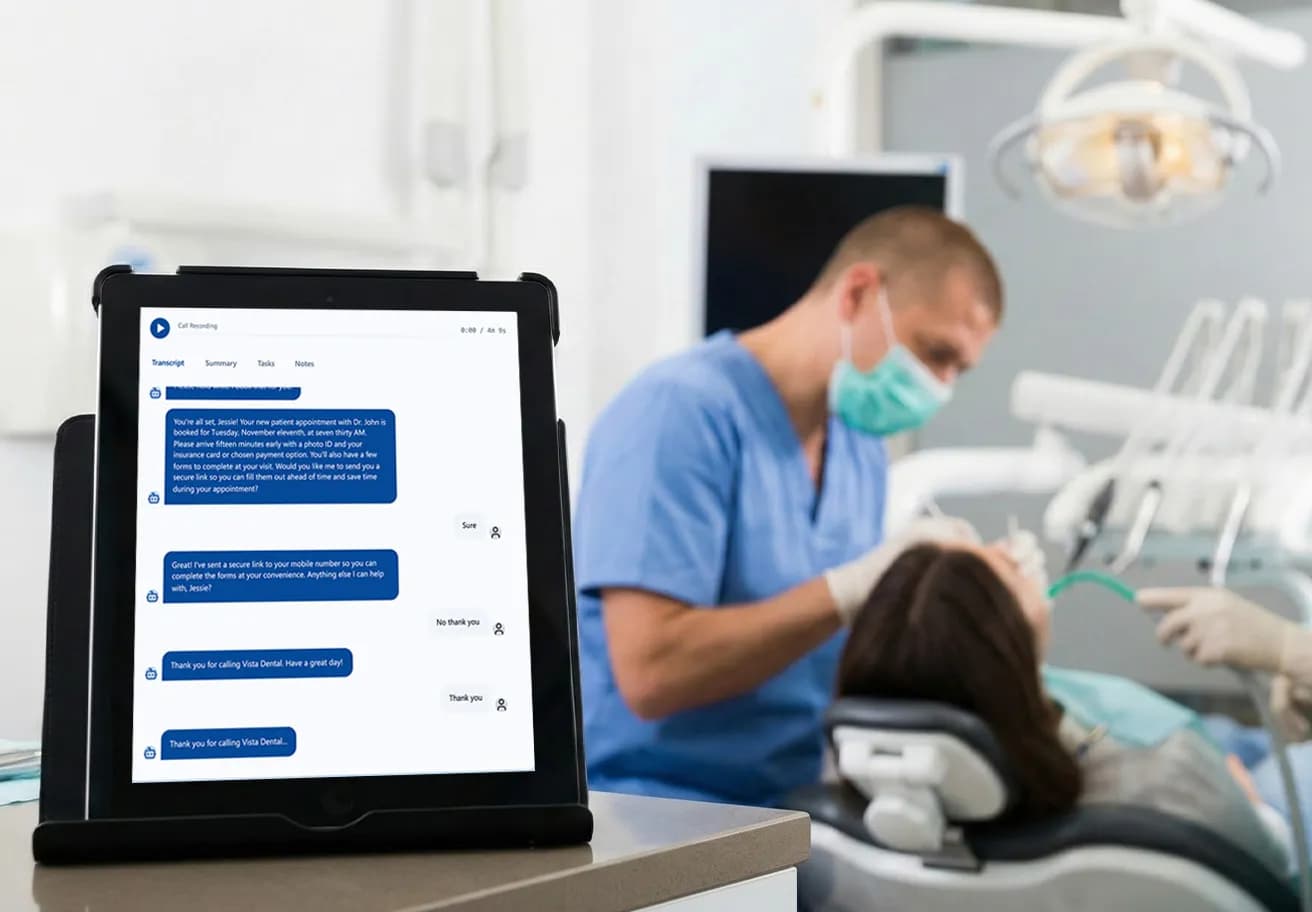
Two-way communication enables patients to respond naturally, ask questions, or request changes without calling the clinic.
Benefits include:
-
Faster response times
-
Higher patient satisfaction
-
Reduced workload for staff
AI-Powered Conversational Messaging
Advanced platforms like Dentivoice leverage AI to:
-
Understand patient intent
-
Provide instant, accurate responses
-
Route complex inquiries to staff only when needed
This allows practices to deliver 24/7 patient communication without increasing staffing costs.
Multi-Channel Communication
Modern patients expect flexibility. Leading platforms support:
-
SMS
-
WhatsApp
-
Email
-
Web chat
Meeting patients where they already are dramatically improves engagement rates.
| Channel | Best used for | Why it works |
|---|---|---|
| SMS | Confirmations, reminders, quick questions | Highest open rate; works on every phone |
| Two-way conversations, rich reminders | Popular with many patient demographics | |
| Recall campaigns, post-treatment instructions | Best for longer, detailed information | |
| Web chat | Pre-booking questions, new-patient intake | Captures website visitors before they leave |
Related: Phone tag and full voicemail boxes are where most missed connections happen, and messaging is the direct fix. See why dental voicemail loses patients →
Automated Recall and Re-engagement Campaigns
Patient messaging platforms help practices stay proactive by:
-
Sending hygiene recall reminders
-
Re-engaging inactive patients
-
Promoting follow-up treatments
These campaigns drive repeat visits and increase lifetime patient value.
Recall is where messaging often pays for itself fastest. A lapsed-hygiene list is rarely a lost-patient list, it is usually a contacted-once-and-forgotten list. Automated, multi-touch recall sequences keep reaching out on the channels patients respond to, without adding calls to the front-desk queue.
Related: The wording and cadence of a recall message decide whether it gets a reply. Read how to write recall reminders patients answer →
Dental Patient Messaging Platforms: Feature Comparison
|
Feature |
Generic Messaging Tools |
DentiVoice |
|
Designed for Dental Workflows |
❌ Not dental-specific |
✅ Built for appointments, recalls, and follow-ups |
|
Two-Way Patient Messaging |
⚠️ Limited or manual |
✅ Fully automated and conversational |
|
AI-Powered Conversations |
❌ Template-based only |
✅ Dental-trained AI understands patient intent |
|
Appointment Reminders |
⚠️ Basic reminders |
✅ Smart reminders with confirmation & rescheduling |
|
Multi-Channel Support |
⚠️ Usually SMS or email only |
✅ SMS, WhatsApp, email, and web chat |
|
PMS Integration |
❌ Requires manual syncing |
✅ Seamless integration with Dentrix, Eaglesoft, etc. |
|
Front-Desk Workload Reduction |
⚠️ Partial |
✅ Significant automation of routine tasks |
|
HIPAA Compliance |
⚠️ Not always healthcare-ready |
✅ Designed for strict HIPAA compliance |
|
Scalability |
❌ Limited |
✅ Enterprise-grade for growing practices |
Dental-specific messaging platforms like Dentivoice are designed to align with real clinical workflows rather than forcing practices to adapt generic tools.
Benefits of Dental Patient Messaging Platforms
A dedicated messaging platform delivers measurable benefits: higher patient engagement through text-based outreach, fewer no-shows and last-minute cancellations, improved front-desk efficiency, and a smoother patient experience. Together, these gains protect production hours. They also strengthen long-term patient loyalty.
Implementing a dental patient messaging platform delivers measurable business and clinical benefits.
Increased Patient Engagement
Patients are far more likely to respond to text-based messages than phone calls.
Key insight: SMS and WhatsApp messages achieve response rates of over 90%, compared to under 30% for phone outreach.
Reduced No-Shows and Last-Minute Cancellations
Automated reminders and confirmations give patients control and clarity, reducing missed appointments and schedule gaps.
Improved Operational Efficiency
By automating repetitive communication tasks, staff can:
-
Spend less time on calls
-
Focus on in-clinic patient care
-
Handle higher patient volumes without burnout
Related: If your team is already stretched thin, automating routine messages is one of the quickest pressure valves. Spot the signs of an overwhelmed dental front desk →
Enhanced Patient Experience
Fast, convenient, and personalized patient communication builds trust and loyalty. Patients feel informed, respected, and supported throughout their care journey.
Why AI Is Changing Dental Patient Messaging
AI is changing dental patient messaging by turning static, template-based notifications into real conversations. It understands patient intent and replies in natural language. It also predicts who may miss an appointment and times outreach for when patients are most likely to respond, all while supporting staff.
Traditional messaging platforms rely on static templates. AI-powered platforms go further.
Smarter Conversations, Not Just Notifications
AI enables:
-
Context-aware responses
-
Natural language understanding
-
Personalized messaging at scale
This turns patient communication into a conversation, not a broadcast.
Predictive Engagement
Advanced AI systems can identify:
-
Patients likely to miss appointments
-
Optimal message timing
-
Best channels for each patient
This leads to higher engagement and better outcomes.
Just as important, AI extends your communication coverage beyond office hours. A patient who texts a question at 9 p.m. gets an immediate, accurate reply instead of waiting until morning, and the conversation is summarized for staff to review the next day. This supports your team rather than replacing it, handling the routine volume so people can focus on the conversations that truly need a human.
Related: After-hours coverage no longer requires a night shift or an answering service. Learn how to answer dental messages after hours without hiring →
The same systems also generate data worth acting on. Tracking response rates, reschedule volume, and channel performance turns everyday messaging into a clear picture of how your front office is performing. Our overview of dental call and message analytics highlights the metrics most tied to revenue.
Why Dentivoice Stands Out?
Dentivoice is purpose-built for dental practices seeking smarter, scalable communication.
What Makes Dentivoice Different?
-
Dental-specific AI messaging workflows
-
High-response SMS and WhatsApp automation
-
Seamless integration with dental systems
-
HIPAA-compliant, secure communication
-
Enterprise-grade reliability for growing practices
Dentivoice is not just a messaging tool it is a patient engagement platform designed for modern dentistry.
Related: Reaching every patient also means meeting language needs, automatically. See how AI handles Spanish-speaking patient communication →
See DentiVoice in your own workflow
Book a short walkthrough and see how dental-specific messaging fits alongside your schedule, recalls, and follow-ups.
Explore DentiVoice →Choosing the Right Dental Patient Messaging Platform
To choose the right tool, weigh ease of use for staff, AI and automation depth, multi-channel support, integration with your existing practice management system, data security and HIPAA compliance, and how well the platform scales as your practice grows over time.
When evaluating platforms, dental practices should consider:
Key Evaluation Criteria
-
Ease of use for staff
-
AI and automation capabilities
-
Multi-channel support
-
Integration with existing systems
-
Data security and compliance
-
Scalability as the practice grows
Selecting the right platform directly impacts both patient satisfaction and clinic profitability.
The Future of Dental Patient Communication
The future of dental patient communication is increasingly conversational and AI-driven. Expect fully automated patient journeys, voice-to-text messaging, predictive scheduling, and deeper personalization built on practice data. Practices that adopt these tools early will hold a clear competitive advantage.
As patient expectations continue to evolve, messaging platforms will become the primary communication channel for dental practices.
Future trends include:
-
Fully AI-driven patient journeys
-
Voice-to-text conversational messaging
-
Predictive scheduling and engagement
-
Deeper personalization through data insights
Practices that adopt these technologies early will gain a competitive advantage.
Conclusion: Transforming Dental Engagement with Smart Messaging
A dental patient messaging platform is no longer optional it is essential for modern, patient-focused practices.
By combining automation, AI, and multi-channel communication, platforms like Dentivoice help dental clinics:
-
Increase engagement
-
Reduce no-shows
-
Improve efficiency
-
Deliver exceptional patient experiences
As dentistry continues to digitalize, smart messaging platforms will define the future of patient communication.
Bring every patient message into one place
DentiVoice combines AI two-way messaging, SMS and WhatsApp automation, and direct practice-management integration, built for the way dental teams actually work.
Get started with DentiVoice →Messaging is one piece of a larger intake and communication overhaul. the complete guide to reducing admin time on intake covers the full plan, and how AI verification calls handle insurance checks upfront covers what happens before a patient ever gets a text.
Frequently Asked Questions
Reputable dental patient messaging platforms are built with HIPAA compliance in mind. They offer secure data handling, encrypted messaging, and role-based access controls that protect patient information while keeping everyday communication fast and efficient for both staff and patients.
Yes. Most modern platforms integrate directly with dental practice management systems such as Dentrix, Eaglesoft, and Open Dental. That sync means appointment reminders, confirmations, recalls, and follow-ups are automated and the schedule updates without anyone retyping patient data by hand.
They automatically handle routine interactions like appointment confirmations, rescheduling requests, and common questions. This lowers inbound phone volume and lets staff focus on in-clinic patient care. The goal is to support the team and absorb repetitive tasks, not to eliminate front-desk roles.
Dental-specific platforms are built around real dental workflows, including appointments, hygiene recalls, and treatment follow-ups. They need little customization and are far easier for dental teams to manage at scale than generic texting apps that were never designed for a clinical schedule.
DentiVoice is a dental-specific platform that combines AI two-way communication, SMS and WhatsApp automation, and direct practice-management integration. It helps practices engage patients efficiently across every channel while keeping communication HIPAA compliant and aligned with how dental teams actually work day to day.
Many practices see measurable gains, such as higher response rates and noticeably fewer missed appointments, within the first few weeks. The exact timeline depends on how heavily the platform is used and how fully the front-desk team adopts the new messaging workflow.
Leading platforms support SMS, WhatsApp, email, and web chat together in one shared inbox. Meeting patients on the channel they already prefer is what drives the higher engagement and response rates these dental-specific tools are consistently known for.
Sources & References
- 1
Was this article helpful?
Written by
DentalBase Team
Expert dental industry content from the DentalBase team. We provide insights on practice management, marketing, compliance, and growth strategies for dental professionals.