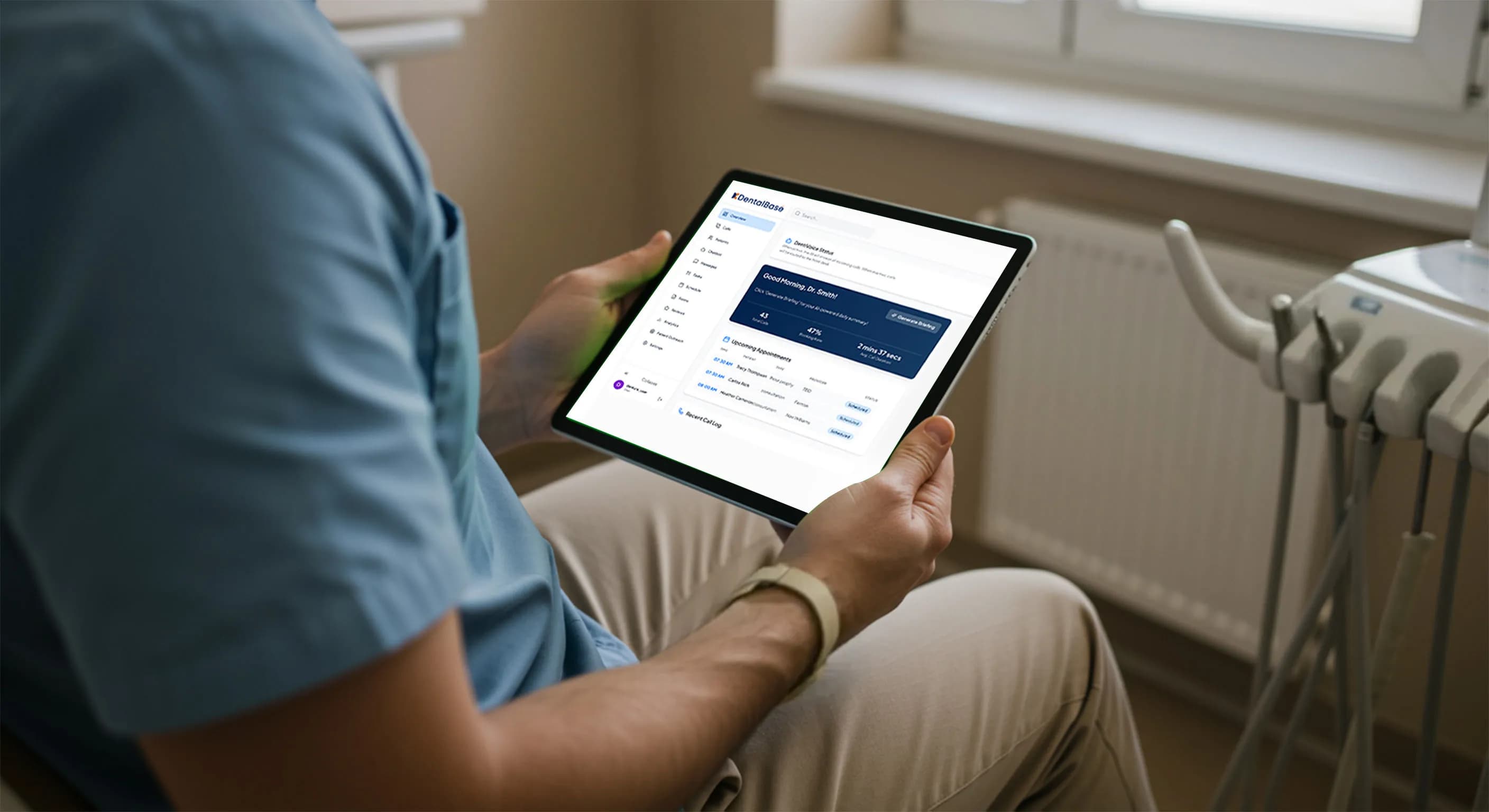
Dental Office Monday Morning Phone Calls: Handle the Rush
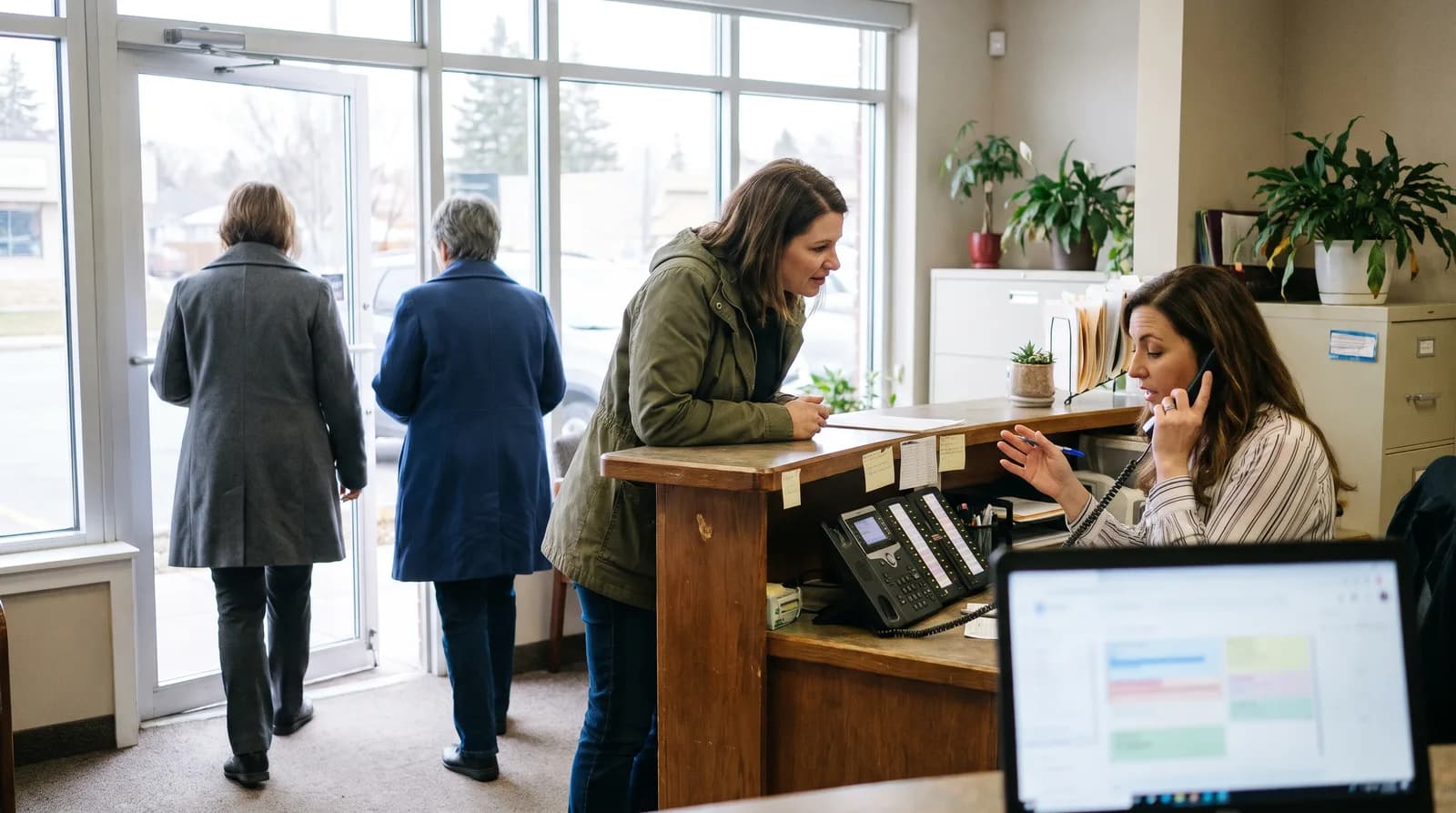
Dental office Monday morning phone calls and walk-ins bring the heaviest load. Learn how to plan staffing and call support so your team handles the rush.
Share:
Table of contents
Dental office Monday morning phone calls arrive in a wave. The weekend voicemail list is waiting, patients are reaching the counter, and every line is lit before the first appointment starts. By 8:15 your team feels it. Studying your own call volume patterns is the fastest way to plan the rush instead of reacting to it.
This guide covers the calls that arrive first, how to staff the opening hours and what can be handled before the doors open. You'll also get a fill-in strip for your weekday call load and a short pre-open checklist. We won't quote a national Monday number, because none was verified. Your own phone report is the source that counts. It's written for owners and office managers who want a plan they can test within a month.
Why are dental office Monday morning phone calls the busiest?
Monday mornings often run heaviest because the office has been closed since Friday, so weekend voicemails, reschedules and new patient questions all reach the front desk at the same moment. Your own call log is the only reliable way to confirm that pattern for your practice.
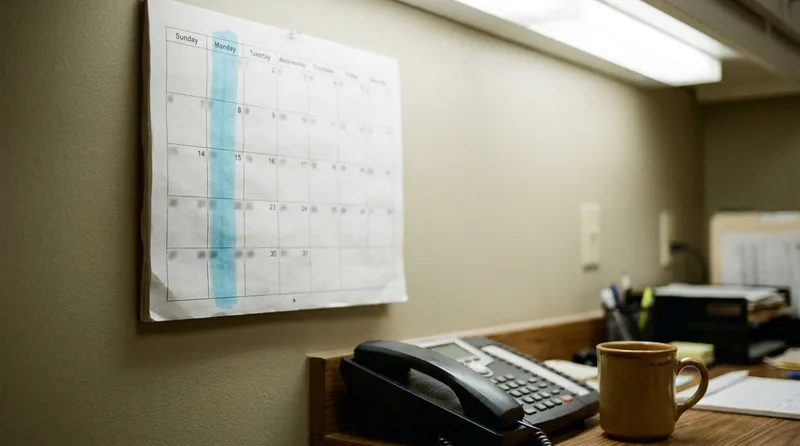
Picture what piles up. A patient who noticed a sore tooth on Saturday waits until opening to call. Someone who needs to move Tuesday's visit does it first thing. Meanwhile the first patients of the day are already at the counter. That's why Monday mornings feel so different from a quiet Tuesday afternoon.
What builds up over the weekend
Typical weekend leftovers include:
- Voicemails and web inquiries that arrived after Friday close, some of them urgent.
- Reschedule and cancellation requests from patients juggling the week ahead.
- New patient calls from people who finally had time to look for a dentist.
- Billing and insurance questions prompted by a statement in the mail.
- Check-in traffic at the counter, competing for the same two people.
Why a missed call costs more at opening
A Dental Economics analysis cites industry benchmarks showing practices miss 30% to 38% of incoming calls during business hours. It also assumes that 60% to 65% of those missed calls are new-patient related. Those are national benchmarks, not Monday counts. Still, they show why the first hour matters: a caller who gets no answer at 8:05 often moves on to the next practice on the list.
Check whether your office follows the pattern
Don't take any article's word for it, this one included. Pull the call report from your phone system and write the number of calls between 8:00 and 10:00 for each weekday into the strip below.
Your weekday call load, 8:00 to 10:00
Write each day's call count in the blank and shade the bar. Monday is outlined in orange.
Source: your own phone system call report. The bars are blank on purpose.
Related: If the phone feels busy all week and not only on Mondays, the causes are different. Real reasons a dental office phone is always busy, and fixes →
What kinds of calls arrive first?
The first calls are usually routine and time-sensitive: voicemail callbacks, reschedules, new patient inquiries, billing questions and a few urgent problems from the weekend. Sorting them by type lets your team answer urgent callers first and batch the rest.
Six call types to sort on Monday
Not every call deserves the same speed. Use this working list when you sort a Monday call log:
- Urgent problems: swelling, a broken tooth, bleeding or trauma that can't wait for a callback.
- Reschedules and cancellations: patients moving the week's visits. Each one opens a slot you may want to refill.
- New patient inquiries: callers deciding where to book, so speed matters most.
- Confirmations and arrival questions: "Is my visit still on?" and "Where do I park?"
- Billing and insurance questions: statements, balances and coverage checks. Many need a staff member.
- Voicemail callbacks: the overnight and weekend backlog.
For a longer list, see the guide to the top dental call types patients call about. Compare it with your own log, because every office has its own mix.
Rank the Monday backlog
Work the list from the top. Urgent problems go first, because a delay can hurt the patient. New patient inquiries come next, since those callers are still choosing a practice. Reschedules follow, because each one frees a slot you can refill. Routine questions and billing calls come last, unless the caller says it can't wait.
Which calls need a person first
Urgent problems, upset callers, clinical questions and billing disputes should reach a person quickly. Everything else can wait a few minutes or be handled by call support. Writing that rule down keeps it consistent when the desk gets busy. If you already use call support, learn how AI triages urgent and routine calls before you set your handoff rules.
Planning your week around the phones?
Browse practice management guides on staffing, call coverage and front desk workflow.
Practice management guides →How do you staff for the surge?
Staff for the surge by matching coverage to your own hourly call data, protecting one phone seat for the first two hours and giving overflow calls a defined path. Add people or call support only where your log shows a real gap.
Start with your own numbers
Say your log shows 48 calls between 8:00 and 9:00 on Monday and 22 at the same hour on Wednesday. That's an illustration, not a benchmark. But a gap like that, and not a national average, tells you how much extra cover the first hour needs.
Compare your staffing options
| Option | How it helps on Monday | Watch for |
|---|---|---|
| Staggered start times | A second person is at the desk before the first patients arrive. | Needs team agreement and a fair rotation. |
| Protected phone seat | One person answers phones for the first two hours while check-in stays at the counter. | Needs a written rule for urgent and upset callers. |
| Overflow to call support | Calls beyond your capacity reach an answering path instead of ringing out. | Set clear rules for what must reach staff. |
| Callback window | Non-urgent callers hear a set time for a return call. | Keep the promise, or patients stop trusting it. |
Protect the first two hours
Give the phone seat one job: answer calls and take clean messages. Check-in and payments stay at the counter. Write a one-line rule for urgent callers, such as who takes them and how fast, and post it where the phone seat can see it. A rule that lives only in someone's head fails on the busiest morning.
Plan for tight staffing
Staffing is tight almost everywhere. When the ADA Health Policy Institute asked dentists in late 2024 about their biggest challenge for 2025, about 62% named staffing shortages, according to ADA News. Hiring another person isn't always an option, which is why overflow planning matters.
Schedule changes also work better when the team helps design them. The ADA keeps a hub of resources on managing dental teams if you want a starting point for that conversation.
Where call support fits
Call support covers the overflow, and your team still owns every patient conversation that needs judgment. That's the line to hold.
Related: Overflow rules deserve their own plan. How to handle dental call overflow without more staff →
What can be automated before doors open?
Routine, repeatable work can be automated before the doors open: appointment confirmations, recall reminders, answers about hours and location, and message capture for callbacks. Urgent, upset or clinical callers still reach a person through a clear handoff rule.
Which routine calls come off the Monday line
Think of it as taking the predictable calls off the Monday line. Automated appointment confirmations and recall reminders that get answered handle routine outreach, so fewer patients need to phone in just to check. Call support can also answer simple questions overnight and hand your team clean summaries instead of a pile of sticky notes.
What call support should hand back
Ask call support for a short summary of each call: who called, why, how urgent it was and a working callback number. A clear summary helps your team rank the morning callbacks quickly.
Run a pre-open routine
A short, repeatable routine matters more than any single tool. Here's one that fits the window before you open the door:
- Open the overnight and weekend voicemail list and mark urgent items first.
- Scan today's schedule for cancellations, gaps and provider changes.
- Name who owns the phones and who owns the counter, plus a backup for each.
- Check your call support settings: opening hours, holiday notes and handoff numbers.
- Assign the first callbacks by name, so nothing waits for someone to volunteer.
- Hold a two-minute huddle on urgent cases and on who steps in if the phones jump.
Monday pre-open readiness card
Print it, tick it each Monday and edit the items to match your office.
Phones
Schedule
Call support
Team
Keep privacy in the routine
Whatever answers your phones handles protected health information. The HIPAA Privacy Rule requirements call for training workforce members on privacy policies and for appropriate safeguards. Add your call support setup to that training. Don't treat it as someone else's job.
How do you measure the Monday peak?
Measure the Monday peak by logging calls per hour, answered versus missed calls and voicemail return time, then comparing Monday with the other weekdays. Your phone system's report is enough to start, and four weeks of data shows whether the pattern holds.

Which numbers to track
Keep it to three measures. Calls per hour shows when the phones peak. Answered versus missed shows how many callers you lost. Voicemail return time shows how long the backlog waits. For a longer menu, see seven dental call analytics metrics that drive revenue.
Review it for four Mondays
Compare each Monday with the Wednesday of the same week, then compare Monday with itself over a month. One busy Monday could be a holiday hangover. Four in a row is a pattern. When you review the data, look at the gap between Monday and Wednesday first, and change one thing at a time so you know what worked.
Turn the numbers into one change
If missed calls cluster in the first hour, try a staggered start. If voicemails wait too long, assign callbacks by name. If Monday looks like every other day, leave the schedule alone. The log should earn each change.
For national context on staffing and practice economics, the ADA Health Policy Institute publishes industry reports and dental industry data. Use them to frame the conversation, then let your own log make the decision.
Dental office Monday morning phone calls feel unpredictable until you count them. Pull last week's call report and fill in the strip above. Then look hard at 8:00 to 10:00.
If Monday stands out, you have your reason to change the schedule. If it doesn't, you've avoided a staffing fix you didn't need. Either way, the decision comes from your data, and your team gets a calmer start to the week.
Your next step is small. Block ten minutes today and pull the report.
Give your Monday team some backup.
See how an AI call assistant supports your front desk during the opening rush while your team keeps every conversation that needs judgment.
Explore AI dental receptionist guides →Frequently Asked Questions
Mondays are often busy because the office has been closed since Friday, so weekend voicemails, reschedules and new patient inquiries arrive together at opening. Confirm the pattern with your own call log, because no national figure shows how busy your Monday is.
Start with your own hourly call data. Protect one phone seat for the first two hours, stagger start times if you can, and give overflow calls a set path. Add staff or call support only where your log shows a real gap.
AI can answer routine questions about hours and location, take messages and send appointment confirmations within your rules. Urgent, upset or clinical callers should reach a person through a clear handoff rule, so your team keeps every conversation that needs judgment.
Log calls per hour, answered versus missed calls and voicemail return time for each weekday, using your phone system's report. Compare four Mondays against the other days. A repeating gap between Monday and Wednesday is your peak.
Yes, if you can keep it. A stated window for non-urgent returns tells patients when to expect a call and lets the team finish check-in first. Urgent callers should always have a way to reach a person.
Sources & References
- 1
- 2
- 3
- 4
- 5
Topics
Was this article helpful?
Written by
DentalBase Team
Expert dental industry content from the DentalBase team. We provide insights on practice management, marketing, compliance, and growth strategies for dental professionals.