How Dental AI Receptionists Improve Front Desk Operations in Dental Practices
Learn what dental AI receptionists do, how they support front desk operations, what they can do, and how to evaluate them for your practice.
Share:
Table of contents
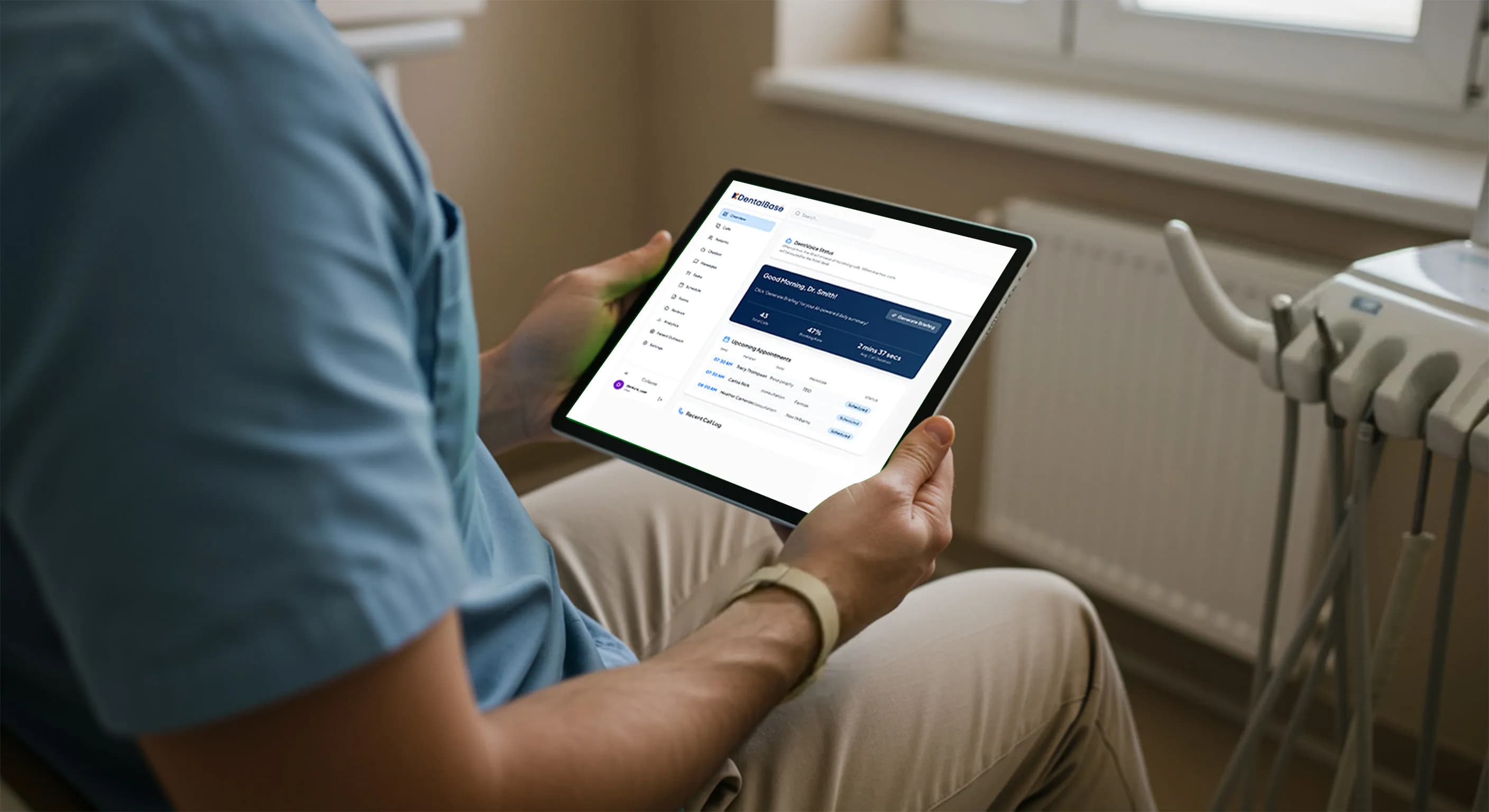
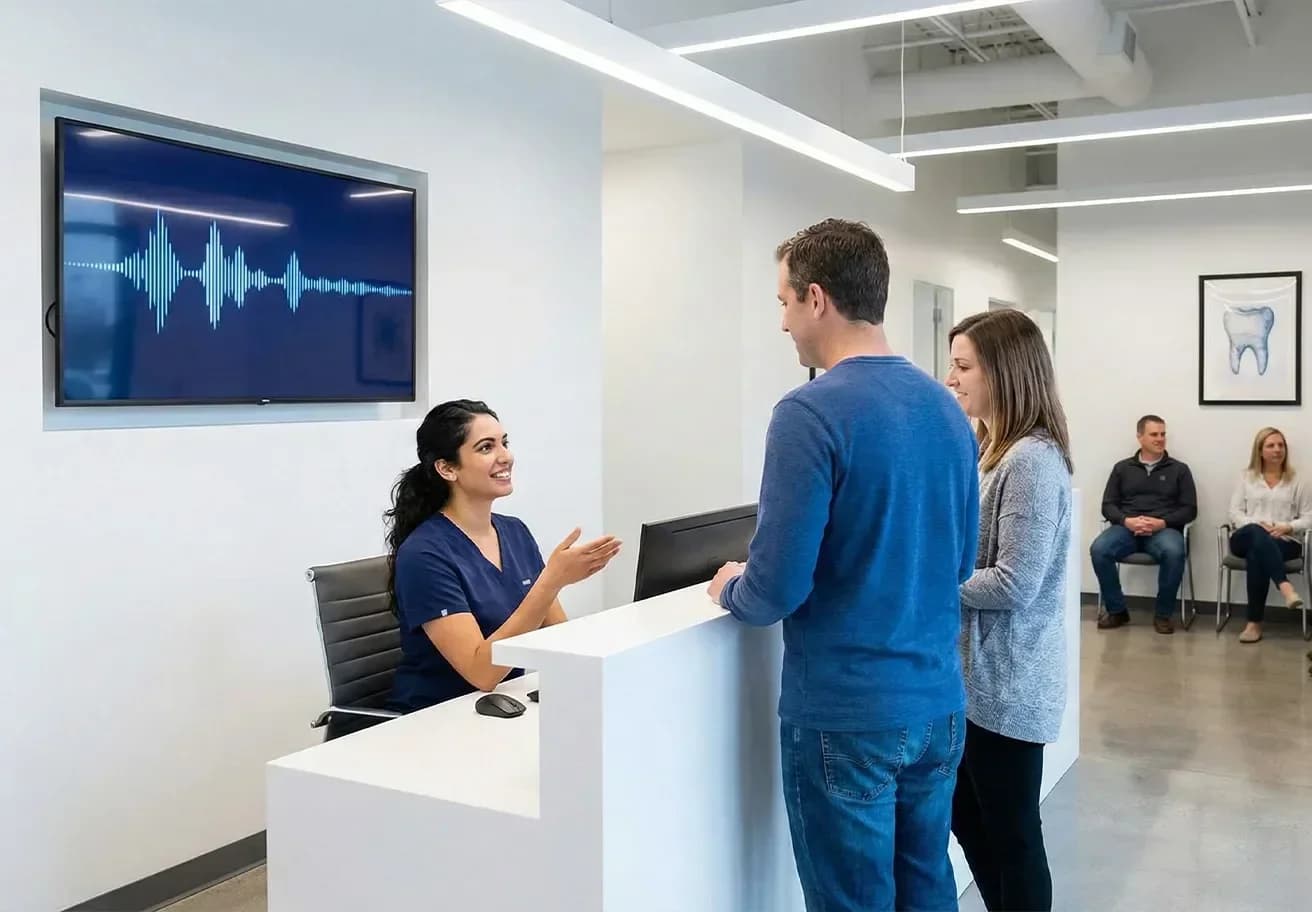
Dental front desk teams manage a wide range of responsibilities, including answering phones, scheduling appointments, handling insurance questions, and supporting in office patient flow. High call volumes, repetitive inquiries, and constant multitasking can strain staff and lead to missed opportunities. Dental AI receptionists are software systems designed to support front desk operations by automating routine communication tasks while preserving human control over complex interactions.
This article explains what dental AI receptionists are, where they add operational value, how modern systems address common limitations, and what dental practice owners should evaluate before adoption.
What Is a Dental AI Receptionist
A dental AI receptionist is an artificial intelligence based system that answers phone calls, understands patient intent using natural language processing, and completes defined front desk tasks such as scheduling, information capture, and frequently asked question responses. Unlike static voicemail or basic automated menus, AI receptionists engage conversationally and operate continuously.
In dental practices, these systems are often integrated with practice management workflows so appointment availability can be checked and requests documented accurately. One example of this category is the AI dental receptionist offered by Dentivoice.
Why Dental Practices Consider AI Receptionists
Dental practices face ongoing challenges related to staffing availability, rising patient expectations, and increased call volume. Missed calls can result in lost new patient opportunities and frustration for existing patients.
AI receptionists are commonly adopted to help with:
-
After hours and overflow call coverage
-
Repetitive inquiries about office hours, services, or insurance
-
Appointment scheduling support during peak periods
-
Reducing interruptions for front desk staff assisting in office patients
Rather than replacing staff, AI receptionists are most effective when used as operational support that absorbs volume and repetition.
The pressure is rarely about one missed call. It builds across a typical day: a hygienist asks a scheduling question while two lines ring, a patient at checkout waits for a receipt, and a new caller hits voicemail because no one is free. Each interruption is small, but together they shape whether a practice captures or loses the patients reaching out. AI receptionists are adopted to absorb that repetitive load so the front desk can stay present for the person standing in front of them. Left unchecked, that daily pressure turns into exhaustion, which how to reduce front desk burnout in a dental office addresses step by step.
Related: Many practices underestimate how much revenue leaks out through unanswered phones before they ever measure it. Calculate the true cost of missed dental calls →
Core Capabilities of Dental AI Receptionists
Modern dental AI receptionists provide several capabilities that directly impact front desk efficiency.
24/7 Call Answering and Natural Language Understanding
AI receptionists can answer calls outside normal business hours and during busy periods. Natural language understanding allows patients to speak freely instead of navigating rigid phone menus, increasing the likelihood of accurate responses and successful call handling.
Appointment Scheduling and Management
When connected to scheduling workflows, AI receptionists can:
-
Check appointment availability
-
Schedule or reschedule visits
-
Handle cancellations
-
Capture preferred times and visit types
This reduces manual scheduling workload and helps maintain accurate calendars.
Handling Common Patient Inquiries
AI receptionists can consistently answer routine questions such as:
-
Office hours
-
Accepted insurance plans
-
Directions and contact information
-
Provider availability
This consistency reduces repetitive tasks for staff and improves response speed for patients.
Automated Confirmations and Follow Ups
Some systems support automated appointment confirmations and reminders, helping practices reduce no shows and maintain consistent patient communication.
Where AI Receptionists Support Front Desk Staff
AI receptionists are most valuable when they complement human teams rather than replace them. Common support areas include:
-
Reducing call interruptions during check ins and check outs
-
Covering phones during lunch hours or peak call times
-
Ensuring no call goes unanswered
-
Allowing staff to focus on complex or in person interactions
This hybrid approach improves workflow stability and staff productivity.
Staff productivity is really a proxy for a bigger issue this hybrid model addresses directly. How AI reduces dental front desk burnout covers that wellbeing angle in more depth.
How Much Front Desk Work Can AI Realistically Offload?
Most practices can route 20-40% of routine front desk call volume to an AI receptionist without changing staffing, typically starting with after-hours coverage, overflow during peak hours, and repetitive informational calls. The remaining work stays with trained staff by design, because clinical, financial, and emotionally sensitive conversations should not be fully automated.
Thinking in tiers makes the decision clearer. Tasks differ in how much judgment they require, and the safest deployments start at the bottom of the list and move up only after each tier proves reliable in the practice’s real workflows.
| Task Tier | Example Calls | Recommended Handling |
|---|---|---|
| Fully automatable | Office hours, directions, accepted insurance, simple availability checks | AI handles end to end, no escalation needed |
| AI with structured capture | Scheduling, rescheduling, cancellations, reminders, callback requests | AI completes or gathers details, staff confirm where policy requires |
| AI triage, human decision | Billing disputes, treatment cost questions, financing options | AI captures context, then routes to staff for the actual answer |
| Human only | Dental pain, trauma, anxious patients, clinical guidance | Immediate escalation with full context preserved |
This tiered view is why a hybrid model outperforms full automation. The goal is not to hand the phone to software, but to let software carry the predictable volume so the team has room for the calls that actually need a person. Practices that want a structured way to decide which calls stay human often start by mapping their own call mix first.
Related: Knowing what patients actually call about helps you set the right automation tiers from day one. See the top dental call types in 2026 →
Limitations of AI Receptionists and How Dentivoice Is Designed to Address Them
AI receptionists are often criticized for specific, repeatable shortcomings. The table below outlines common limitations and how Dentivoice is intentionally designed to mitigate them through structured workflows and escalation rather than forced automation.
| Common AI Receptionist Limitation | Why It Creates Problems in Dental Practices | How Dentivoice Is Designed to Address It |
|---|---|---|
| Attempting clinical or treatment related conversations | Risks misinformation, patient anxiety, and clinical liability | Detects clinical language and urgency cues early, then routes the interaction for human follow up with context preserved |
| Poor handling of emotionally sensitive calls | Frustrates patients who need reassurance or empathy | Identifies emotional or urgent signals and escalates instead of continuing scripted responses |
| Oversimplified insurance and billing answers | Leads to confusion and increased staff rework | Separates information capture from decision making by gathering structured details for staff review |
| Lack of clear escalation rules | Causes stalled conversations or unresolved calls | Uses predefined escalation logic so unresolved or high risk calls are transferred or flagged appropriately |
| Loss of context during handoff | Forces staff to replay calls or re gather information | Provides structured call summaries so staff can act efficiently without repetition |
| Treating escalation as a failure state | Encourages AI to overreach beyond its role | Designed around a hybrid model where escalation is expected and built into workflows |
Dentivoice uses this hybrid approach so AI reliably manages volume and repetition, while trained front desk staff retain control over complex, sensitive, or high impact interactions.
How Do AI Receptionists Triage Urgent vs Routine Calls?
AI receptionists triage calls by listening for intent and urgency cues in natural speech, then applying predefined routing rules that decide whether to handle the call, capture details for staff, or escalate immediately. Well-designed systems treat escalation as a normal outcome rather than a failure, so urgent calls reach a person quickly with context attached.
In practice, triage follows a consistent path on every call. Understanding that path helps a practice owner judge whether a system is genuinely safe for dental use or simply a generic phone bot wearing a dental script.
How a call moves through AI triage
Listen and interpret
Natural language understanding identifies why the patient is calling, not just keywords.
Detect urgency and sensitivity
Pain, trauma, and emotional cues are flagged before any scripted response continues.
Route by rule
Routine calls are completed, while high-risk calls transfer or get flagged per the practice’s rules.
Preserve context on handoff
Staff receive a structured summary so the patient never has to repeat themselves.
The difference between a safe system and a risky one usually lives in steps two and three. A system that cannot recognize a patient in pain, or that treats every call as something to resolve on its own, will eventually mishandle a call that needed a human immediately.
Related: Triage logic is the safety layer that separates dental-ready AI from generic answering tools. See how AI triages urgent vs routine dental calls →
Evaluating Dental AI Receptionist Solutions
When evaluating AI receptionist solutions, dental practice owners should consider:
Natural Language Accuracy
The system’s ability to understand real patient phrasing and dental terminology.
Integration With Practice Workflows
Accurate scheduling and documentation depend on seamless integration.
Customization Options
Scripts and workflows should reflect how the practice actually operates.
Reporting and Insights
Call summaries, volume trends, and unanswered inquiries provide operational visibility.
Reporting is where an AI receptionist quietly becomes a management tool. Instead of guessing how the phones performed, owners can review what actually happened and adjust coverage, scripts, and staffing around real patterns. A few metrics matter more than the rest.
Answer rate
Share of calls answered live versus sent to voicemail across every hour.
After-hours volume
Calls captured when the office is closed that would have been lost.
Escalation rate
How often calls move to staff, and whether the reasons make sense.
Booking outcomes
How many handled calls turned into a scheduled or rescheduled visit.
Related: A handful of call metrics drive most scheduling and revenue decisions. Explore 7 dental call metrics that drive revenue →
Operational Best Practices
Successful implementation depends on:
-
Defining clear objectives for call coverage and staff support
-
Starting with routine tasks such as after hours calls
-
Training staff on escalation and follow up workflows
-
Reviewing call data regularly to refine performance
A phased rollout lowers risk and builds staff confidence. Rather than switching everything on at once, most practices move through three stages over 30 to 60 days, expanding only after each stage proves reliable.
This same phased approach is what lets practices add locations or provider volume later without a proportional front desk hiring spree. How dental practices scale without overloading the front desk picks up where this rollout leaves off.
Phase 1 · After-hours only
Let AI cover nights and weekends, where the alternative is voicemail. Review every transcript.
Phase 2 · Overflow and peak hours
Add daytime overflow so no caller waits while staff help in-office patients.
Phase 3 · Full routine coverage
Hand off all routine scheduling and FAQs, with escalation rules tuned from real call data.
Impact on Patient Experience
From a patient perspective, timely responses matter. AI receptionists reduce voicemail frustration, shorten response times, and ensure basic questions are answered consistently. When AI handles routine communication, staff are more available for empathetic, personalized patient interactions.
See where AI reception fits before you change anything
Walk through your real call flows, escalation rules, and after-hours gaps with the Dentivoice team.
Request a Dentivoice demo →FAQs About Dental AI Receptionists
What tasks can a dental AI receptionist handle?
Dental AI receptionists can answer calls, provide office information, schedule and reschedule appointments, handle cancellations, send reminders, and document patient inquiries for staff follow up.
Do dental AI receptionists replace human front desk staff?
No. They are designed to support front desk teams by handling repetitive and high volume tasks while staff manage complex, sensitive, or in person interactions.
How does an AI receptionist know when to escalate a call?
AI receptionists use predefined rules and language cues to identify urgency, complexity, or emotional sensitivity and route those calls to human staff with context preserved.
Are AI receptionists useful for small or single location practices?
Yes. Single location practices often benefit from fewer missed calls, better after hours coverage, and reduced front desk interruptions.
Can AI receptionists integrate with existing dental software?
Many systems integrate with practice management and scheduling workflows to ensure accurate appointment handling and documentation.
How quickly can a dental practice start using an AI receptionist?
Most practices begin with a single use case, such as after-hours calls, within a few days of configuring scripts and escalation rules. A phased 30 to 60 day rollout is common before expanding the system to daytime overflow and full routine coverage.
Will patients know they are talking to an AI receptionist?
Practices can choose how the system introduces itself, and transparency is generally recommended. What matters most to patients is a fast, accurate response and a smooth handoff to a person when their question needs human judgment.
Ready to See How AI Reception Fits Your Practice
If your practice experiences missed calls, after-hours gaps, or front desk overload, the next step is evaluating how AI call handling would work with your real workflows.
Request a Dentivoice demo to walk through call flows, escalation rules, and after-hours handling based on how your front desk currently operates. This allows you to assess fit before making any changes to staff or systems.
Request a Dentivoice demo to see how it would work in your practice.
Frequently Asked Questions
Yes. Most dental AI receptionists answer calls 24/7, so you can schedule, cancel, or get office information even after hours. This reduces voicemail tag and helps patients secure appointments sooner.
If the system is connected to the practice’s scheduling software, it can check availability and book, reschedule, or cancel appointments in real time. For complex cases, it captures your request and sends it to staff for follow up.
Well-designed dental AI receptionists do not give clinical advice. They detect medical or urgent language and escalate the call or message to a human team member so your concerns are handled safely.
Modern systems use natural language understanding, so you can speak normally instead of pressing buttons. If the conversation becomes emotional or confusing, the AI should transfer the interaction to a real person.
Topics
Was this article helpful?
Written by
DentalBase Team
Expert dental industry content from the DentalBase team. We provide insights on practice management, marketing, compliance, and growth strategies for dental professionals.