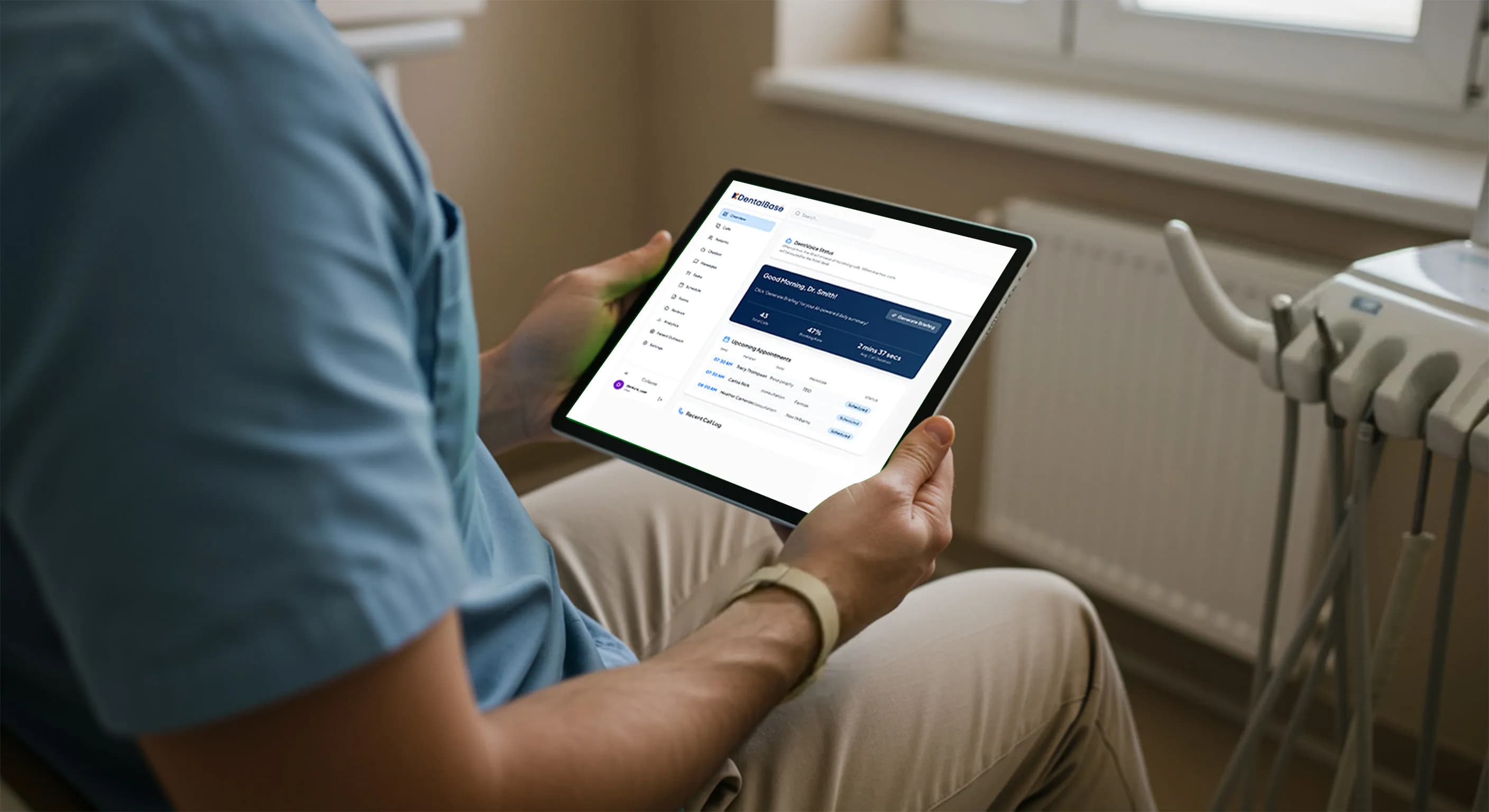
How a Dental AI Assistant Supports Your Team

A dental AI assistant handles calls, scheduling, and follow-ups, without replacing your front desk staff.
Share:
Table of contents
Running a modern dental practice means balancing patient care with constant administrative demands. Phone calls, appointment scheduling, confirmations, and follow-ups can overwhelm even the most efficient front desk team. This is where a Dental AI assistant becomes a powerful support tool, not a replacement.
In this article, we’ll explore how a dental AI assistant strengthens your team, improves workflows, and enhances the patient experience while keeping human staff at the center.
Here is the tension every practice owner knows. An overwhelmed front desk does not just feel stressful. It quietly leaks revenue, because the calls your team cannot reach are often new patients who never call back. A dental AI assistant closes that gap. It picks up what your staff cannot get to, then hands the human moments back to humans.
This is not about doing more with less. It is about doing the right work with the people you already have. The phone gets answered. The schedule fills. And your team finally gets room to breathe between patients.
35%+
of inbound dental calls go unanswered during a busy week
24/7
coverage for scheduling and reminders, with no overtime
0
new hires needed to add a second phone line of capacity
What Is a Dental AI Assistant?
A Dental AI assistant is an intelligent virtual system designed to automate repetitive front-office tasks. Solutions like Dentivoice are built specifically for dental practices and can:
-
Answer incoming calls automatically
-
Schedule, confirm, and reschedule appointments
-
Send reminders and follow-up messages
-
Respond to common patient questions
-
Integrate with dental practice management systems
The goal is simple: reduce workload, not headcount.
Think of it as a tireless teammate for the phone. It works from scripts you approve, speaks in natural language, and writes everything back into your scheduling system. The patient gets a fast answer. Your staff get fewer interruptions. Nobody loses a job.
The AI assistant handles
- Answering and triaging every inbound call
- Booking, confirming, and rescheduling visits
- Recall and reminder outreach
- Routine questions about hours, location, and insurance accepted
- Capturing details when the line is busy or closed
Your team handles
- Chairside care and clinical conversations
- Complex insurance and billing disputes
- Anxious or upset patients who need reassurance
- Treatment planning and case acceptance
- Anything that calls for human judgment
How a Dental AI Assistant Supports Front Desk Staff
1. Handling High Call Volumes
Dental offices often miss calls during peak hours. A dental AI assistant ensures:
-
Every call is answered instantly
-
No patients placed on long hold times
-
Multiple calls handled simultaneously
This removes pressure from front desk staff and prevents lost appointment opportunities.
What is a missed call actually costing you?
Each unanswered new-patient call can walk away for good. Put a real number on it.
Calculate your missed-call cost →2. Automating Appointment Scheduling
Scheduling is one of the most time-consuming front desk tasks.
A Dental AI assistant can:
-
Book appointments based on availability
-
Confirm or reschedule visits automatically
-
Reduce double bookings and human error
Result: Staff spend less time clicking and more time helping patients.
Reminders and recall run on the same engine. The assistant texts a confirmation the day before, nudges patients who go quiet, and reaches back out to anyone overdue for a cleaning. That work used to sit at the bottom of the to-do list. Now it just happens.
Related: Automated recall only helps if patients actually pick up. Recall reminders that get answered →
3. Reducing Administrative Burnout
Repetitive tasks lead to staff fatigue and turnover. That pattern has a name, and this guide to dental front office burnout explains how to spot it early and what to change first.
By automating routine actions, a dental AI assistant:
-
Lightens daily workloads
-
Improves job satisfaction
-
Allows staff to focus on meaningful patient interactions
Support, not stress, is the outcome.
Front desk stretched thin?
If calls pile up faster than your team can answer them, the warning signs are worth knowing.
See 7 signs and real fixes →Improving the Patient Experience
24/7 Availability
Patients expect convenience. A Dental AI assistant is available:
-
After office hours
-
On weekends and holidays
-
When staff are busy with in-office patients
This means patients are never ignored, even when your office is closed.
Related: After-hours calls are the easiest place to start. Answer after-hours calls without hiring →
Faster, Consistent Responses
Unlike humans, AI assistants:
-
Never forget protocols
-
Provide consistent answers
-
Follow pre-approved scripts aligned with your practice
This improves professionalism and trust.
Consistency is quietly one of the biggest wins. A new front desk hire takes weeks to learn your hours, your providers, and how you handle a toothache call at 4:55pm. The assistant knows all of it on day one, and it never has an off day. Every caller hears the same accurate answer, whether they ring on a Tuesday morning or a Saturday night.
That does not make your team less valuable. It makes them more. When the routine answers are handled, your staff spend their energy on the conversations that build loyalty: the anxious patient, the big treatment plan, the family deciding where to bring their kids. Those are the moments that grow a practice, and they are exactly the moments a human should own.
Helping Dentists and Managers Focus on Growth
When your team isn’t buried in calls and scheduling, leadership benefits too.
A Dental AI assistant helps by:
-
Increasing appointment fill rates
-
Reducing no-shows with automated reminders
-
Providing call and scheduling insights
-
Supporting scalability without new hires
With Dentivoice, practices grow without operational chaos.
And you get a clearer view of the front desk than you have ever had. Every call is logged, every booking tracked, every missed opportunity counted. Patterns you used to guess at become numbers you can act on.
That visibility changes how you lead. You can see which hours overflow, which call types eat the most time, and where patients drop off before booking. Staffing decisions stop being guesswork. So do marketing decisions, because you finally know how many calls your last campaign actually produced.
Related: The right call data shows you exactly where patients drop off. 7 call metrics that drive revenue →
AI Assistant vs Replacing Staff: Clearing the Myth
One common concern is whether AI will replace front desk employees.
The reality:
A Dental AI assistant works best as a co-pilot, not a substitute.
-
AI handles repetitive, time-consuming tasks
-
Humans handle empathy, problem-solving, and complex cases
-
Patients still interact with real people when it matters most
This hybrid approach creates stronger, happier teams.
What Tasks Can a Dental AI Assistant Handle vs Your Team?
A dental AI assistant should own the repetitive, high-volume work, while your team keeps the moments that need a human. The split below is a useful starting point for most practices.
| Front desk task | Best owner | Why |
|---|---|---|
| Answering peak-hour calls | AI assistant | Handles several calls at once with no hold time. |
| Booking a routine cleaning | AI assistant | Reads live availability and confirms instantly. |
| Recall and reminder outreach | AI assistant | Runs on schedule, every day, without fail. |
| Disputed insurance claim | Your team | Needs judgment and a relationship with the payer. |
| Nervous first-time patient | Your team | Reassurance is a human strength. |
| Urgent vs. routine triage | AI assistant, then your team | AI flags the emergency; staff take it from there. |
The line is not fixed. As your team gets comfortable, the assistant can take on more. The point is balance, not handover. Triage is the clearest example of the two working together.
Picture a Monday morning at a three-provider practice. Forty calls land in the first hour. A patient with a cracked molar, two cancellations, a recall reminder that needs a callback, and a dozen routine booking requests. Your front desk cannot be in twelve places at once. The assistant takes the routine bookings and the reminders, flags the cracked molar as urgent, and hands your team a short, prioritized list instead of a blinking voicemail light. That is the difference between a chaotic morning and a managed one.
Related: Triage is where AI and your team work best together. How AI triages urgent vs. routine calls →
Why Dental Practices Choose Dentivoice
Dentivoice is designed specifically for dental environments, offering:
-
HIPAA-compliant communication
-
Seamless PMS integration
-
Natural, human-like conversations
-
Custom workflows aligned with your practice
It’s not just AI, it’s smart support.
How Do You Roll Out a Dental AI Assistant Without Disrupting Your Team?
Start small, connect it to your scheduling system, and bring your front desk into the setup. A staged rollout protects your workflow and earns staff trust instead of forcing change on them.
Start with after-hours and overflow
Let the assistant catch the calls your team already misses. Low risk, fast payback.
Connect your scheduling system
Sync the assistant to your practice management software so bookings land in one calendar.
Approve the scripts together
Your team reviews how the assistant greets, answers, and routes. Their input builds trust.
Review the call data weekly
Watch booking rates and missed-call counts. Adjust scripts as you learn what patients ask.
Most practices feel the difference within the first week. The phone stops ruling the day. Your team breathes. And the calls that used to slip away get answered.
One more thing matters during rollout: tell your patients. A short note on your website and a line in your voicemail greeting set the expectation that they can book or get answers any time. Patients rarely mind talking to an assistant when it solves their problem in thirty seconds instead of leaving them on hold. What they remember is that your office picked up.
Watch three numbers as you go. Answer rate should climb toward every call handled. Missed calls should fall close to zero. And booking rate, the share of callers who actually schedule, should rise as fewer people hang up frustrated. If those move in the right direction, the rollout is working.
Related: Integration is what keeps every booking in one place. How the Open Dental integration works →
Related: Not sure whether to staff up, outsource, or automate? Compare the three coverage models side by side. In-house vs service vs AI →
Frequently Asked Questions (FAQ)
Does a Dental AI assistant replace front desk staff?
No. It supports staff by handling repetitive tasks, allowing them to focus on patient care and in-office responsibilities.
Can patients tell they’re talking to AI?
Modern systems like Dentivoice use natural language processing to create conversational, human-like interactions.
Is a Dental AI assistant secure?
Yes. Reputable platforms are HIPAA-compliant and use secure data handling protocols.
Will it work with my existing dental software?
Most Dental AI assistants integrate with popular dental practice management systems.
See what your team stops doing manually
DentiVoice answers, schedules, and follows up so your front desk can focus on the patients in the chair. Book a walkthrough built around your practice.
See how dental phone coverage works →Looking to empower your team without adding pressure?
Dentivoice’s Dental AI assistant helps your staff work smarter, serve patients better, and scale with confidence.
New to the concept? our complete guide to what an AI dental receptionist is covers the basics, and how the underlying NLP actually works goes deeper on the technology.
Frequently Asked Questions
Yes. A Dental AI assistant handles routine tasks like scheduling and reminders, but real front desk staff are always available for complex questions, insurance issues, or personal concerns when needed.
Absolutely. Many dental offices using AI assistants allow patients to schedule, reschedule, or confirm appointments 24/7, including evenings, weekends, and holidays.
Yes. Reputable systems like Dentivoice are HIPAA-compliant and follow strict data security protocols to protect your personal and health information.
Modern dental AI assistants use natural language processing, allowing them to understand common patient questions and respond conversationally using pre-approved, accurate information.
Sources & References
- 1
- 2
- 3
- 4
- 5
Topics
Was this article helpful?
Written by
DentalBase Team
Expert dental industry content from the DentalBase team. We provide insights on practice management, marketing, compliance, and growth strategies for dental professionals.