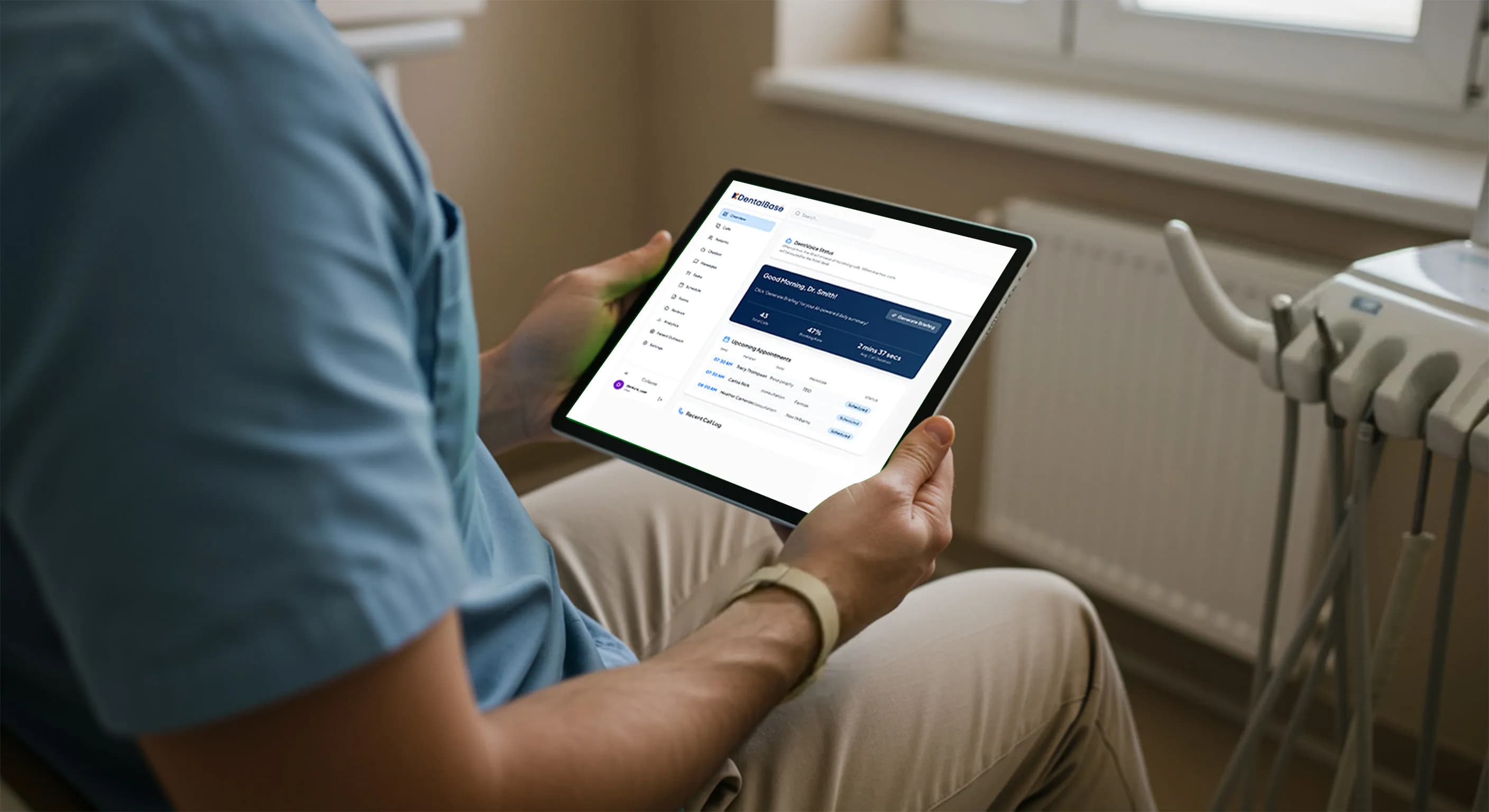
Dental Hygiene Appointment Management Tools for 2026
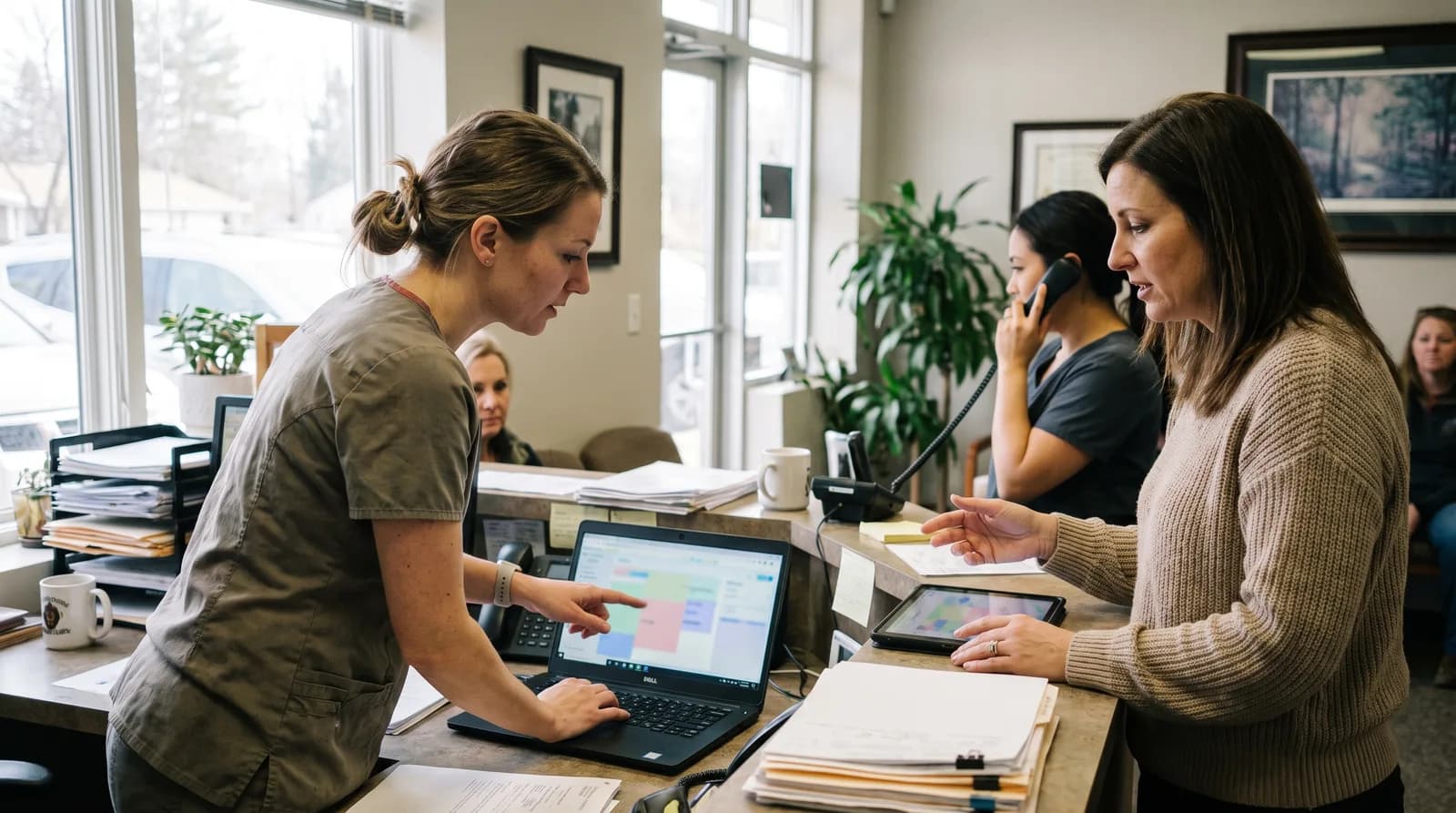
Compare dental hygiene appointment management tools for 2026: key features, KPIs, a rollout plan, and how to choose the right fit for your team.
Share:
Table of contents
Why Does Dental Hygiene Appointment Management Matter?
Dental hygiene appointment management matters because an empty chair is lost production, not just an open slot. Practices that automate recall tracking, reminders, and rescheduling with a platform like DentiVoice fill more hygiene visits and cut front-desk workload.
What Does an Empty Hygiene Chair Really Cost?
An empty hygiene chair is more than a gap in the schedule. It means lost revenue, wasted clinical time, and one fewer chance to diagnose, educate, and reappoint a patient for future care.
Hygiene schedules also drive predictable revenue, patient retention, and steady daily workflow. Done well, scheduling is more than booking time. It supports consistent recall cycles, reduces front-desk load, and helps hygienists prepare with the right time blocks and patient details.
How Does Scheduling Shape the Patient Experience?
Patient experience starts at scheduling too. Automated confirmations, friendly reminders, and simple rescheduling options reduce friction. When routine communication runs on its own, your team can focus on quality care and meaningful relationships.
Why Does Recall Matter for Patient Health?
Preventive visits matter clinically, too. According to the CDC, an estimated 42% of dentate US adults aged 30 and older have periodontitis, and 7.8% have the severe form. Consistent recall scheduling has a direct health payoff, not only a financial one.
42%
of dentate US adults aged 30 and older have periodontitis
7.8%
have the severe form, which is why steady hygiene recall matters
Source: CDC, Periodontitis in US Adults, NHANES 2009-2014.
What Are Dental Hygiene Appointment Management Tools?
These tools are scheduling and communication platforms purpose-built for preventive care, going beyond a generic calendar. They combine recall-cycle tracking, automated reminders, and hygienist-specific scheduling logic that generic booking software typically lacks.
Unlike generic calendars, these platforms account for hygiene-specific needs: appointment length differences, provider availability, recall intervals, and pre-visit preparation. They focus on the rhythm of preventive care, meaning recall cycles, chair-time optimization, and appointment sequencing that keeps the day running smoothly.
Core Functions and Capabilities
Most hygiene scheduling solutions include:
- Smart scheduling and calendar controls: drag-and-drop booking, color-coded appointment types, real-time availability, and buffer-time rules.
- Recall and reactivation workflows: tracking due dates and automatically launching outreach sequences.
- Patient communication: confirmations, reminder campaigns, and two-way messaging.
- Integrations: syncing with practice management software so schedules, patient info, and notes stay consistent across systems.
- Reporting: utilization, cancellation and no-show trends, and capacity insights by hygienist, day, or location.
How These Tools Support Dental Teams
Beyond the feature list, the daily payoff shows up in how the team works:
- Fewer phone calls: patients confirm and reschedule on their own.
- Fewer surprises: hygienists see recall status and patient details before the visit.
- Faster gap filling: a waitlist offers open slots to patients who want an earlier time.
- Clearer numbers: managers see no-show and utilization trends by hygienist and day.
Who Benefits Most From Better Dental Hygiene Appointment Management Tools?
Everyone touching the schedule benefits, though the impact looks different by role. Hygienists gain fuller days, office managers gain visibility into hygiene KPIs, and dentists gain steadier production from stronger recall and patient retention.
Hygienists
- Hygienists benefit from fuller schedules, fewer last-minute gaps, and more predictable daily flow.
- Better recall and waitlist tools reduce empty chair time and help maintain consistent production.
- Stronger confirmations and reactivation workflows reduce no-shows that disrupt patient care routines.
Office Managers
- Office managers benefit from clearer visibility into hygiene KPIs like reappointment rate, overdue recall volume, and no-show trends.
- Automation reduces front office workload and supports staffing stability without constantly adding coverage.
- Reporting tools make it easier to identify bottlenecks, coach the team, and improve consistency.
Dentists and Practice Owners
- Dentists and owners benefit from improved patient retention and more stable hygiene-driven production.
- Stronger recall systems protect long-term revenue by reducing the number of inactive patients.
- Efficient scheduling and communication tools improve patient experience and strengthen practice growth.
Front Desk Team
- Front desk teams benefit from fewer manual calls, less phone tag, and fewer interruptions during peak hours.
- Two-way texting, confirmations, and automated rescheduling reduce repetitive tasks and stress.
- Call handling and AI support tools help capture hygiene appointment requests faster, especially during overflow and after hours.
Reducing this manual workload is directly tied to staff retention. Our guide on preventing dental front-office burnout covers how scheduling automation fits into a broader staffing strategy.
See how AI-assisted scheduling fits into hygiene appointment management
DentiVoice handles confirmations, recall outreach, and rescheduling automatically, so your front desk isn't chasing down every hygiene slot manually.
Explore Practice Management Resources →What Key Features Should You Look for in Hygiene Scheduling Software?
The most important features to prioritize are automated recall management, reliable calendar controls, and integration with your existing practice management system. These core capabilities directly reduce no-shows and keep hygiene chairs filled without adding administrative work.

Must-have features
- Automated recall management (due-date tracking + outreach)
- Reliable calendar management (easy scheduling, visibility, and controls)
- Integration with your existing systems (to avoid duplicate entry and errors)
- Customizable reminders (timing, channels, and message templates)
- Permission controls (secure access by role)
Nice-to-have features (valuable if they don't add complexity)
- Patient mobile apps
- AI-assisted scheduling optimization
- Digital forms and automated intake workflows
Patient-Facing Features
Patient experience improves most when tools include:
- Online booking with real-time availability
- Multi-channel reminders (text, email, phone, based on preference)
- Self-service rescheduling to reduce phone volume
- Digital intake forms to keep health history current
- Two-way messaging for quick questions and confirmations
Staff and Operations Features
Operational features that usually deliver the biggest ROI:
- Real-time schedule monitoring (fast response to gaps and cancellations)
- Waitlist automation (fill openings without manual outreach)
- Reporting dashboards (no-shows, utilization, hygiene KPIs)
- Billing and coding alignment (as supported by your existing systems)
- Audit trails (see who changed or cancelled which appointment)
Because these systems store appointment history and health information, they fall under HIPAA. The HHS HIPAA Security Rule requires administrative, physical, and technical safeguards for electronic patient information, so ask vendors how they support HIPAA compliance before signing a contract. Our guide on evaluating HIPAA compliance in AI-assisted scheduling tools covers the specific questions to ask. Switching from manual calls to automated appointment confirmations is a common first step toward saving front-desk time.
How Do Common Dental Hygiene Appointment Tools Compare?
These solutions generally fall into three categories: standalone schedulers, all-in-one practice platforms, and AI-assisted reception tools. Each trades off integration depth, hygiene-specific features, and implementation complexity differently, so the right fit depends on your current systems.
Standalone scheduling tools
Standalone scheduling tools focus exclusively on appointment management, without handling billing, treatment planning, or other practice functions. They are a good fit for practices that like their current practice management platform but need stronger hygiene scheduling, recall automation, or patient communication.
All-in-one practice platforms
All-in-one dental practice platforms, such as Dentrix, include appointment management as one part of a full practice management suite. They are a good fit for practices that want one vendor for scheduling, records, and billing. They are often simpler to run, though scheduling depth may be solid rather than top-tier.
AI-assisted reception tools
AI-assisted reception tools are an emerging category that combines appointment management with intelligent patient communication. They handle routine scheduling requests, answer common questions, and manage appointment confirmations. They suit high-call-volume practices or teams that want after-hours scheduling support, when configured carefully.
How Do the Three Tool Types Compare Side by Side?
| Tool Type | Good Fit For | Integration Level | Hygiene Focus | Main Trade-Off |
|---|---|---|---|---|
| Standalone Scheduling | Practices keeping their current PMS | Moderate; connects to your PMS | High; built for recall and hygiene blocks | Adds another system to learn |
| All-in-One Platforms | New practices or major upgrades | Complete; one system | Varies by vendor | Hygiene tools may be less deep |
| AI-Assisted Tools | High-call-volume practices and after-hours coverage | Good; layers onto your PMS | Growing; strongest on booking and reminders | Needs careful setup of scheduling rules |
What Should You Check Before Comparing Vendors?
When comparing specific solutions, evaluate each tool's ability to handle hygiene-specific workflows, including recall management, hygienist assignment preferences, and integration with clinical documentation systems. Write those preferences down before you compare vendors, since hygiene carries more scheduling rules than any other column.
How Do You Implement Appointment Management Tools Step by Step?
Rolling out dental hygiene appointment management software works well as a phased process: audit your current workflow, migrate and validate data, train staff in stages, then launch gradually. Skipping the audit or migration-validation steps is the most common reason implementations stall.
Step 1
Audit
Map how you schedule, confirm, recall, and cancel. Set measurable goals.
Step 2
Migrate
Export data, then check recall intervals and future appointments.
Step 3
Train
Teach core scheduling first, then recalls, then advanced features.
Step 4
Launch
Run both systems briefly, turn on features in stages, review monthly.
What Are the Four Rollout Steps?
- Audit your current workflow. Document how you schedule, confirm, manage recalls, and handle cancellations. Identify pain points such as no-shows, phone volume, and capacity gaps, then set measurable goals. This baseline gives you something to compare against later.
- Plan and validate data migration. Export patient data, appointment history, recall status, and provider preferences. Validate the migrated data before going live, especially recall intervals and future appointments. Most vendors offer migration help, but your team should still confirm that everything transferred.
- Prepare your dental team.
- Communicate the "why" and the timeline clearly.
- Identify internal champions to support adoption.
- Train in phases: core scheduling first, then recalls, then advanced features.
- Provide quick-reference guides and backup procedures during rollout.
- Launch gradually and optimize. Run the new software alongside your existing system for a short period, so staff can get comfortable while the schedule stays safe. Turn on features in stages, review metrics monthly, and adjust rules, templates, and workflows based on real usage.
How Often Should You Review Recall Intervals?
Recall intervals deserve a review during setup. Many practices default to six months, but intervals can be set by each patient's risk, which is easier to manage when your system tracks due dates per patient. Our practice management automation ROI breakdown helps you weigh system cost against fewer no-shows and recovered chair time.
Rolling out a new hygiene scheduling system?
DentiVoice layers onto your existing practice management software to automate recall outreach and reminders without a disruptive full-system switch.
See How DentiVoice Works →Which KPIs Tell You If Your Hygiene System Is Working?
Five KPIs reveal whether your dental hygiene appointment management is working: reappointment rate, recall effectiveness, no-show rate, schedule utilization, and response time to inquiries. Tracking these monthly by provider and location shows exactly where gaps are forming.
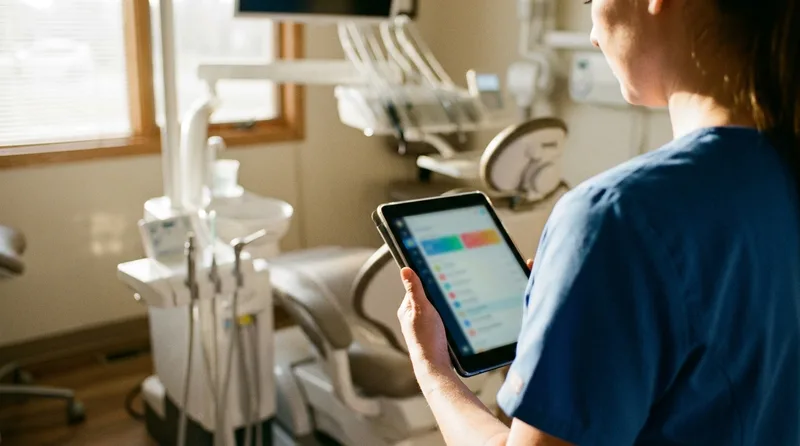
KPIs show whether hygiene scheduling is predictable, profitable, and patient-friendly. Track them monthly and review results by provider, day, and location.
Hygiene KPI cheat sheet
KPI 1
Reappointment rate
Watch: reappointed patients ÷ completed hygiene visits
If it slips: standardize checkout scripts
KPI 2
Recall effectiveness
Watch: contacted vs booked, by days overdue
If it slips: simplify booking links and tighten follow-up
KPI 3
No-shows and late cancellations
Watch: two separate numbers, including cancellations within 24 hours
If it slips: layer reminders and keep a short-notice waitlist
KPI 4
Schedule utilization
Watch: filled chair time vs available hygiene capacity
If it slips: automate the waitlist and rework block templates
KPI 5
Response time
Watch: how fast patients reach your team and get booked
If it slips: centralize inboxes and add after-hours support
1. Hygiene reappointment rate
This rate shows how many patients book their next hygiene visit before leaving the office. Calculate it as reappointed patients ÷ completed hygiene visits. If it drops, standardize checkout scripts and prompt scheduling before the patient stands up.
2. Recall effectiveness
Recall effectiveness shows how outreach converts overdue patients into booked appointments. Track contacted patients versus booked patients, segmented by days overdue. If contacts are high but bookings lag, simplify booking links and tighten follow-up timing.
3. No-show and late cancellation rate
These rates reveal day-of schedule disruption and revenue leakage. Track no-shows and cancellations within 24 hours as separate metrics. For context, a Finnish register study on PubMed Central cites a Swedish study in which 13.1% of 23,522 booked appointments for 16 to 19-year-olds were missed. In the same Finnish study of Helsinki children and adolescents, 5% of patients accounted for 21.8% of all no-shows, so repeat no-shows are worth flagging. Reduce your own rate with layered reminders, easy rescheduling, and an active short-notice waitlist.
4. Schedule utilization
Utilization measures filled chair time versus available hygiene capacity. Watch open time, same-day gaps, and unfilled blocks by hour. Improve it using waitlist automation, smarter block templates, and targeted recall pushes during slow weeks.
5. Response time to inquiries
Response time shows how quickly patients can reach your team and get scheduled. If response times slip, centralize inboxes and use templates or after-hours support.
What Do Real-World Hygiene Scheduling Scenarios Look Like?
Real-world data shows reminders cut missed visits, but the channel matters. In one randomized trial at a university pediatric dental clinic, 8.2% of patients with voice reminders missed visits versus 17.7% with text messages, so test channels instead of assuming.
What Does Research Say About Appointment Reminders?
That trial, summarized by the Dental Elf, covered 318 caregiver and child pairs. A separate study of orthodontic patients in the Journal of Dental School found missed appointments fell from 41.39% without reminders to 11.08% with them. Results vary by clinic and patient group, so track your own baseline first.
Missed appointments: what two studies found
Pediatric dental clinic trial: reminder type
Voice reminder
Text message reminder
Orthodontic patients: reminders vs none
No reminders
With reminders
Sources: randomized trial summarized by the Dental Elf (318 caregiver and child pairs); Journal of Dental School orthodontic reminder study. Different settings, so compare within each group only.
Why Does Early Detection Make Recall Worth the Effort?
Early detection makes consistent recall worth the effort. The National Institute of Dental and Craniofacial Research notes that gum disease often causes few obvious symptoms in its early stages, which is why keeping patients on schedule matters clinically, not only financially.
Reducing No-Shows in a Busy Practice
Picture a practice with several hygienists that keeps losing visits to forgetfulness and last-minute conflicts. It adds reminders at 72 hours, 24 hours, and 2 hours before each visit, each with an easy way to confirm or reschedule. As attendance improves, hygienists see fewer gaps, and the front desk spends less time on manual confirmation calls. Compare no-show rates for 60 days before and after to measure the change.
Layered reminder schedule
72 hours before
First reminder
Patient confirms or reschedules in one tap.
24 hours before
Second reminder
Catches forgetfulness and last-minute conflicts.
2 hours before
Final nudge
Easy reschedule keeps a same-day gap fillable.
After the visit
Reappoint
Book the next hygiene visit before the patient leaves.
Related: If staffing shortages are part of why your hygiene schedule feels fragile, that's worth solving alongside the software itself. See how staffing shortages affect patient scheduling →
How Do You Choose the Right Tool for Your Hygiene Team?
Choosing the right platform starts with your biggest priority: no-show reduction, recall compliance, or operational efficiency. Match that priority to a platform's core strength, then confirm it fits your current systems and patient volume before committing.

How Do Your Priorities Change the Right Choice?
Different priorities call for different solutions:
- Practices focused on reducing no-shows should prioritize platforms with strong reminder systems, recall automation, and active waitlist management.
- Those aiming to improve operational efficiency should look for strong automation, analytics, and tight integrations that reduce manual front-desk tasks.
If your priority is
Fewer no-shows
Look for
Strong reminder systems, recall automation, and active waitlist management
If your priority is
Recall compliance
Look for
Automated recall management with due-date tracking and outreach
If your priority is
Operational efficiency
Look for
Strong automation, analytics, and tight integrations that cut manual front-desk tasks
What Should You Ask Vendors Before Signing?
When evaluating vendors, consider:
- Fit for your patient volume and hygiene model
- Integration requirements and implementation complexity
- Training resources and ongoing customer support
- Total cost of ownership, not just monthly subscription fees
Should You Run a Trial or Pilot First?
Many vendors offer trial periods or pilot programs. Use them to test real-world usability, workflow impact, and return on investment before committing long-term.
Conclusion
Strong dental hygiene appointment management keeps the schedule full, protects revenue, and strengthens patient relationships. The right combination of scheduling, recall automation, and reminders keeps chairs full and reduces strain on the front desk.
For dental hygiene appointment management, choose a solution that fits your current systems and your biggest priority, whether that is no-show reduction, recall compliance, or operational efficiency. Then roll it out in phases, train the team well, and review performance monthly.
A hygiene schedule stays full only if new patients can get on the books just as easily. Round-the-clock booking pairs well with the tools above.
Frequently Asked Questions
Most hygienists schedule inside their practice management software, such as Dentrix, which includes recall tracking and appointment blocking. Many practices add a standalone scheduler or AI-assisted reception tool for reminders, online booking, and waitlist filling.
Dental offices manage hygiene appointments through integrated scheduling systems that coordinate with treatment schedules, track recall intervals, and automate patient communications. Most practices use color-coded appointment blocks, automated reminder systems, and waitlist management to optimize hygiene chair utilization while maintaining consistent preventive care schedules for patients.
Yes, reminders and easy rescheduling reduce no-shows, though results vary by channel and patient group. In one study of orthodontic patients, missed appointments fell from 41.39% without reminders to 11.08% with them. Test timing and channels in your own practice.
Yes, most hygiene scheduling tools connect with major practice management systems so schedules and patient records stay in sync. Before you choose, ask each vendor which systems it supports, how often data syncs, and whether it can read and write appointments directly.
Most teams learn core scheduling functions within a few days, while advanced features can take a few weeks. Role-specific training, quick-reference guides, and clear communication from practice leadership make adoption faster and smoother.
Many practices default to every six months, but the right interval depends on each patient's risk, as decided by the dentist or hygienist. Good tools store a different interval for each patient and trigger outreach when the due date arrives.
Track five KPIs monthly: reappointment rate, recall effectiveness, no-show and late cancellation rate, schedule utilization, and response time to inquiries. Review them by provider, day, and location to see where gaps are forming.
Sources & References
- 1
- 2
- 3
- 4
- 5
Topics
Was this article helpful?
Written by
DentalBase Team
Expert dental industry content from the DentalBase team. We provide insights on practice management, marketing, compliance, and growth strategies for dental professionals.