Automated Dental Recall Reminders That Get Answered
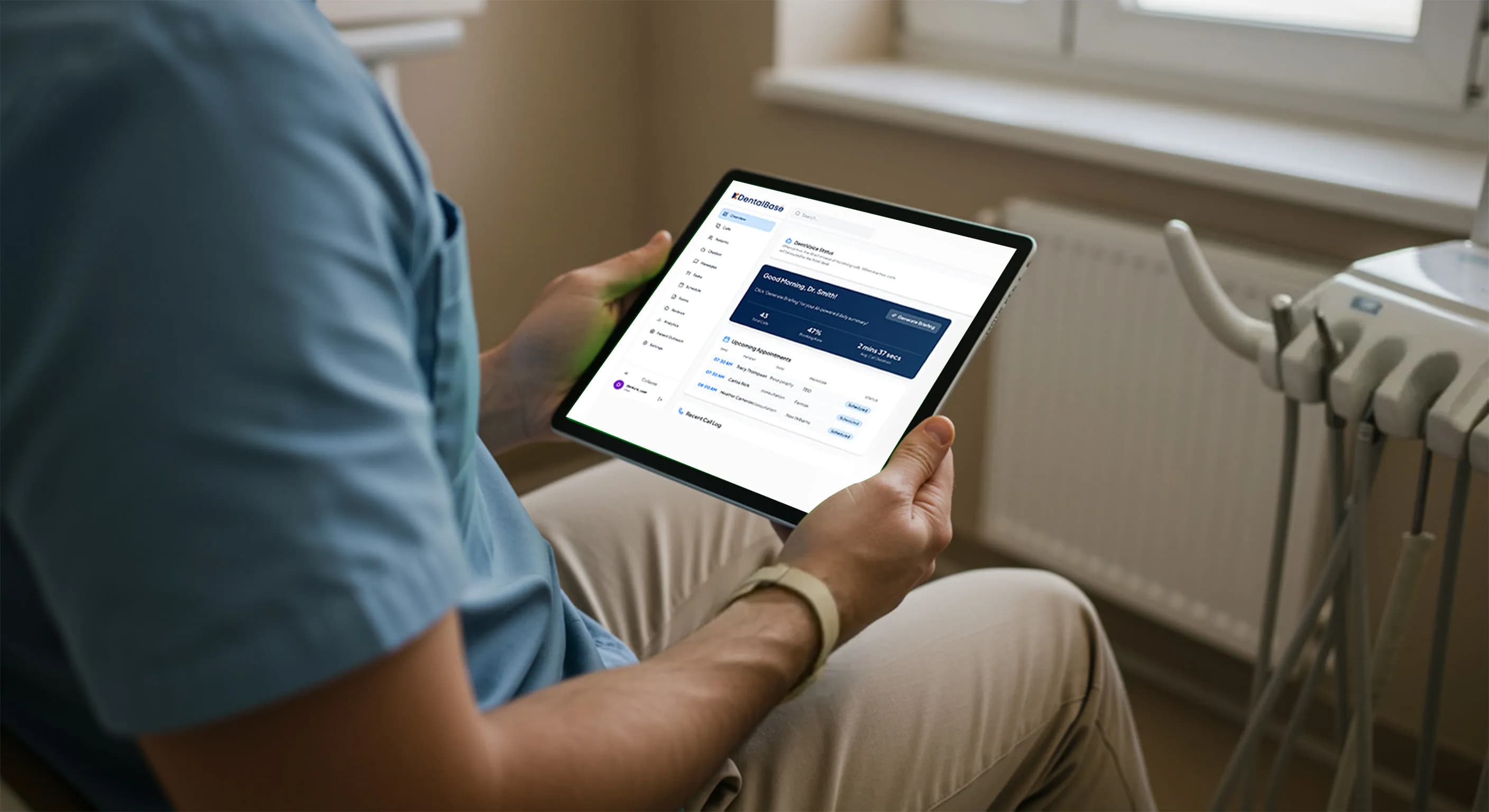
Automated dental recall reminders using AI outbound calling re-engage overdue hygiene patients with natural conversation and smart timing strategies.
Share:
Table of contents
Automated dental recall reminders should bring overdue patients back to your chair. But most don't. The average dental practice loses 20-30% of its active patient base each year because recall outreach either goes unnoticed or actively annoys people into tuning out. Postcards collect dust. Robocalls get blocked. Generic text blasts get swiped away without a second thought.
This article breaks down why traditional recall methods fail, how AI-powered outbound calling changes the equation, and what timing, frequency, and measurement strategies actually move your hygiene recall numbers.
Why Do Most Dental Recall Reminders Get Ignored?
Most dental recall reminders fail because they're impersonal, poorly timed, and easy to dismiss. A postcard that arrives three weeks before a patient's recall date carries no urgency. A robocall from an unknown number gets declined in under two seconds. The format itself tells patients this isn't a real conversation worth their attention.
The numbers tell a clear story. According to the American Dental Association's Health Policy Institute, roughly 35% of U.S. adults didn't visit a dentist in the past year. Many of those patients had a dental home at some point. They just stopped showing up.
Here's why that happens. Traditional recall relies on one-way communication. You send a reminder. The patient either responds or doesn't. There's no conversation, no back-and-forth, no chance to address the real reason they haven't booked. Maybe their insurance changed. Maybe they moved and don't realize you're still nearby. Maybe they're anxious about a procedure they think they need. A postcard can't answer any of those concerns.
The busy phone problem makes it worse. Even when patients do call back after getting a reminder, they often hit a busy signal or voicemail during peak hours. That friction is enough to push the appointment off another six months.
- Postcards: Open rates for direct mail in healthcare hover around 25-30%, and the action rate is far lower. Most end up in recycling bins the same day they arrive.
- Robocalls: Carrier-level spam filtering now blocks or labels up to 50% of automated calls before they ring. Patients under 45 almost never answer unknown numbers.
- Mass text blasts: Generic "time for your cleaning!" texts lack context and get mentally filed alongside promotional spam.
- Email reminders: Dental email open rates average 20-25%, and click-through rates sit below 3%. For overdue patients who've already disengaged, email alone won't close the gap.
Related: If your front desk team is stretched too thin to follow up on recall lists manually, the root cause may be broader. → Dental Front Desk Overwhelmed? 7 Signs and Real Fixes
What Makes an Automated Dental Recall System Different?
A modern dental recall system uses AI-driven outbound calling to have actual conversations with patients, not just deliver a recorded message and hang up. The difference is two-way interaction. The AI identifies overdue patients from your schedule, calls them at the right time, and responds to their questions in real time before booking directly into your PMS.
| Capability | Traditional Recall | AI-Powered Recall |
|---|---|---|
| Conversation Style | One-way message (no patient response) | Two-way natural dialogue in real time |
| Schedule Awareness | Generic "call us to book" | Offers specific open slots from live PMS data |
| Objection Handling | None (patient must call back with questions) | Answers insurance, pricing, and scheduling questions live |
| Booking Outcome | Patient must take a separate action to book | Appointment confirmed during the call |
| Patient Personalization | Same message for every patient | Adapts tone and details to patient history |
Think about what a good front desk team member does when calling recall patients. They don't just say "you're due for a cleaning." They check the schedule for openings, mention the patient's preferred provider, answer insurance questions, and work around the patient's availability. That's what a well-built AI dental receptionist replicates at scale.
Schedule awareness is what separates dental recall automation from a basic autodialer. The system knows which hygienist has openings next Tuesday, which time slots need filling, and whether the patient's insurance is still active. It doesn't offer a vague "call us back to book." It offers a specific appointment. That specificity is what converts the call into a booking.
What Should a Dental Recall System Include?
- PMS integration: Direct sync with your practice management software so the AI sees real-time availability and patient history. Booking into your dental software without manual re-entry is non-negotiable.
- Natural language conversation: The AI should handle objections, answer basic questions about insurance or pricing, and adapt to the patient's tone. Scripted robocall trees don't do this.
- Recall-specific logic: Knowing the difference between a 6-month hygiene recall, a periodontal maintenance recall at 3-4 months, and a treatment follow-up matters for the conversation. Post-treatment check-ins deserve their own cadence and script rather than being folded into a generic recall call.
- Frequency caps: No patient should get called five times in a week. A good system tracks attempts and backs off after a configurable number of tries.
Research from the National Institute of Dental and Craniofacial Research shows that consistent preventive visits reduce the incidence of untreated dental caries significantly. Your recall system isn't just a revenue tool. It's a patient health tool. Framing it that way matters when you're measuring success.
See How AI Handles Outbound Recall Calls
DentiVoice's outbound calling feature contacts overdue patients, has a natural conversation, and books directly into your schedule.
Learn How It Works →How Does AI-Powered Recall Compare to Cards, Texts, and Robocalls?
AI-powered dental recall outperforms traditional methods because it creates a real-time, two-way exchange that adapts to each patient. Cards, texts, and robocalls all share the same weakness: they broadcast a message and hope for the best. An AI recall call adjusts its approach based on patient responses, schedule availability, and conversational cues.
| Method | Contact Rate | Booking Conversion | Staff Time Required |
|---|---|---|---|
| Postcards | 25-30% opened | 1-3% booked | Medium (print, mail, track) |
| Robocalls | 10-15% answered | 2-5% booked | Low (but high spam-flag risk) |
| SMS Blasts | 90%+ read | 5-10% booked | Low |
| AI Outbound Calls | 40-60% answered | 15-25% booked | Near zero |
The booking conversion gap is where it really matters. SMS gets read, sure. But reading a text and actually calling back to schedule are two very different actions. AI outbound calling removes that gap entirely. The patient picks up, has a 60-90 second conversation, and either books on the call or hears back at a better time. No "call us back" step in the middle.
Cost matters too. A practice sending 500 recall postcards per month at $1.50 each spends $750 monthly for a 2% return. That's roughly 10 bookings. An AI dental recall system running those same 500 contacts through outbound calls typically generates 75-125 bookings for a fraction of that cost, especially when you factor in the staff time saved from not making manual calls.
The CDC's oral health data consistently shows that regular preventive visits correlate with better long-term outcomes. Your recall method directly affects whether patients maintain that cadence. A method that books 15% of contacts versus one that books 2% isn't just more efficient. It's better for patient health.
When Should You Send Automated Dental Recall Reminders?
The best time to send automated dental recall reminders is 2-4 weeks before the patient's ideal recall date, with a follow-up sequence for those who don't respond to the first attempt. Starting too early (8+ weeks out) feels irrelevant to patients. Starting too late (same week) doesn't leave enough time to fill the slot if they can't make it.
Recommended Recall Outreach Timeline (6-Month Hygiene Patient)
4 Weeks Before Recall Date
First AI outbound call. Goal: book directly on the call. If no answer, leave voicemail and queue follow-up.
2 Weeks Before Recall Date
Second attempt if no response. Adjust call time based on when first attempt went unanswered.
1 Week Before Recall Date
Final call attempt paired with a text message. Offer specific same-week openings to create urgency.
1-2 Weeks After Missed Date
Re-engagement call with adjusted tone. This is no longer a reminder, it's a conversation about getting back on track.
Timing strategy breaks into two parts: when in the recall cycle to start outreach, and what time of day to actually place the calls.
Recall Cycle Timing
For standard 6-month hygiene patients, your dental recall automation should follow this sequence:
- 4 weeks before recall date: First outbound call attempt. The goal is a direct booking. If the patient doesn't answer, leave a voicemail and queue a follow-up.
- 2 weeks before recall date: Second attempt if no response. Adjust the time of day based on when the first call went unanswered. A morning miss might mean an afternoon retry works better.
- 1 week before recall date: Final call attempt paired with a text message. At this stage, the AI can offer specific same-week openings to create urgency.
- 1-2 weeks after missed recall date: A "you're now overdue" call with a different tone. This isn't a reminder anymore. It's a re-engagement conversation.
For perio maintenance patients on 3-4 month cycles, compress the timeline. Start outreach 3 weeks before the due date. These patients need tighter follow-up because longer gaps between visits carry clinical consequences that you can reference in the conversation.
Time-of-Day Strategy
Data from practices using dental hygiene recall software shows that call answer rates peak between 10:00-11:30 AM and again between 2:00-4:00 PM on weekdays. Avoid calling before 9 AM, during the lunch hour, or after 6 PM. Not complicated.
Tuesday through Thursday consistently outperform Monday and Friday for recall call answer rates. Monday mornings are chaotic for everyone. Friday afternoons mean patients are mentally checked out. A smart automated scheduling system adjusts call times based on past answer patterns for each patient.
Stop Losing Patients to Outdated Recall Methods
AI-powered outbound calling contacts your overdue patients, has a natural conversation, and books them directly into your PMS. No staff time. No postcards. No missed opportunities.
See How Automated Outreach Works →How Do You Measure and Improve Your Recall Rate?
You measure dental recall success by tracking your recall rate (percentage of due patients who actually book and attend), not just the number of reminders sent. A practice sending 1,000 reminders per month with a 5% booking rate has a recall problem. The volume of outreach means nothing if patients aren't converting into chairs.
The recall rate formula is simple: take the number of patients who completed a recall visit in a given period, divide by the number who were due for recall in that same period, and multiply by 100. Most practices fall between 30-50% when they track honestly. Top-performing practices using AI dental recall systems push into the 60-75% range.
Key Metrics to Track
- Recall rate: Your headline number. Anything below 40% signals a system problem, not just patient apathy.
- Contact rate: What percentage of outbound calls actually reach a live patient? If it's below 30%, your timing or caller ID strategy needs work.
- Booking conversion rate: Of the patients you reach, how many book? This isolates whether the conversation itself is effective.
- Reactivation rate: Patients who were 12+ months overdue and came back. This is where AI recall shines because it can run re-engagement campaigns that your staff would never have time to do manually.
- Schedule fill impact: How many hygiene slots are filled through recall vs. new patient bookings vs. same-day requests? This shows recall's contribution to production.
For a deeper look at which KPIs matter most and how to set realistic benchmarks, our guide on measuring AI receptionist success covers the full framework.
According to Dental Economics, the annual value of a single hygiene patient over their lifetime with a practice ranges from $800-$1,200 per year when you include treatment acceptance from recall visits. Losing 100 patients from your recall pool costs $80,000-$120,000 annually. That context makes the ROI calculation for dental recall automation straightforward.
Related: Understanding overall AI patient communication benefits and limits helps you set realistic expectations for recall automation results.
Setting Up Dental Recall Automation in Your Practice
Setting up dental recall automation starts with cleaning your overdue patient list, connecting the system to your PMS, and configuring frequency caps and escalation rules. You don't flip a switch and hope. Successful implementation follows a specific sequence that takes most practices 1-2 weeks from start to first outbound call.
Recall Automation Setup Checklist
Check each item as you complete it before launching your first outbound recall campaign.
Your score: count your checks out of 6
Step 1: Clean Your Recall List
Pull every patient who's 1+ months overdue for hygiene or perio maintenance. Segment them into tiers: 1-3 months overdue, 3-6 months, 6-12 months, and 12+ months. Each tier gets a different conversation approach. A patient who's two months late needs a quick scheduling nudge. Someone who hasn't visited in 18 months needs a warmer re-engagement pitch that acknowledges the gap without guilt-tripping.
Step 2: Connect to Your PMS
Your dental recall system needs direct PMS access to check real-time availability and book appointments during the call. Integration with platforms like Denticon, CareStack, or Eaglesoft means the AI isn't guessing at open slots. It's reading your actual schedule.
Step 3: Set Frequency Caps
This is where most practices mess up. Without caps, your system might call the same patient three days in a row. That's how you get complaints and opt-outs. Set a maximum of 3 call attempts per recall cycle with at least 5-7 days between each attempt. After three unanswered calls, move the patient to a text-based follow-up channel before trying voice again next cycle.
Step 4: Configure Escalation Rules
Not every patient responds to the same approach. Your dental recall automation should escalate through channels: AI call first, then text with a booking link, then a personal call from your hygienist for high-value patients who've gone 12+ months. According to Becker's Dental Review, practices that use multi-channel recall see 25-40% higher reactivation rates than single-channel approaches.
The whole point of automation is freeing your front desk from the recall grind. But that only works when the system is configured properly from the start. Rushing the setup means spending more time fixing problems later.
Wondering What Else an AI Receptionist Handles?
Recall is just one piece. AI receptionists also answer inbound calls, book new patients, confirm appointments, and handle after-hours calls.
Read the Complete Guide →Automated dental recall reminders only work when they feel like a real conversation, not a broadcast. The practices seeing 60%+ recall rates aren't using better postcards or more aggressive text campaigns. They're using AI-powered outbound calling that knows the patient's history, checks the schedule in real time, and books the appointment before the call ends.
Your overdue patient list isn't shrinking on its own. Every month you wait, patients drift further from your practice. Start by auditing your current recall rate, identify the gap, and explore how AI outbound calling can close it.
Recall isn't the only leak in the schedule. Practices that let evening and weekend calls roll to voicemail face the same drift, and closing that after-hours gap compounds the same wins you're chasing with recall automation.
Bring Overdue Patients Back With AI Recall Calls
DentiVoice contacts your overdue hygiene patients, has a natural phone conversation, and books directly into your schedule. No staff time required.
See 30 FAQ About AI Receptionists →Want to automate more than just recall?
How to Automate Dental Appointment Scheduling: Step-by-Step →Frequently Asked Questions
An automated dental recall reminder is a system that contacts overdue patients about their hygiene or maintenance appointments without manual effort from your staff. Modern versions use AI outbound calling to have natural conversations and book directly into your schedule, going beyond simple text or email notifications.
Start 4 weeks before the recall due date, with a second attempt at 2 weeks and a third at 1 week if the patient hasn't responded. Cap attempts at 3 per cycle with 5-7 days between each. After three unanswered calls, switch to text-based follow-up.
Yes. Practices using AI-powered outbound calling for recall typically see booking conversion rates of 15-25%, compared to 1-3% for postcards and 5-10% for SMS blasts. The two-way conversation removes the friction of asking patients to call back.
Most practices fall between 30-50%. Top-performing practices using AI dental recall systems achieve 60-75%. Anything below 40% signals a system problem rather than patient apathy and warrants reviewing your outreach methods and timing strategy.
Yes, if the system integrates with your PMS. AI recall platforms connect with Denticon, CareStack, Eaglesoft, Dentrix, and Open Dental to check real-time availability and book appointments during the call without manual data entry afterward.
Robocalls play a prerecorded message and offer no interaction. AI recall uses natural language processing to have a real conversation, answer patient questions, check your schedule live, and book the appointment on the spot. Robocalls also get flagged as spam by carriers.
Postcards cost roughly $1.50 each at volume. Sending 500 monthly costs $750 for about 10 bookings. AI recall systems contact the same 500 patients for a lower per-contact cost and typically generate 75-125 bookings, making the cost per booked appointment significantly lower.
Sources & References
- 1
- 2
- 3
- 4
Topics
Was this article helpful?
Written by
DentalBase Team
Expert dental industry content from the DentalBase team. We provide insights on practice management, marketing, compliance, and growth strategies for dental professionals.