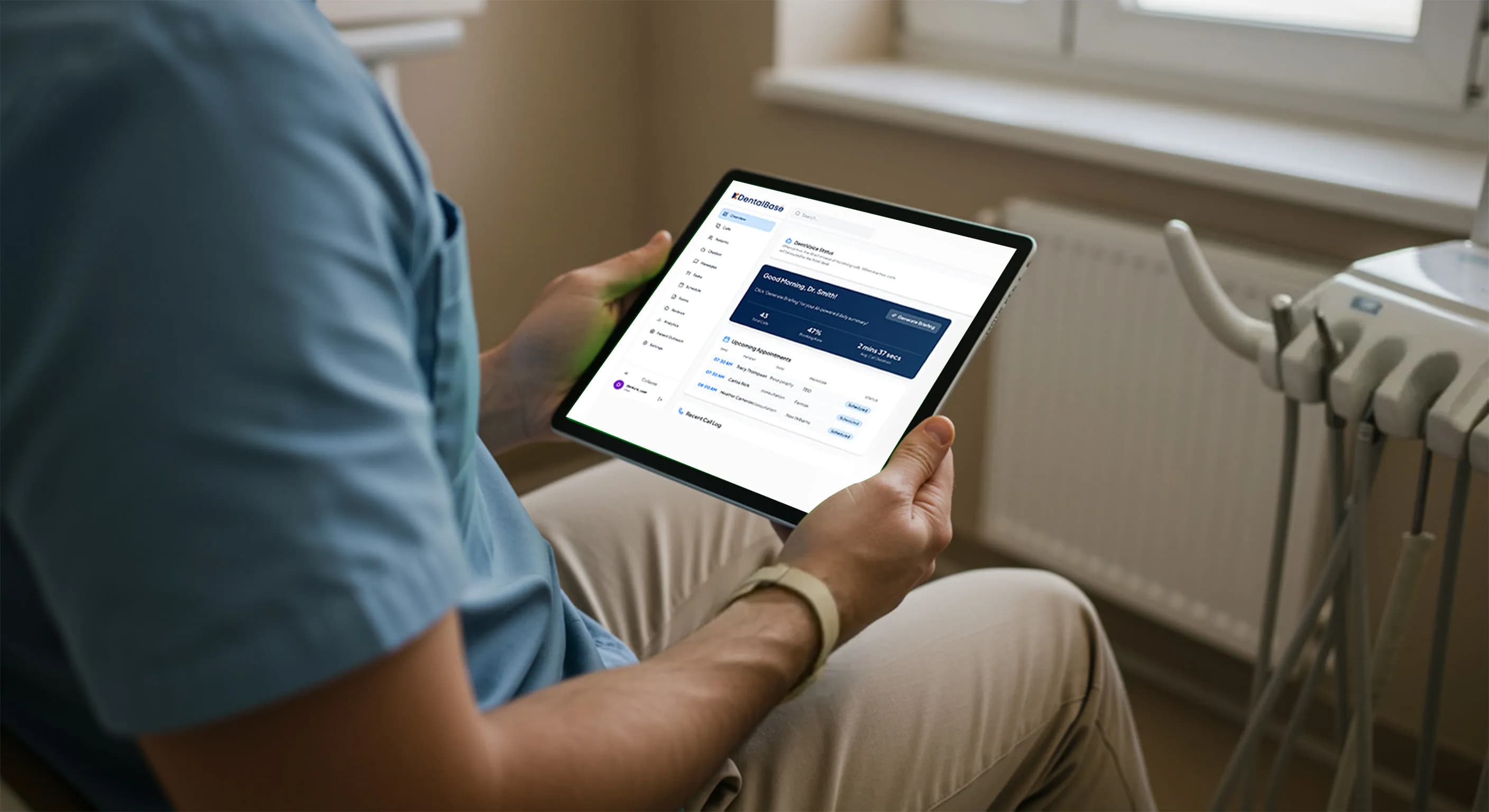
AI Receptionist Call Quality: What to Review and How Often

Monitor AI receptionist call quality with a repeatable review routine. Learn which calls to spot-check, key metrics, and how often to review them.
Share:
Table of contents
AI receptionist call quality is the difference between a system that quietly gets better every month and one that drifts until a patient complaint forces a review. Most practices set up their voice AI once, listen to it work for a week, and then never open a call log again. That gap is where missed appointments and awkward handoffs pile up unnoticed. This guide gives you a repeatable routine for what to review, which metrics actually matter, and how often to check in, so your initial setup keeps paying off instead of quietly decaying.
Think of call quality monitoring as the maintenance schedule for a system that talks to your patients all day. Skip it, and small configuration gaps become the reason a caller hangs up. Stay on top of it, and your front desk team spends less time firefighting and more time on the patients standing in front of them.
If you have not yet gone live at all, monitoring is a later step. The full guide to implementing an AI receptionist in your dental office covers choosing a platform, integrating it with your systems, and training staff before you reach this stage.
What Does AI Receptionist Call Quality Monitoring Mean?
AI receptionist call quality monitoring is the ongoing practice of listening to a sample of calls, checking outcomes against a scorecard, and feeding what you learn back into the system's configuration. It's not a one-time QA pass. It's closer to chart auditing: a recurring habit that catches drift before it becomes a pattern.
Most practices confuse "the system is running" with "the system is running well." A voice AI can complete every call without hanging up, misrouting anyone, or throwing an error, and still be handling half its scheduling questions badly. Errors like that rarely show up in a dashboard. They show up when a patient mentions, almost in passing, that the phone system misunderstood their insurance question three times before a staff member picked up. That's the failure mode monitoring exists to catch, and it's a different problem entirely from uptime or call completion rate.
Treat monitoring the same way you'd treat any operational habit: scheduled, not reactive. A ten-minute weekly check beats a two-hour emergency audit after a patient complaint.
The same discipline applies to your human team. Running a dental mystery shopper phone audit on the front desk applies the identical scorecard logic to staff-handled calls, not just the ones your AI receptionist takes.
Haven't finished your initial configuration yet?
A clean setup makes monitoring far easier later. Walk through the day-by-day launch process before you start building your review routine.
See the setup checklist →Which Calls Should You Spot-Check Each Week?
Spot-check a mix of call types every week, not just the ones that triggered a complaint. Pull a handful of new patient calls, a few reschedules, at least one after-hours or overflow call, and any call your AI flagged as low-confidence or escalated to voicemail. That spread catches problems a single call type would hide.
For a full breakdown of which call types show up most often at a dental front desk, see our guide to what patients actually call about, it's a useful checklist when building your weekly sample.

A single-location practice can usually get a fair read by reviewing 15 to 20 calls a week. Multi-location groups need a proportional sample from each site, since a script tweak that works at one location can misfire at another with a different patient mix or accent range. Don't just grab the easiest calls to review. Deliberately include the ones your team already grumbles about, because that's where the real fixes live.
A simple weekly sampling method
- Pull all calls flagged as "low confidence" or "escalated" by the AI, review every one.
- Add 5 random new patient calls from the week.
- Add 5 random existing patient calls (reschedules, cancellations, billing questions).
- Include any overflow call that came in during peak hours.
- Note the outcome of each: booked, transferred, dropped, or unresolved.
If your practice runs high call volume, this sample takes under 30 minutes once you build the habit. That's a small price for catching a broken booking flow before it costs you a week of missed patients.
What Metrics Signal a Problem With Your AI Receptionist?
Yes, a handful of metrics reliably flag trouble: rising escalation rate, longer average call duration without a corresponding rise in complexity, repeated misroutes to the wrong department, and a drop in successful bookings from calls that should convert. Track these weekly, not monthly, so a spike doesn't sit unnoticed for a full billing cycle.
These same numbers roll up into a bigger picture once you start tracking them over time, which is where the call analytics metrics that actually move revenue come in.
For the full scorecard, including patient experience, staff workload, and ROI, see this complete set of AI receptionist KPIs for dental offices.
Spot-checks should also include reviewing accent and noise-handling accuracy specifically, since a single blended accuracy score can hide accent-specific gaps entirely.
Escalation rate deserves special attention. A small, steady rate of calls handed to a human is healthy. It means the system knows its limits. A rising escalation rate usually means something changed on your end, a new insurance carrier, a schedule template update, a service you stopped offering, and the AI's configuration hasn't caught up. Hold time creeping upward inside the call itself is another quiet warning sign; if callers are waiting through long pauses before the AI responds, that friction shows up as abandoned calls even when the eventual answer was correct.
A drop specifically in booking accuracy is worth pulling out of the general metrics review, since it usually points to a sync problem between the AI and your practice management system rather than a conversational one. Denticon-based practices can check that connection against the AI dental receptionist Denticon integration guide to confirm scheduling data is syncing the way it is supposed to before assuming the issue is with the AI's conversation handling.
Here's a quick way to think about severity:
| Metric | Healthy range | Investigate if |
|---|---|---|
| Escalation rate | Low and stable week to week | Rises for two consecutive weeks |
| Misroute rate | Near zero | Any repeated pattern, not just a one-off |
| Booking conversion | Consistent with your baseline | Drops without a seasonal explanation |
| In-call pause length | Brief, consistent | Noticeably longer on specific call types |
How Often Should You Review AI Receptionist Calls?
Most practices should run a short review every week and a deeper audit monthly. The weekly pass catches acute problems, a new script that's confusing callers, a scheduling rule that broke after an update, while the monthly audit looks for slower drift across a larger sample and confirms the fixes from prior weeks actually held.
Weekly reviews take 20 to 30 minutes and focus on flagged calls plus a small random sample. Monthly audits run longer, often an hour, and pull a broader cross-section: calls from every provider, every call type, and every time of day the AI handles. That monthly pass is also when you compare current performance against the baseline you set right after go-live, using the same cadence outlined in the practice's day-to-day operating playbook.
New practices or anyone recently onboarded onto voice AI should shorten this cycle for the first month. Review daily for the first week, then step down to the weekly rhythm once the configuration stabilizes.
- Week 1 after go-live: Daily spot-checks on every escalated call.
- Weeks 2 to 4: Move to the standard weekly sample.
- Month 2 onward: Weekly sample plus one monthly deep audit.
- After any major change: New provider, new insurance, new service, return to daily checks for a week.
That cadence gets harder to hold once a single practice becomes several. Florida DSOs measuring call quality across multiple locations tend to run the same weekly and monthly cycle per office, then compare results side by side instead of blending everything into one number.
Not sure your review cadence is catching what matters?
See how the full operating playbook structures monitoring alongside setup, staff handoff, and scaling.
Read the operating playbook →How Do You Turn Call Reviews Into Configuration Fixes?
You turn a review into a fix by logging the exact phrase or scenario that failed, then updating the specific piece of configuration responsible, whether that's an FAQ entry, a routing rule, or a scheduling constraint, rather than making a broad change. Vague notes like "AI struggled with insurance calls" don't translate into an actionable fix. Specific notes do.

Build a simple feedback log: date, call type, what the caller asked, what went wrong, and the fix applied. Over a few months this log becomes your most reliable training resource, more useful than any generic FAQ, because it's built from your actual patients asking things your actual configuration didn't anticipate. Many of these gaps trace back to the same source: an FAQ answer that was never trained into the system in the first place.
Prioritize fixes by frequency and impact. A rare edge case can wait. A misunderstanding that shows up on ten calls a week, especially one that affects booking, needs a same-day fix. Whichever fix you apply, publish it the same way you'd publish any other prompt update, with a saved previous version and a quick test call first. AI receptionist prompt management and version control basics covers that process in full.
A basic feedback loop that works
- Log the failed call with enough detail to reproduce the issue.
- Tag it by root cause: missing FAQ, routing rule, scheduling logic, or tone mismatch.
- Apply the fix in the configuration, not just a verbal note to staff.
- Re-test with a similar scenario within the same week.
- Confirm the fix held during the next weekly review.
What Mistakes Undermine an AI Call Quality Review Process?
The most common mistake is reviewing only the calls that already went wrong, which skips the slow degradation happening in calls nobody flagged. A close second is treating monitoring as a one-person task with no backup, so the whole process stops the week that person is out sick or on vacation.
Another frequent misstep: changing multiple configuration settings at once after a bad week, then losing track of which change actually fixed the problem. That approach might work in the short term, but it makes your next review far harder, since you can no longer tell which lever moved the needle. Practices that skip the written log fall into this trap more often, because memory of "what we changed last month" fades fast once the daily grind of patient calls resumes.
A third mistake worth naming directly: monitoring calls only to police staff performance rather than to improve the system. Call quality review works most effectively as a shared, blameless process. Your front desk team knows things the transcripts don't show, like which callers were already frustrated before the phone even rang, and that context matters when you're deciding whether a rough call reflects a system gap or ordinary patient stress.
Related: Weigh how your current phone setup compares to the alternatives before you invest more time refining call reviews. Compare dental phone coverage models →
How Does Call Quality Monitoring Connect to the Patient Experience?
Call quality monitoring connects directly to patient experience because every metric on your scorecard is really a proxy for how a caller felt during that conversation. A low escalation rate means most callers got what they needed without extra friction. A short hold time means fewer people hung up mid-question. Zooming out, quality monitoring is really just one piece of how technology improves the dental patient experience across every stage of a visit, not just the phone call.

It helps to periodically review calls specifically through that lens rather than a purely operational one. Listen to a few calls each month and ask what a nervous or rushed caller would have experienced, not just whether the AI technically completed the task. That's a different filter than "did it book the appointment," and it catches issues a pure conversion metric misses entirely, tone that reads as rushed, a confirmation that came across as robotic, or a hold that felt longer than its actual seconds. The patient phone experience guide covers what callers should hear moment to moment, which pairs naturally with the quality checks in this article.
The American Dental Association's Health Policy Institute has tracked how patient access and communication shape practice growth for years, and that same logic applies to phone experience: friction anywhere in the call chain compounds into fewer booked patients over time, according to the ADA Health Policy Institute.
Keeping Call Reviews From Becoming Another Burnout Driver
Call quality monitoring is meant to reduce strain on your front desk, not add to it. When review work piles onto the same staff who are already fielding live calls, the process defeats its own purpose.
- Assign call review to a rotating owner rather than defaulting it to whoever has the most tenure.
- Cap weekly review time so it doesn't compete with peak-hour phone coverage.
- Treat recurring configuration fixes as a way to reduce staff workload, not just improve AI accuracy.
If monitoring duties are stacking on top of an already stretched front desk, our guide to reducing dental front-office burnout has a broader look at where that pressure tends to build and how to relieve it. Staff also tend to review calls more willingly when they helped shape the rollout in the first place. Our guide to getting front desk buy-in before an AI receptionist launch covers how to set that expectation from day one.
What Does a Complete Monitoring Setup Look Like Long Term?
A complete long-term setup combines the weekly and monthly review cadence, a written feedback log, clear ownership of who reviews what, and a quarterly check against your original goals from go-live. Without that last piece, it's easy to keep fixing small issues while losing sight of whether the system is meeting the bigger targets you set when you adopted it.
Assign a specific person, not "the front desk team" collectively, to own the weekly review. Rotate that responsibility quarterly if you want cross-training, but don't leave it undefined. Undefined ownership is how monitoring quietly stops happening three months after launch, right when the novelty wears off and everyone assumes someone else is watching the logs.
Regulatory context matters here too. Under HIPAA, any call recordings or transcripts your practice retains for quality review count as protected health information, which means your monitoring workflow needs the same access controls and retention policies as the rest of your patient records, not an informal shared folder. The National Institute of Dental and Craniofacial Research and other federal health bodies continue to emphasize documentation discipline across dental operations generally, and phone records are no exception.
Industry publications like Dental Economics and forums such as DentalTown regularly surface how other practices structure their front-desk QA, which is worth skimming a few times a year even if your process already works. Preventive oral health guidance from the CDC's oral health program reinforces the same principle in a different context: consistent, scheduled checks catch small problems before they compound, whether that's a patient's teeth or a phone system's configuration.
AI receptionist call quality isn't something you set once and forget. It's a habit built on a short weekly check, a deeper monthly audit, and a written log that turns scattered observations into real fixes. Practices that treat monitoring as routine maintenance, not emergency response, catch problems while they're still small and cheap to fix. Start with this week's sample of 15 to 20 calls, log what you find, and build the cadence from there.
Call quality is one factor to weigh before you ever get to monitoring, it should already be part of how you picked the vendor. Our guide to choosing the best dental AI receptionist software covers what to check at the evaluation stage, before go-live.
Ready to build your monitoring routine?
Walk through the complete operating playbook to see how monitoring fits alongside setup, staff handoff, and scaling across locations.
Read the full playbook →Want to see what missed calls are actually costing you?
Run the missed call cost calculator →Frequently Asked Questions
Review every escalated or low-confidence call plus 10 to 15 random calls covering new patients, reschedules, and overflow. Single-location practices can complete this in under 30 minutes. Multi-location groups need a proportional sample from each site.
A low, stable escalation rate week to week is healthy since it shows the system recognizes its own limits. A rising rate over two consecutive weeks usually signals a configuration gap, often tied to a recent schedule, insurance, or service change.
Assign one specific person to own the weekly sample and keep a simple written log of what failed and what fix was applied. Rotate ownership quarterly if needed, but never leave the responsibility undefined or it stops happening within months.
Log the exact phrase or scenario that failed, tag it by root cause such as a missing FAQ or routing rule, apply a targeted fix, and re-test with a similar scenario the same week to confirm the fix actually held.
Yes, call recordings and transcripts used for quality review count as protected health information under HIPAA. They need the same access controls and retention policies as any other patient record, not an informal shared folder.
Run a 20 to 30 minute weekly check on flagged and sampled calls, and a deeper monthly audit of roughly an hour covering every provider and call type. New deployments should start with daily checks for the first week.
Sources & References
- 1
- 2
- 3
Topics
Was this article helpful?
Written by
DentalBase Team
Expert dental industry content from the DentalBase team. We provide insights on practice management, marketing, compliance, and growth strategies for dental professionals.