Is My Dental Call Recorded? What Your Office Hears and Keeps
Is my dental call recorded? Follow one call from first ring to chart note and see what your dental office hears, writes down, and keeps.
Share:
Table of contents
Is my dental call recorded? Most patients only wonder about that when they hear a recording notice. But the audio is just one piece. A single five-minute call to move a cleaning can leave behind a log entry, a screen of your chart, a transcript, a written note, and a text confirmation.
None of that is unusual or sinister. It's how busy front desks keep track of hundreds of calls a week, and why more practices now use AI dental receptionist tools that write things down automatically. Still, you deserve to know what your call creates.
This guide follows one ordinary call from the first ring to weeks later: who hears it, what gets written down, what it's used for, and the simple choices that change what stays on file.
Is My Dental Call Recorded, or Just Logged?
Almost every call is logged, but not every call is recorded. A log is a basic entry with your number, the time, and the call length. A recording captures the conversation itself. Many dental offices record some or all calls, and they usually say so in the greeting before anyone answers.
The difference matters. A log tells the office that you called. A recording, or an AI transcript, tells it what you said. Most phone systems keep logs automatically, while recording is a setting the practice chooses to turn on.
Federal wiretap law allows a call to be recorded when one person on it agrees, and some states require everyone's consent. The exact rules are the office's job to follow, and this state-by-state guide to call recording laws covers them if you're curious. For you, the practical signal is simple: if you hear a notice, assume the call is being recorded or transcribed.
No notice? That doesn't always mean nothing is saved. If you're still asking yourself "is my dental call recorded," ask the front desk directly.
Wondering why a computer answered instead of a person?
Plenty of practices now use AI to pick up during busy hours. This patient guide explains why, and what it means for you.
Read the patient guide →What Happens in the First Few Seconds of Your Call?
Before anyone says hello, the phone system has usually identified your number, matched it to your chart, and decided where to send the call. That is why staff sometimes greet you by name. Several things happen in those seconds, and each one leaves a small trace.
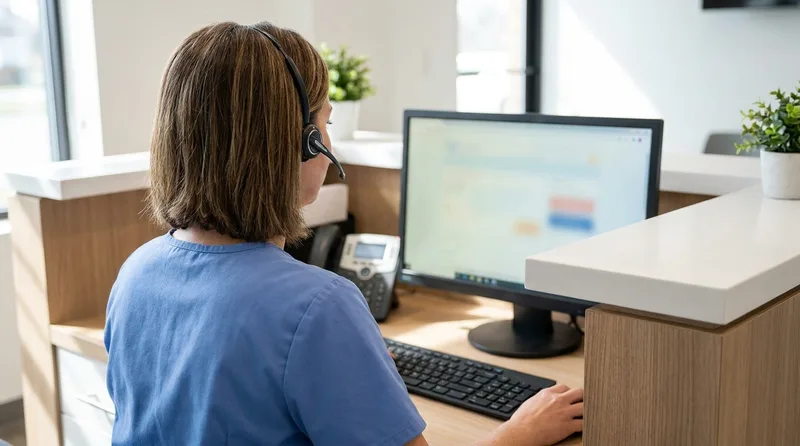
Here's roughly what happens, in order:
- Number tracking. If you dialed a number from an ad or Google listing, it may be a tracking line that tells the office which marketing source brought you in. Practices use this for marketing attribution, not to profile you.
- Caller ID match. The system checks your number against patient records and opens a screen pop with your name and upcoming visits, as this look at caller ID screen pops explains.
- Routing. A menu or AI decides whether your call goes to scheduling, billing, or an urgent line, and that choice is logged too.
- Recording notice. If recording is on, the notice plays here.
Calling from a shared family phone? The screen pop may show whoever's number it is, not you. Saying your own name and date of birth early fixes that quickly.
Who Is Actually Listening While You Talk?
Usually one person or one AI system, not a room full of staff. Depending on the office, your call might reach a front desk team member, an AI receptionist, a remote answering service after hours, or an overflow team. Dentists and hygienists rarely hear the call live unless you're transferred to them.
Each option handles your words a little differently. A team member listens and types notes. An AI receptionist turns speech into text as you talk, so a written transcript exists almost by default. An answering service writes a message and passes it to the office in the morning, and call routing rules decide which of these you reach.
Patients want to know which one they're talking to. A Pew Research Center survey of 3,488 U.S. adults in June 2026 found that 72% say it's extremely or very important for providers to disclose AI use in their care. Even for routine tasks, 56% want to know when AI schedules visits, and 64% when it orders prescription refills. Yet 46% weren't sure whether AI had been part of their care at all, and only 17% felt they had much control over it.
So listen to the greeting. A clear one tells you whether you're speaking with AI and how to reach a person. Rules on that kind of disclosure are growing, as this overview of AI disclosure requirements shows.
What Does the Office Write Down After You Hang Up?
The office typically writes a short note in your chart and updates anything the call changed, like an appointment or a payment plan. If an AI answered, a summary may be saved automatically. These written records usually outlast any audio recording, and they're what staff actually read next time you call.
Dental software has built-in places for this. Open Dental's Commlog, for example, is a general log of communications with each patient, visible in the account and chart areas. A line like "Pt called, crown sensitivity, booked Thu 9am" can sit in your file for years.
After a typical call, you might leave behind:
- A chart or communication note with the reason for the call and any decision made.
- An updated appointment, plus a text or email confirmation sent to you.
- A follow-up task, such as "check insurance" or "doctor to call back," assigned to a team member.
- An AI summary or transcript, if the office uses one.
Notes tend to be brief and practical. Staff write what the next person needs, not a word-for-word account. Still, anything you mention about symptoms, medications, or money may show up in that note, so the details you choose to share matter.
What Is a Recorded Call Used For Later?
Mostly for training, quality checks, and settling mix-ups. Offices replay calls to coach new staff, check that patients got accurate information, and confirm details like which day you asked for. Some also use call data to spot busy hours and missed calls. Your recording isn't a sales tool and shouldn't be shared publicly.
| Use | Who usually reviews it | What they're looking for |
|---|---|---|
| Staff training | Office manager or trainer | Tone, accuracy, and how questions were answered |
| Quality checks | Manager or outside phone auditor | Whether the caller got clear, correct help |
| Resolving a dispute | Office manager | What was actually said about a time, fee, or instruction |
| Call analytics | Practice owner or manager | Busy hours, hold times, and calls that went unanswered |
| Marketing tracking | Marketing team or agency | Which ad or listing led to the call, not what you said |
Much of this is aggregate. When a practice reviews dental call analytics, it's usually looking at patterns across hundreds of calls, like how many rang out on Monday mornings, rather than listening to yours specifically.
That said, individual recordings do get replayed when something goes wrong. If you and the office disagree about what was said, a recording can actually help you. Ask whether one exists.
How Are Your Call Details Protected Once They're Stored?
Once a recording, transcript, or note links your identity to your dental care, it's protected health information under HIPAA. The office must limit who can open it, secure it with safeguards like passwords and encryption, and only use it for allowed purposes such as treatment, payment, and running the practice.

Phone conversations with health details fall under the Privacy Rule, and stored digital copies bring in the Security Rule too, as HIPAA Journal explains. Practices can find templates and guidance through the American Dental Association's HIPAA resources.
Outside companies follow the same rules. A cloud phone provider or AI receptionist vendor that stores your calls must sign a Business Associate Agreement with the practice first, which you can read more about in this guide to Business Associate Agreements. How long each piece is kept is set by the office's call recording retention policy, and audio is often deleted sooner than chart notes.
Access is limited by role, too. Billing staff don't need your clinical notes, and a scheduler doesn't need your full history to move a cleaning.
Related: Sometimes the fastest way to keep a sensitive topic off an automated line is simply to reach a person. See how to reach a human at a dental office →
How Can You Shape What Your Call Leaves Behind?
Share what the call needs and move sensitive topics to a channel you prefer. You can ask the office not to record, request a callback from a team member, or use the secure patient portal for detailed medical or money questions. Fewer details spoken usually means fewer details written down.
Picture a three-dentist practice fielding about 200 calls a week. A reschedule needs your name, date of birth, and preferred time. It doesn't need your medication list or the story behind a late payment. And patients often prefer it that way: in a 2024 Talkdesk survey, 74% of U.S. respondents said they'd rather discuss personal health information with a person than an automated agent.
- Listen for the notice and decide what to share before you start.
- Ask for options if you'd rather not be recorded, such as a callback or an unrecorded line.
- Keep it brief and stick to the task at hand.
- Use the portal for anything detailed, since it creates a record you can see yourself.
- Ask for a person whenever a topic feels sensitive.
One exception. In a dental emergency, describe swelling, bleeding, or severe pain clearly, recording or not. The office needs those details to help you quickly.
What Can You Ask to See After Your Call?
You can usually ask to see the chart note from your call, and sometimes the recording or transcript. HIPAA gives you a right to copies of records used to make decisions about your care or payment. Notes almost always qualify, while recordings kept only for staff training may not.
Offices generally have 30 days to respond to a written request, with one 30-day extension allowed. Your portal may already show some of it, like appointment changes and messages. For anything else, keep the request specific:
- The date and rough time of the call
- What it was about, such as rescheduling or a billing question
- Whether you want the note, the transcript, the recording, or all three
Most offices handle these requests without fuss. Asking also gives you a quick way to check that what was written down matches what you meant. If a note gets something wrong, you can ask the office to correct it.
Your call is more than a conversation. It's a small trail of logs, notes, and sometimes audio that helps the office remember what you need, and it's protected the same way your chart is.
So the next time you ask yourself, is my dental call recorded, ask the office too. One question covers it: "Do you record or transcribe calls, and what gets saved in my file?" A good front desk will answer in under a minute.
This article is general information for patients and isn't legal advice. Recording and privacy rules vary by state.
Get clear answers about calling your dental office
Browse our patient guides on how dental offices handle calls, AI receptionists, privacy, and getting the help you need.
Explore patient guides →Have more questions about AI answering your dentist's phone?
Read 30 common AI receptionist questions answered →Frequently Asked Questions
Yes, a voicemail is a recording by nature. Many phone systems also transcribe it into text and attach it to an inbox or your chart. Keep voicemails short: your name, callback number, and the general reason for calling are usually enough for the office to follow up.
Yes, you can decline. Tell the office at the start of the call that you don't want to be recorded and ask about alternatives. Some practices can transfer you to an unrecorded line, while others will suggest a callback, the patient portal, or handling the request in person.
It can be. Outbound calls for reminders, treatment follow-ups, or billing may run through the same recorded phone system. If a staff member or automated system calls you, it's fine to ask whether the call is recorded before you discuss anything personal.
Only for permitted purposes such as payment, and only the minimum information needed. HIPAA lets offices share health information with insurers to process claims, but they shouldn't send a full call recording when a short note or claim form would cover it.
The office must investigate and notify you if your unsecured health information was compromised. Under the HIPAA Breach Notification Rule, notice generally goes out without unreasonable delay and no later than 60 days after the breach is discovered.
Not automatically. Texts are stored too, often in the same communication log as call notes. A secure patient portal is usually the safer choice for sensitive details, since it requires a login and keeps a record you can review yourself.
Sources & References
- 1
- 2
- 3
- 4
- 5
- 6
Topics
Was this article helpful?
Written by
DentalBase Team
Expert dental industry content from the DentalBase team. We provide insights on practice management, marketing, compliance, and growth strategies for dental professionals.