Dental Phone Accessibility: Serving Every Patient Who Calls

Dental phone accessibility means handling elderly callers, anxious patients, and diverse needs with patience. See how AI voice agents help.
Share:
Table of contents
Dental phone accessibility means making sure every caller, regardless of age, anxiety level, hearing ability, or communication style, can book an appointment without friction. Most front desks are trained for the average patient. But the average patient doesn't call your office. An 78-year-old who prefers a phone over an app calls. A first-time patient with a needle phobia calls and stalls before speaking. A caller with a hearing aid asks you to repeat the appointment time twice.
None of this is rare. It's the daily reality of running a dental phone line, and it's exactly the kind of caller your phone coverage strategy needs to account for, not just the easy callers who already know what they want. This guide breaks down what accessible phone handling actually requires, how it differs by caller type, and where a patient AI voice receptionist closes gaps a stretched front desk physically cannot.
See How DentiVoice Handles Every Caller
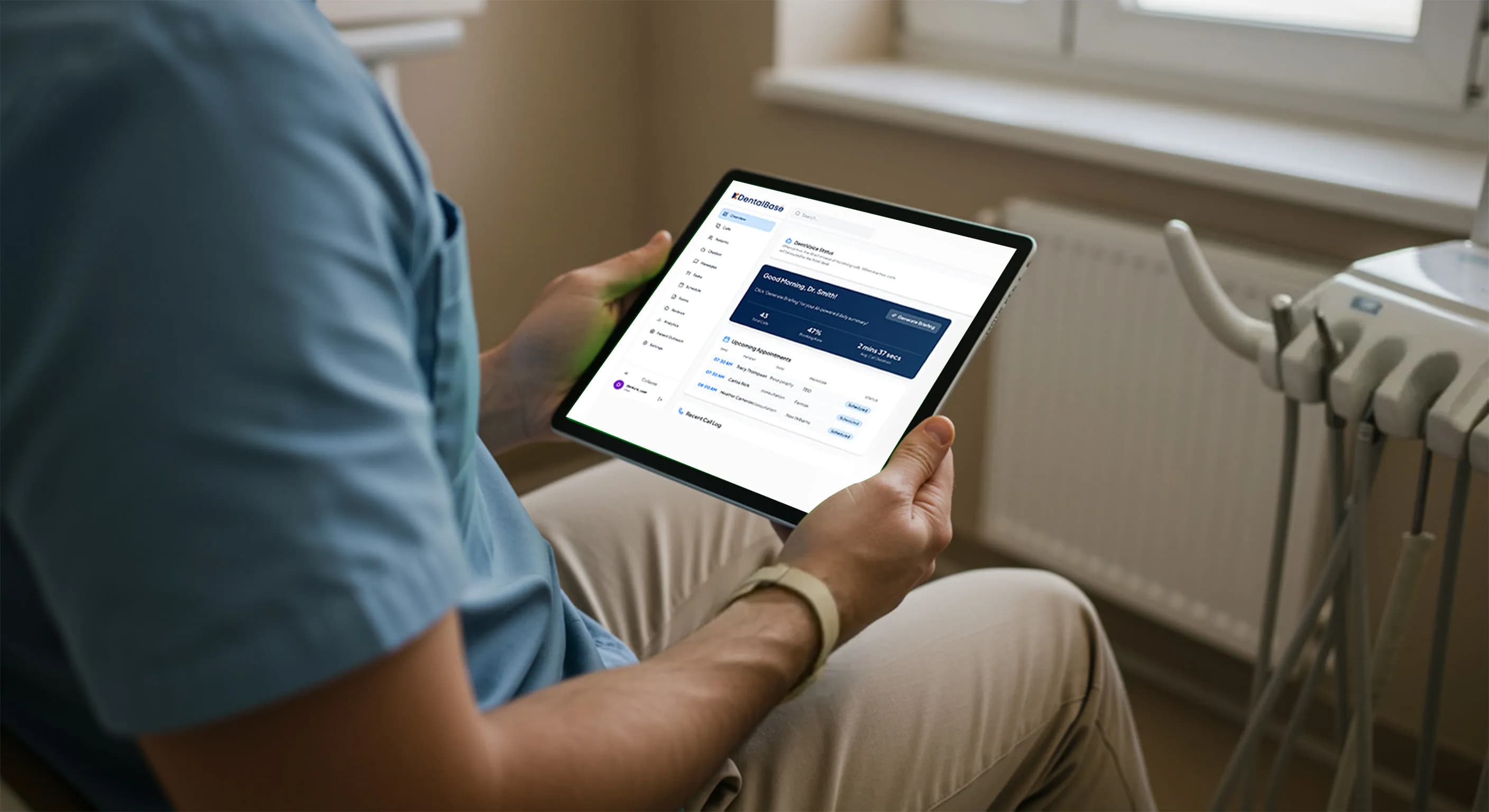
From a rushed working parent to a patient who needs extra time to explain a concern, DentiVoice adapts pace and tone to the caller on the line.
See DentiVoice in Action →What Does Dental Phone Accessibility Mean for Your Practice?
Dental phone accessibility means a caller can complete a booking or get an answer regardless of age, anxiety, hearing ability, or language comfort. It's a practical standard, not a legal checkbox. A practice meets it when its phone process bends to the caller instead of forcing the caller to keep up.
This shows up in small, specific ways. It's a receptionist who slows down for a caller who says "can you say that again," instead of repeating the same sentence at the same speed. It's a system that doesn't hang up on silence, because the silence might be someone composing a sentence they're nervous to say out loud.
That single data point matters more than it looks. According to CDC data on older adults, 63.7% of adults 65 and older had a dental visit in the past 12 months as of 2022, a population that disproportionately calls rather than books online. A practice that treats phone accessibility as an afterthought is underserving a patient segment that is both large and likely to need more clinical care, not less.
- Pace: can the caller set the speed of the conversation, or are they rushed?
- Repetition: does the system or staff member repeat information without irritation?
- Clarity: is speech clear enough for someone with hearing loss or a non-native ear?
- Patience: does silence on the line get interpreted as confusion, not disconnection?
The American Dental Association's guidance on the Americans with Disabilities Act frames accessible communication as a baseline expectation of patient-centered care, not an optional courtesy reserved for difficult calls.
Why Do Elderly Patients Still Prefer Calling the Dental Office?
Elderly patients prefer calling because phone conversation feels more reliable than a booking form, and many simply find it easier than navigating a website on a small screen. A booking widget assumes confident typing and clear vision. A phone call assumes neither.
There's also a trust factor that's easy to underestimate if you're not the one making the call. An older caller wants to hear a calendar confirmed out loud, not just see a green checkmark appear on a screen they're already squinting at. Some are calling about a complex medical history, multiple medications, or a spouse's appointment too, and that kind of nuance rarely fits cleanly into an online form's dropdown menus.
The risk for your practice is what happens when that call doesn't get the patience it needs. A rushed staff member, even unintentionally, can make an older caller feel like a burden. That caller often doesn't push back. They just don't call back either.

Practical fix: never rush an older caller toward a faster channel. Confirm details out loud, twice if needed, and treat the phone call itself as the preferred experience rather than a fallback.
How Should a Dental Practice Handle Anxious Callers on the Phone?
Handle anxious callers by lowering the pace, normalizing hesitation, and never filling silence with pressure to hurry up. Anxiety on a dental call often shows up as long pauses, trailing sentences, or a caller who asks the same question twice because they didn't process the first answer.
This is where tone does more work than script. A flat "go ahead" after a pause can read as impatience even when none is intended. The fix isn't a different script. It's permission, stated or implied, to take the time they need. Some callers are anxious about the visit itself, others about the call, and a few are anxious about both at once.
This connects directly to what callers actually hear in the first moments of a dental call, since the opening seconds often determine whether an anxious caller relaxes or shuts down. A greeting that's warm but unhurried sets the tone for everything that follows, and the first seven seconds of a dental phone greeting tend to predict the rest of the call.
- Open with a slower, calmer pace than your default speaking rhythm.
- Avoid clinical jargon that forces the caller to ask for clarification.
- Let pauses sit for a beat before jumping in.
- Confirm the booking clearly, since anxious callers often forget details under stress.
What Makes a Caller Feel Rushed, and How Do You Prevent It?
Callers feel rushed when staff talk over them, skip confirmations, or audibly sigh through hold music delays. It's rarely one big mistake. It's a stack of small ones that add up across a 90-second call, and each one chips away at dental phone accessibility before the caller even finishes their first sentence.
Picture a three-provider practice fielding 200 calls a week during flu season, with two staff members also checking patients in at the front desk. The math doesn't work in the caller's favor. Every call after the third one in a row gets a faster, flatter version of the same greeting, and patients can hear that fatigue even when no one means to show it.
| Behavior | Feels Rushed | Feels Patient |
|---|---|---|
| Pace | Fast, clipped sentences | Even tone, natural pauses |
| Repetition | Audible annoyance | Repeats without comment |
| Hold time | Long silence, no update | Brief, with a check-in |
Long hold times compound the problem, and the data on this is unambiguous. Most patients abandon a call after roughly 90 seconds on hold, and a caller who already feels rushed gives up even faster. Statista's healthcare market data shows patient experience expectations climbing across outpatient services generally, and dental phone interactions are not exempt from that shift.
Can AI Voice Receptionists Offer More Patience Than a Busy Front Desk?
Yes, an AI voice receptionist can sustain the same patient pace on call 200 of the day as it does on call one. Human staff get tired. Even excellent, well-trained staff have a finite supply of patience by 4 p.m. on a Friday with a packed waiting room.
This isn't about replacing the front desk team. It's about giving the team backup for the calls that would otherwise eat ten minutes or get rushed through. An AI voice agent doesn't sigh, doesn't speed up out of frustration, and doesn't need to glance at the line forming at the counter while a caller works through a complicated insurance question.
What it does need is to be configured correctly. A poorly built voice AI can sound just as rushed as a tired human if it's tuned for speed over clarity. The goal is a system trained to slow its pace, repeat information cleanly, and never push a caller toward a faster channel they didn't ask for.
Patience That Doesn't Run Out
DentiVoice keeps the same calm pace on the last call of the day as the first, for every caller who needs extra time.
Talk to DentiVoice →Serving Diverse Callers: Accents, Hearing Differences, and Communication Needs
Serving diverse callers means recognizing that accessibility isn't one category. It covers hearing loss, non-native English speakers, cognitive differences, and callers juggling kids or noisy environments in the background. Each needs a different small adjustment, not a single universal fix.
The technical side of this, how the system actually parses accents and filters background noise, is covered in how AI receptionists handle accents and background noise.
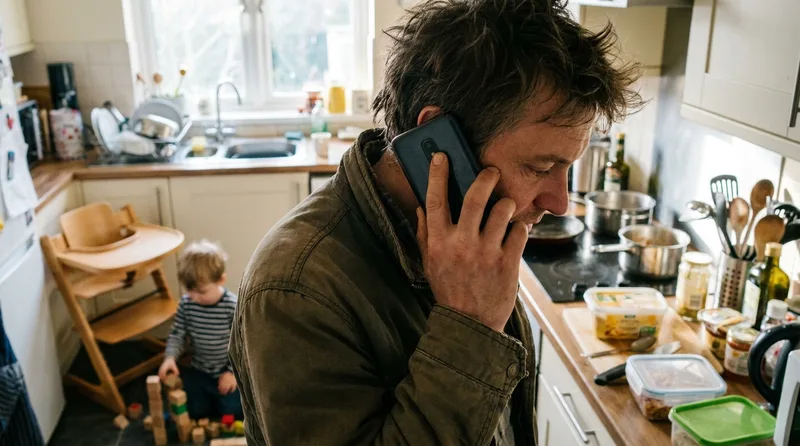
Spanish-speaking callers are one of the largest groups practices underserve on the phone, and it's a solvable problem rather than a staffing limitation. An estimated 25 million people in the U.S. have limited English proficiency, and roughly six in ten of them are Spanish speakers, according to KFF research on language access in healthcare. Bilingual call handling for Spanish-speaking patients shows how an AI system can switch language mid-call without the awkward transfer-and-hold cycle a human-only line often requires.
Hearing differences need a different kind of fix entirely: clear, unhurried enunciation rather than louder volume, since shouting distorts speech for hearing aid users more than it helps. The scale of this is easy to underestimate. According to the National Institute on Deafness and Other Communication Disorders, roughly 15% of American adults report some trouble hearing, and that share climbs sharply after age 65. Background noise on the caller's end, kids, traffic, a job site, means a slower system is more forgiving than a fast one that misreads a half-heard word as a wrong answer.
- Non-native English speakers: simple sentence structure beats idioms or fast speech.
- Hearing aid users: clarity and pace matter more than raw volume.
- Cognitive differences: short, single-step instructions reduce confusion.
- Callers with background noise: confirm key details twice, briefly.
According to the National Institute of Dental and Craniofacial Research, patients with developmental and communication-related disabilities often face added barriers to routine dental care, and the phone is frequently the first point where that barrier shows up.
What Role Does Phone Coverage Play in Accessibility?
Phone coverage determines whether accessible handling even gets a chance to happen. A call that goes to voicemail at 6:15 p.m. never benefits from a patient, well-trained voice on the other end, because there's no voice at all. Without reliable coverage, dental phone accessibility stops mattering, since there's no call to make accessible in the first place.
Accessibility and coverage are two sides of the same problem. A practice can train its daytime staff perfectly and still fail elderly or anxious patients who call after hours, when only an answering machine picks up. Handling call overflow without adding staff matters here specifically because overflow calls, the ones that hit during lunch rushes or after hours, are disproportionately likely to come from callers who already struggle to get through on the first attempt.
The fix isn't more staff hours. It's making sure every call, regardless of when it lands, reaches something with the same patient, accessible standard as a call during the quietest hour of the morning.
How Do You Measure Whether Your Phone Experience Is Truly Accessible?
Measure accessibility by tracking abandonment rate by time of day, average call length for first-time callers, and how often staff or systems ask a caller to repeat themselves. These numbers expose gaps that "the phones seem fine" never will.
A practice that only looks at total calls answered misses the pattern entirely. If first-time callers consistently hang up faster than returning patients, that's often an accessibility signal, not a coincidence. Call analytics built around the right metrics can surface this kind of pattern long before a patient complaint ever reaches the front desk. Dental Economics research on front desk call handling identifies hold time and inconsistent phone habits as recurring reasons practices lose new patients before a first visit is ever booked.
Run a simple internal audit quarterly. Listen to a sample of calls, specifically ones from older callers or non-native speakers if you can identify them, and ask one question: did the caller control the pace, or did the system control them?
| Metric | What It Reveals | Warning Sign |
|---|---|---|
| Abandonment rate | Whether callers give up before booking | Spikes during peak staffing strain |
| First-call length | How long new patients need to feel understood | Much shorter than expected, suggesting rushed exits |
| Repeat requests | Clarity gaps in speech or pacing | High frequency on specific staff shifts |
Accessible phone handling isn't a separate initiative from good patient care. It's the same standard applied to the moment before care even begins, the call. For more on building a phone process around the patient experience, see the full patient care resource library. Dental phone accessibility shows up most clearly in the small decisions: who gets rushed, who gets repeated information without friction, and who gets a calm, steady pace regardless of how busy the line is. Practices that get this right keep patients other offices quietly lose. Start by auditing one week of calls for pace and repetition, then decide where your coverage needs backup.
Give Every Caller the Same Patient Standard
See how DentiVoice handles elderly, anxious, and diverse callers with the same calm pace, every time.
See DentiVoice in Action →Frequently Asked Questions
Dental phone accessibility means a caller can complete a booking or get an answer regardless of age, hearing ability, anxiety, or language comfort. It focuses on pace, clarity, and patience rather than legal compliance alone.
Elderly patients often find phone calls more reliable than booking forms, especially when vision or typing speed makes small screens difficult. A spoken confirmation also feels more trustworthy than a silent checkmark on a webpage.
Staff should slow their pace, avoid filling silence with pressure, and skip clinical jargon that forces clarifying questions. A calm, unhurried greeting in the first few seconds often determines whether an anxious caller stays on the line.
Yes, AI voice receptionists hold the same pace and tone on the last call of the day as the first, since they don't experience staff fatigue. They still need correct configuration to avoid sounding rushed under high call volume.
Bilingual support lets Spanish-speaking or other non-native English callers switch language mid-call instead of being transferred or placed on hold. This removes one of the most common accessibility gaps in dental front desks today.
Abandonment rate by time of day, average first-call length, and frequency of repeat requests all reveal accessibility gaps. A noticeably shorter first-call length for new patients often signals callers are being rushed off the line.
Sources & References
- 1
- 2
- 3
- 4
- 5
- 6
- 7
Topics
Was this article helpful?
Written by
DentalBase Team
Expert dental industry content from the DentalBase team. We provide insights on practice management, marketing, compliance, and growth strategies for dental professionals.