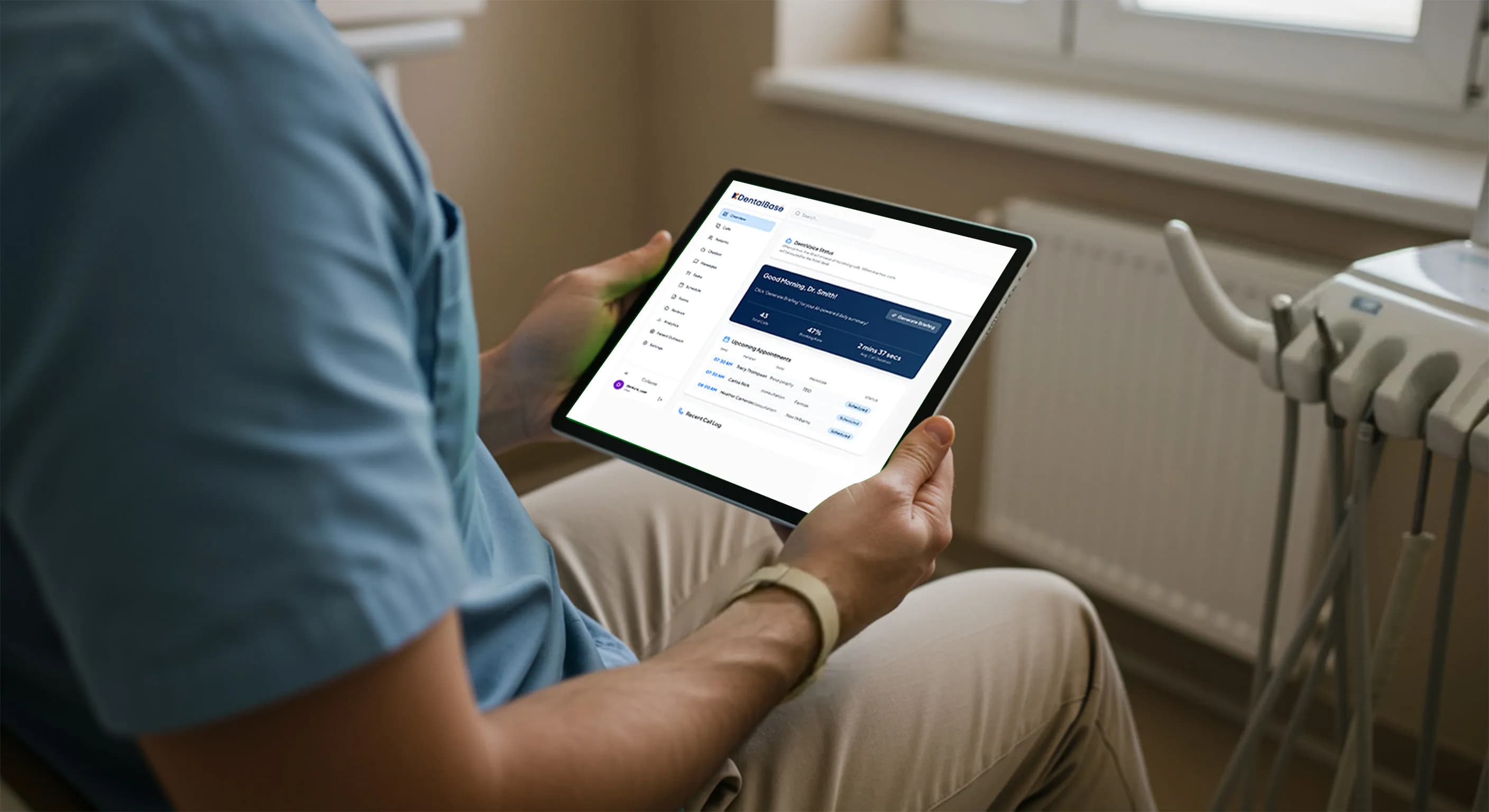
Dental Emergency Call Handling: What Patients Need to Hear
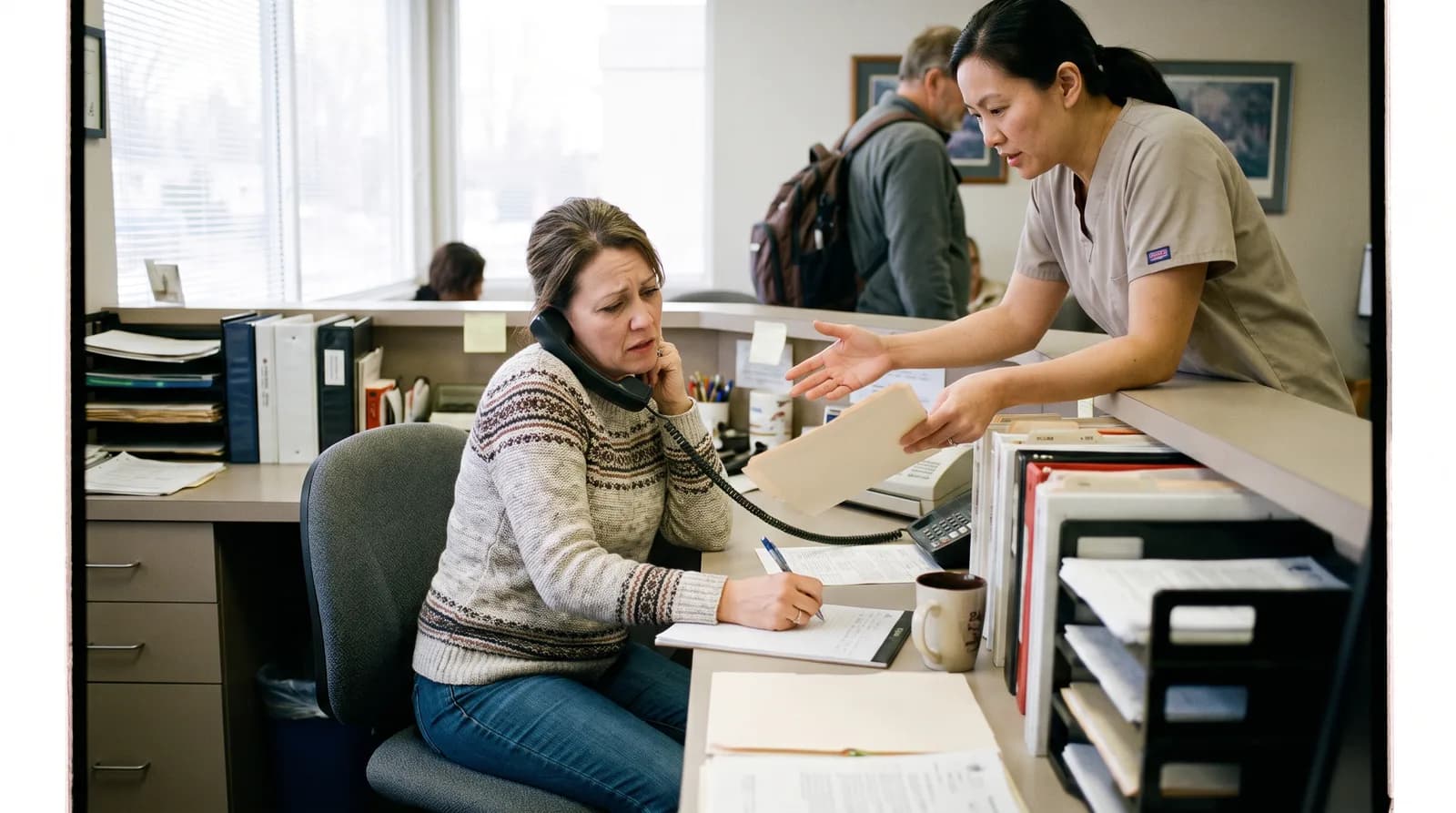
Dental emergency call handling requires empathy first, triage second. Learn the words, tone, and close that turn frightened callers into patients.
Share:
Table of contents
A patient calls your practice at 7:14 p.m., a dental emergency call. They are in pain, possibly frightened, and almost certainly unsure whether their situation qualifies as a real emergency. What they hear in the next thirty seconds of that dental emergency call handling will decide whether they stay on the line, book an appointment, or hang up and search for a different practice.
Dental emergency call handling is not primarily a triage problem. It is an empathy problem with a triage layer on top. The clinical questions matter, but they only reach the patient after the emotional threshold is crossed, after they feel heard, taken seriously, and safe enough to stay in the conversation. This article examines exactly what worried dental patients need to hear during an emergency call, what words and tone achieve it, and how practices can deliver that experience at any hour of the day.
What makes a dental emergency call emotionally different from a routine call?
Most incoming dental calls are logistical: scheduling, insurance questions, directions. The caller is calm, patient, and in control. A dental emergency call is none of those things. The patient is often dealing with acute pain, a knocked-out tooth, a broken restoration, or swelling that appeared without warning. Even a caller who presents as composed is usually masking significant anxiety.
According to research published by the National Institute of Dental and Craniofacial Research, approximately 36% of Americans experience some level of dental anxiety, with around 12% classified as severely anxious, numbers that shape every aspect of dental emergency call handling, starting the moment the phone rings. For patients already dealing with pain or trauma, that underlying anxiety compounds during the call. They are not simply asking for an appointment. They are asking: will someone help me?
Understanding this emotional state is the starting point for every element of good dental patient phone experience during an emergency. The tone, the pacing, the first sentence, all of it lands differently when the caller is distressed than when they are scheduling a routine cleaning.
What should a caller hear in the first seven seconds of an emergency call?
The opening of any call shapes the rest of the conversation. During an emergency, that effect is amplified. A patient in pain who hears hold music, a robotic prompt tree, or a distracted greeting will disengage fast.
The first seven seconds of a dental emergency call should do three things simultaneously: acknowledge the practice, signal availability, and invite the patient to speak. A greeting like "Thank you for calling [Practice Name], how can I help you today?" achieves all three in under five seconds. It is warm without being performative, and it opens the floor immediately.
What the caller should not hear: extended hold periods, a prompt asking them to press 1 for emergencies, or a greeting that feels scripted and hurried. Patients in pain notice the emotional temperature of a greeting instantly. Research from the American Dental Association's Health Policy Institute consistently shows that the perceived quality of a phone interaction shapes a patient's overall impression of a practice, before a single clinical question is asked.
Good dental phone greeting design matters on every call, but it matters most when the caller is distressed. The opening is not a formality, it is the first clinical decision point in the encounter.
Which words and phrases help a worried caller feel safe?
The vocabulary of reassurance is specific. General comfort phrases like "you'll be fine" or "don't worry" can backfire, they minimize the caller's experience and can feel dismissive to someone in genuine pain. The language that works does something more precise: it validates, it commits, and it moves forward.
Validating phrases acknowledge the caller's situation without judgment or false reassurance. Examples: "I can hear that you're in discomfort, let's figure out the best way to get you seen." Or: "Thank you for calling us. Tell me what's happening and we'll take it from there."
Committing phrases signal that action is being taken, not just information being collected. "We want to make sure you're taken care of" is weaker than "We're going to find a time for you today." Specificity reduces anxiety because it replaces uncertainty with a concrete next step.
Forward-moving phrases keep the conversation oriented toward resolution. Questions like "When did this start?" and "On a scale of one to ten, how would you describe the pain?" are clinical, but they also signal competence and momentum. The caller hears a professional taking their situation seriously and moving toward a solution.
According to Dental Economics, emotional responsiveness on the phone is one of the most underrated factors in whether an emergency caller converts to a long-term patient. The emergency call is, in many cases, the first real interaction a new patient has with the practice. How it goes determines whether they return.
How should an emergency call handle triage without sounding cold?
Triage is necessary. Practices need to understand the nature and severity of the emergency to route the caller correctly, whether that means an immediate in-office visit, an after-hours callback from the dentist, guidance on OTC palliatives, or direction to an emergency room. But clinical triage questions, asked in a flat tone without context, can feel interrogative to a frightened caller.
Related: Emergency triage sits alongside scheduling, insurance, and intake in an automated call flow. See how AI receptionists triage emergency calls and route the rest
| Call Stage | Patient's Emotional Need | What to Say or Do | What to Avoid |
|---|---|---|---|
| Opening (0-10 sec) | Confirmation that someone is there and cares | "Thank you for calling, how can I help you today?" | Hold music, prompt trees, slow greetings |
| Validation (10-30 sec) | To feel heard before being questioned | "I'm sorry you're dealing with this, let me ask a few quick questions." | Jumping straight into clinical intake |
| Triage (30-120 sec) | Competence and momentum | One question at a time with brief acknowledgments between answers | Rapid-fire lists, hold while consulting, vague responses |
| Close | A specific, concrete next step | "You're set for 8:30 tomorrow, is there anything else you need tonight?" | "Someone will call you back." No timeline, no confirmation |
The bridge between empathy and triage is acknowledgment. Before moving into assessment questions, the caller needs a brief signal that they have been heard. "I'm sorry you're dealing with this tonight, I want to ask you a few quick questions so we can figure out exactly what you need." This sentence does the transition work: it validates, commits to helping, and frames the questions that follow as purposeful rather than procedural.
The core triage questions for a dental emergency call cover:
- Nature of the issue: pain, trauma, swelling, broken or lost restoration
- Onset and duration: when it started, whether it has gotten worse
- Severity: pain on a scale of one to ten
- Red-flag symptoms: difficulty breathing or swallowing, spreading swelling, uncontrolled bleeding, these require immediate ER direction
Deliver these questions conversationally, one at a time, with a brief acknowledgment between each answer rather than as a rapid-fire list.
Specialty offices carry an extra layer here, since many emergency callers arrive by referral rather than by search. Triaging acute pulpal pain against a booked surgical block covers how that changes the opening.
During after-hours dental calls, triage becomes especially important because the routing options are more complex, the on-call dentist, the nearest emergency room, an urgent care dental center, or a next-morning scheduling recommendation. The emotional component of triage does not change after hours; if anything, a caller reaching out at 11 p.m. is operating with more urgency and less patience than one calling at 2 p.m.
What role does hold time play in a dental emergency call?
Hold is the moment where the most patient-centered emergency call handling can collapse. A caller who has just shared their pain and heard a warm, responsive opening will experience a sharp psychological shift when placed on hold. The reassurance built in the first ninety seconds can dissolve in under a minute of silence or generic hold music.
For emergency calls specifically, hold should be avoided whenever possible. If a transfer or brief pause is unavoidable, the practice should (a) explain why before placing the caller on hold, (b) give a specific and short time estimate, and (c) return within that window or check back proactively if more time is needed.
The research on dental phone hold time shows that caller abandonment accelerates after thirty to forty seconds, even for routine calls. For emergency callers, that threshold is lower, a patient in pain has less tolerance for perceived inaction. Every second on hold is a second the caller is reassessing whether they called the right practice.
How do weekend and holiday emergency calls differ from weekday ones?
The emotional stakes of a dental emergency call rise on weekends and holidays because the caller's sense of options narrows. A patient calling on a Tuesday afternoon knows, at some level, that the practice is open and staffed. A caller at 6 p.m. on a Sunday is operating with a different backdrop, they are already anticipating that help may be unavailable, which intensifies distress before anyone picks up.
This means the reassurance work has to happen faster and go further during closed-hours emergency calls. In practices without structured after-hours dental emergency call handling, voicemail capture rates on weekend calls can exceed 60%, according to operational data reported in Dental Economics. The caller needs to know, within the first few seconds, that they have reached a system that is actually going to help them, not a voicemail that might be checked Monday morning. Language like "We handle dental emergencies seven days a week, let me find out what you need" resets the caller's expectation immediately.
A solid weekend dental call coverage framework ensures that the routing logic behind the scenes, on-call dentist alerts, urgent triage escalation, next-morning scheduling, supports the emotional promise made in that opening. What the caller hears and what the system does have to align.
This is exactly why after-hours dental calls matter more than most practices think: the callers reaching you outside business hours are often the most anxious and the most decision-ready at the same time.
Why does voice naturalness matter more in an emergency call than in a routine one?
A robotic or noticeably automated voice during a routine appointment confirmation is mildly annoying. During a dental emergency call, it is a trust-breaking moment. When a patient is in pain and frightened, any cue that they are talking to a machine, a slight processing delay, an unnatural inflection, a response that doesn't quite fit what they said, triggers a pull toward disconnection.
This is one reason why voice naturalness, tone modulation, and conversational fluency matter so much in AI-assisted emergency call handling. The natural AI voice standards that inform DentiVoice's design, low latency, appropriate pacing, human-like interruption handling, matter across all call types, but they are most consequential when the caller is emotionally vulnerable.
Research on patient trust in automated health communication, cited in the National Library of Medicine, indicates that perceived naturalness and responsiveness are the primary drivers of whether a patient accepts or rejects an automated communication channel. For dental emergency calls, rejection means the caller hangs up, and in the worst cases, a patient in real distress does not get routed to appropriate care.
How should an emergency call close, and why does it matter?
The close of an emergency call should mirror the opening in warmth and leave the caller with a specific, concrete next step. Vague closings, "someone will get back to you" or "we'll see what we can do", undo the reassurance of the preceding conversation. The caller needs to end the call knowing exactly what is going to happen next and when.
Every dental emergency call handling close should include five elements:
- Confirmed appointment time, state the exact time, not "sometime tomorrow"
- Provider name, if known, naming the dentist adds personal accountability
- Location or arrival instructions, especially for new patients who may not know the office
- Callback number, if the call is being escalated to an on-call dentist, give the patient a number to use if they don't hear back within the stated window
- Open invitation, "Is there anything else you need tonight?", leaves the door open without prolonging the call
For a call that results in a same-day or next-morning appointment: confirm the time, the provider if known, and the location. Repeat it once. Ask if they have any questions. "You're all set for 8:30 tomorrow with Dr. [Name], is there anything else you need tonight?" is a complete close. Simple, specific, care-forward.
For a call that routes to an on-call dentist callback: give the caller a timeline and a number they can use if they do not hear back. For a call that warrants emergency room direction: be direct and compassionate. Directness here is a form of care, not a brush-off.
Practices that close emergency calls with clarity and specificity see better conversion and retention outcomes. The patient who ends the call feeling heard, helped, and informed is far more likely to show up for the appointment and to return for ongoing care. The dental booking friction that causes abandonment at other stages of the phone experience can be almost entirely eliminated at the close when the patient has been walked to a confirmed slot rather than left in a queue.
How does AI-assisted handling scale emergency call quality without scaling staff hours?
The challenge for most dental practices is not knowing what good emergency call handling looks like, it is delivering it consistently. A front desk coordinator who handles twenty calls on a busy Monday and is then asked to respond to a 10:30 p.m. emergency call with the same warmth and clinical precision faces a real human limitation. Fatigue, distraction, and bandwidth all affect call quality.
AI voice systems address this by holding the same tone, pacing, triage sequence, and empathy protocols on the 300th call of the week as on the first. Research cited in ADA Health Policy Institute reports that nearly 1 in 5 dental patients who called a practice after hours received no response, a missed-call rate that structured dental emergency call handling systems are specifically designed to reduce. The empathy is designed at the system level and maintained at scale, not dependent on any individual staff member's energy level. Triage is only one branch of a wider call flow, and the full call-to-booking path an AI system follows on every call → shows where emergency routing sits inside it. For after-hours and weekend emergency coverage especially, this consistency has a real clinical implication: every patient who calls in distress gets the same quality of first contact, regardless of when they call.
The handoff from AI to human for calls that require clinical escalation, the on-call dentist callback, the emergency scheduling coordination, is the integration point where the practice's human and AI systems work together rather than in isolation. Well-designed systems make this handoff invisible to the patient. The caller experiences a single, coherent conversation that moves from triage to resolution.
Missed emergency calls, calls that roll to voicemail because the practice is closed or the line is busy, represent a specific patient-experience failure. The patient does not simply wait patiently. They call the next practice on the search results page. Understanding the cost of missed dental calls makes the case for ensuring emergency coverage is never dependent on a staff member being available to answer.
Practices that manage emergency call handling through dental phone coverage systems rather than individual staff can also audit the quality of those calls systematically, reviewing triage accuracy, close quality, and booking conversion to improve the process over time.
What a worried dental patient needs during an emergency call is not sophisticated. It is fast, warm, specific, and competent. It is a voice that sounds like it knows what it is doing and cares about the person on the other end of the line. The accessibility and patience required for emergency callers is the same quality every caller deserves, the stakes are simply higher when the person calling is in pain.
Frequently Asked Questions
The first response should acknowledge the practice, signal immediate availability, and invite the patient to describe what they are experiencing, all within the first few seconds. Avoid prompt trees or hold queues. After the opening, use validating language before moving into triage questions, and close with a specific next step such as an appointment time or a callback window.
After-hours emergency calls require faster reassurance because callers are operating with fewer perceived options. The opening should immediately signal that the practice handles emergencies outside of office hours. Triage determines whether the call routes to an on-call dentist callback, next-morning urgent scheduling, or emergency room direction. The patient should never be left with a voicemail and no alternative path.
Core triage questions cover: nature of the issue (pain, trauma, swelling, lost restoration), onset and duration, pain severity on a numeric scale, and any red-flag symptoms such as difficulty breathing or swallowing, spreading swelling, or uncontrolled bleeding. Questions should be delivered conversationally, one at a time, not as a rapid sequential list.
AI voice systems designed for dental practices can handle the initial triage and empathy phase of emergency calls effectively, provided the voice sounds natural, responds without significant latency, and has a clear escalation path to a human for cases requiring clinical judgment. The consistency of an AI system at any hour is its primary advantage for emergency coverage.
Emergency callers are in pain or distress, which reduces their tolerance for hold time, robotic responses, and ambiguous closings. Distressed callers drop the call at lower hold-time thresholds than routine callers. Every second of hold or delay signals inaction to a patient who called because they needed immediate help.
Empathy addresses the emotional state of the caller, validating their experience, signaling care, and building enough trust for the clinical conversation to proceed. Triage addresses the clinical facts, onset, severity, nature of the issue, and risk flags. Both are necessary, and the order matters: empathy must come first or the triage questions feel cold and interrogative to a frightened caller.
Sources & References
- 1
- 2
- 3
- 4
- 5
Was this article helpful?
Written by
DentalBase Team
Expert dental industry content from the DentalBase team. We provide insights on practice management, marketing, compliance, and growth strategies for dental professionals.