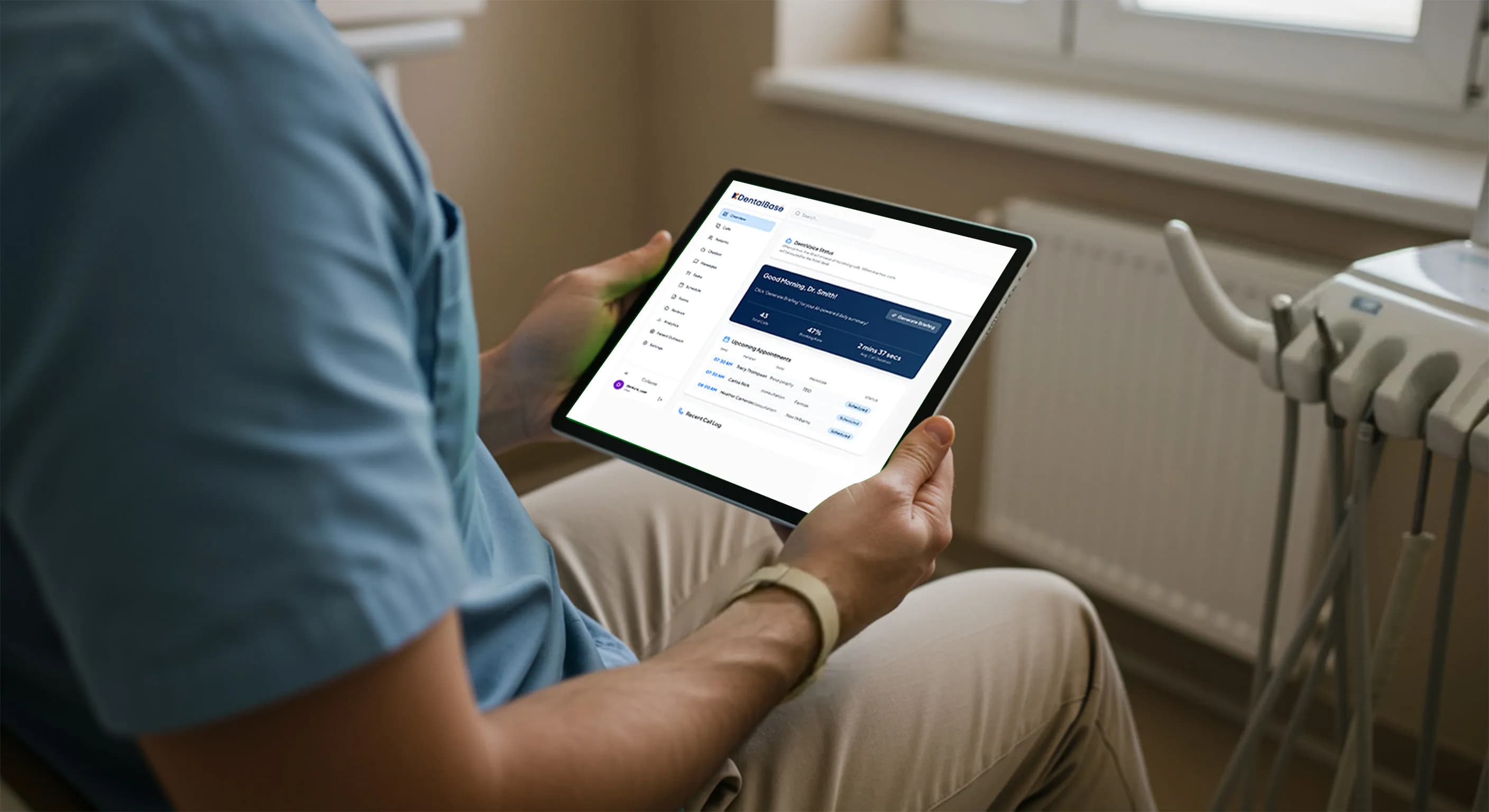
Dental Booking Friction: Why Patients Abandon Calls
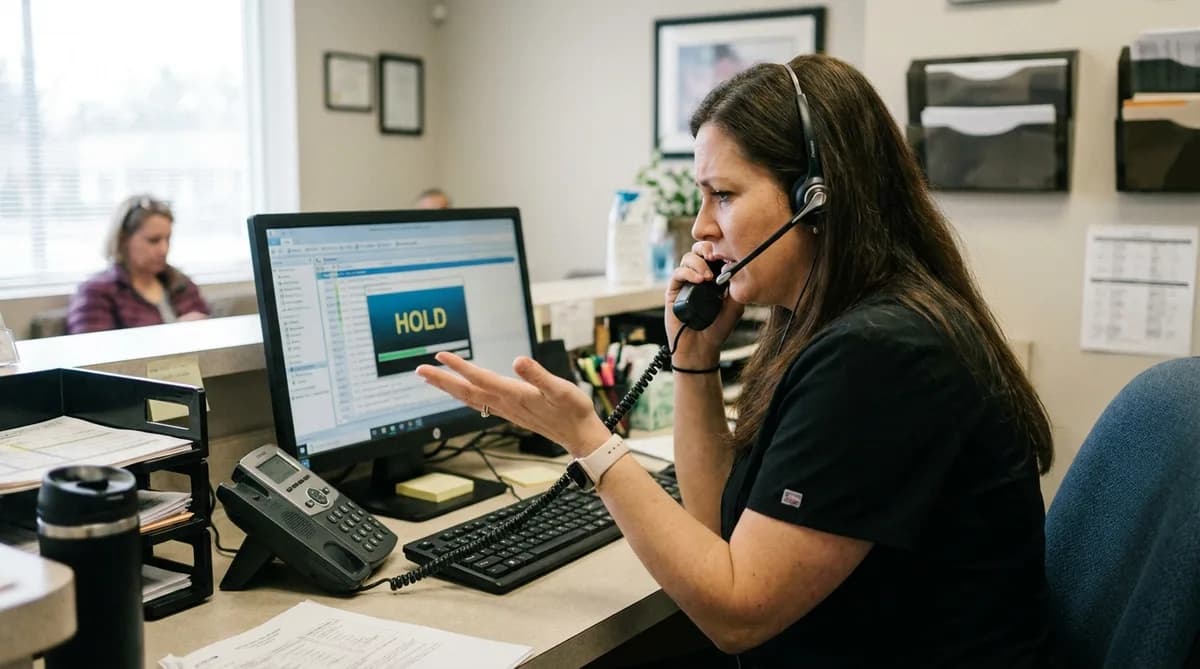
Dental booking friction drives call abandonment. Learn the five friction points that cause patients to hang up and how AI scheduling eliminates them.
Share:
Table of contents
Dental booking friction is the silent revenue drain most practices never measure. A patient picks up the phone ready to book, they have decided, their guard is down, their dental need is real. Then something goes wrong. They are put on hold. They are transferred. The person who can actually schedule is not available. They are told someone will call them back. The moment passes. They hang up, and many of them never call again.
This is not a customer service problem. It is a structural one. The dental patient phone experience has more friction points built into it than most practices realize, and each one is a place where a caller's motivation can stall. Understanding where and why patients abandon dental appointment calls is the first step to fixing it.
What Is Dental Booking Friction and Why Does It Matter?
Dental booking friction is any obstacle between a caller's intent to schedule and a confirmed appointment slot. It matters because patient motivation is time-sensitive: the decision to call a dental office is often made in a moment of discomfort, convenience, or deadline, and that window can close faster than a callback arrives.
Research on service industries consistently shows that customer effort, not just wait time, is the strongest predictor of whether a transaction completes. A landmark study published by the Harvard Business Review on reducing customer effort found that reducing the effort required to complete a transaction has a greater impact on loyalty and completion rates than any attempt to delight the customer. Applied to dental scheduling: a caller who gets through friction-free is more likely to book, keep the appointment, and return than one who had to work for the confirmation.
The stakes are practice-wide. According to NCBI research on administrative barriers to dental appointments, access barriers, including administrative difficulty, are consistently cited by patients who delay or forgo dental care. Some of those barriers are systemic, but some of them are directly within a practice's control. Scheduling friction falls in the second category.
The Five Friction Points on a Dental Scheduling Call
- Hold friction, placed on hold before or during scheduling
- Transfer friction, handed off to a different team member mid-call
- Availability friction, back-and-forth negotiation over open slots
- Verification friction, insurance or identity questions that delay confirmation
- Callback friction, promised a return call that arrives late or not at all
Why Do Patients Abandon Dental Appointment Calls Before Booking?
Patients abandon dental appointment calls when the effort of completing the booking exceeds their in-the-moment motivation. The most common triggers are holds that exceed a few minutes, being transferred to a voicemail, and being told a callback is needed when they expected to book on the spot.
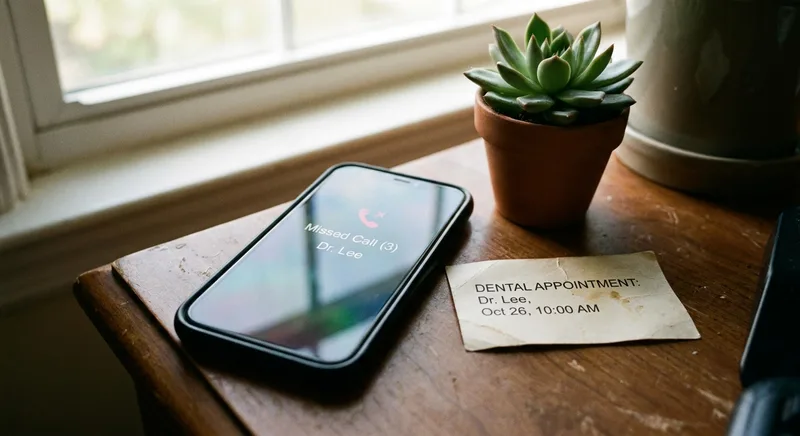
The research on dental phone hold time is unambiguous: callers begin disengaging after relatively short waits, and the hang-up rate increases sharply after two minutes on hold. But hold time is only one of the five friction points listed above. A call with no hold at all can still fail if the patient is transferred to a voicemail, or if the front desk cannot confirm a slot and has to call back.
Friction costs more when the case is worth more. A caller researching full-arch treatment has usually shortlisted several offices in one sitting, so a hold queue or a promised callback hands the case to whoever answers next. Those high-value calls are broken down in this guide to what implant consultation callers need to hear on the first call.
Callback friction is arguably the most damaging form because it extends the friction across time. When a caller is told someone will call back to schedule, the practice is betting on three things: that the staff member calls back promptly, that the patient is still available, and that the patient's motivation has not cooled. Each of those is a non-trivial assumption. By the time the callback arrives, if it does, many patients have already tried another practice, used an online booking tool, or simply postponed their dental care. Thin front desk coverage makes callbacks more common, a pattern explored in how understaffed dental offices lose patients on the phone.
New patients are disproportionately affected. An established patient may accept friction because they have a relationship with the practice. A first-time caller has no loyalty and no sunk cost. If their first contact with the practice involves a transfer and a callback promise, that experience is the first data point they have about what the practice is like. Many do not call back.
Which Friction Points Have the Largest Impact on Dental Booking Conversion?
Hold-and-transfer combinations have the largest single impact on call-to-booking conversion rates. When a caller is put on hold and then transferred, rather than being handled by the person who answered, abandonment rates climb sharply compared to single-step calls.
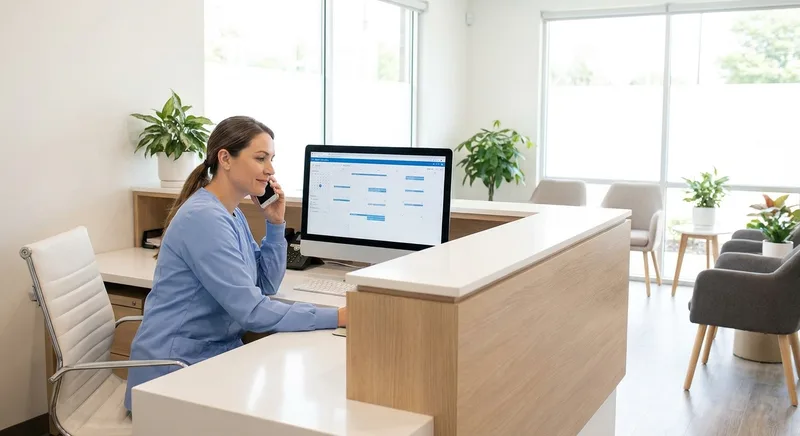
Availability friction is the second-highest-impact category and the one most practices underestimate. When a caller asks for a specific day or time and the front desk must manually check the schedule, often while the caller waits, the back-and-forth can stretch a two-minute booking into a five-minute negotiation. Each exchange is another moment where the caller can decide the effort is not worth it.
Verification friction is lower-impact in isolation but compounds with other friction points. Asking for insurance details, date of birth, and referring provider before confirming the appointment is reasonable from an administrative standpoint, but stacking those questions on top of a hold and a transfer creates a cumulative effort load that pushes callers to abandon.
| Friction Type | What Triggers It | Abandonment Risk |
|---|---|---|
| Hold friction | Caller placed on hold before scheduling begins | High, increases with each additional minute |
| Transfer friction | Caller handed off mid-call | High, especially if transferred to voicemail |
| Availability friction | Manual slot lookup creates back-and-forth | Moderate, compounds with other friction |
| Verification friction | Insurance/identity questions before confirmation | Low-moderate in isolation; higher when stacked |
| Callback friction | Patient told to wait for a return call | Very high, motivation often expires before callback |
How Is Phone Booking Friction Different From Online Booking Friction?
Phone booking friction and online booking friction are distinct problems that require separate solutions, and reducing one does not automatically reduce the other. Online friction typically involves form complexity, page load speed, and the absence of real-time availability, all of which are well-studied and relatively straightforward to diagnose. Phone friction is harder to quantify because it happens in conversation, varies by staff member, and rarely leaves a clean data trail.
The patient populations affected also differ. Callers tend to skew older, have more complex scheduling needs, or are calling with some urgency, a toothache, a broken restoration, a deadline. These are often the patients a practice most needs to capture, and they are the patients who least tolerate being put on hold, transferred, or told to wait for a callback.
It is worth noting that the risks of dental voicemail fall squarely in the phone channel. Voicemail is effectively maximum friction: the caller cannot complete the booking at all and must wait passively for the practice to re-initiate contact. For new patients, voicemail is often a terminal outcome rather than a scheduling delay.
Online booking solves friction only for callers who prefer digital self-scheduling. That is a real and growing segment, but it does not replace the phone channel, and practices that assume online booking has eliminated their scheduling friction problem often find their call abandonment rate is unchanged.
How Does Real-Time AI Scheduling Collapse the Dental Booking Friction Path?
AI scheduling intelligence eliminates most dental booking friction by handling availability lookup, patient verification, and appointment confirmation within a single, uninterrupted conversation, without holds, transfers, or callback promises. The friction path collapses from five steps to one.
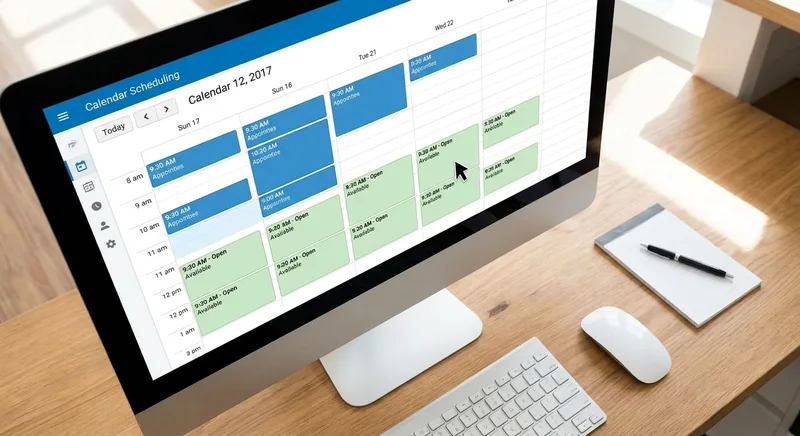
The mechanism is straightforward: an AI receptionist with direct access to the practice management system can check available slots in real time and present them to the caller without any manual lookup step. The caller does not wait while someone navigates a scheduling screen. There is no hold while a colleague checks availability. There is no transfer to reach the person who handles new patients. The booking completes in the same call leg that started with a scheduling request.
Verification friction is reduced similarly. Rather than asking insurance and identity questions as a separate administrative block before or after scheduling, AI tools can interleave these questions naturally and confirm the appointment while collecting them, reducing the perceived effort without eliminating the actual data collection.
For practices dealing with high call volume, this also directly reduces call overflow. When each scheduling call is shorter because friction has been removed, the queue clears faster, fewer callers wait, and fewer callers abandon. The improvement is self-compounding: less friction means shorter calls, shorter calls mean lower hold times, lower hold times mean fewer abandons.
What Frictionless Dental Scheduling Looks Like
- Caller is greeted immediately, no hold before scheduling begins
- Availability is checked in real time while the caller is on the line
- No mid-call transfer to a different team member
- Appointment is confirmed before the call ends
- Confirmation is sent by text or email immediately after hanging up
- No callback required, the booking is complete in one interaction
How Should a Practice Measure and Track Booking Friction?
Dental booking friction is measured most directly through call-to-booking conversion rate: the percentage of inbound scheduling calls that result in a confirmed appointment. A practice with 100 scheduling calls per week that books 45 appointments has a 45% conversion rate, and the 55% that did not convert is the friction problem to solve.
A robust dental call analytics setup will surface additional metrics that help localize friction. Call duration by outcome is particularly useful: if abandoned calls have an average duration of 90 seconds, and completed bookings average 4 minutes, the friction is likely happening early in the call, holds or immediate transfers, rather than during the scheduling conversation itself.
Call recording review is the highest-resolution method for identifying friction sources. Listening to a sample of abandoned calls, particularly those that lasted more than one minute before hanging up, will reveal the most common failure point. That could be a hold that runs too long, a transfer that goes to voicemail, or a scheduling back-and-forth that stalls on availability. Call recording review works after the fact, once friction has already cost you a patient. A dental mystery shopper phone call audit catches the same friction points proactively, before a real caller ever hits them.
The true cost of missed dental calls provides a financial lens on the same problem. Friction does not end when the call does either, which is why automating the patient intake process matters just as much as the booking itself: a patient who books easily and then faces a clipboard of paperwork has simply met the same obstacle later. Multiplying the number of abandoned scheduling calls by the average production value of a new patient appointment converts a call quality metric into a revenue impact number, which tends to focus attention more effectively than a percentage alone.
According to a BrightLocal consumer survey, consumers increasingly expect to complete service interactions quickly and without repeated effort. When businesses, including healthcare providers, make routine transactions feel effortful, the research consistently shows lower follow-through and lower satisfaction scores. Dental scheduling is no exception.
What Role Does the Initial Greeting Play in Reducing Booking Friction?
The initial greeting sets the caller's expectation for the entire interaction. A greeting that starts with a hold request before the caller speaks creates immediate friction, the patient has not yet said a word, and they are already waiting. Research on first impressions in phone-based service interactions shows that the first seven seconds significantly shape whether a caller feels they have reached a place that can help them efficiently.
A well-designed dental phone greeting can reduce friction before the scheduling conversation begins by signaling competence and readiness. Conversely, a chaotic greeting, background noise, uncertain routing, or an immediate transfer, signals organizational friction that many callers correctly anticipate will extend through the booking process.
For AI-handled calls, the greeting also establishes the caller's willingness to interact with an automated system. Research published by the NCBI study on patient scheduling barriers on healthcare scheduling barriers found that familiarity and predictability in the scheduling interface, whether human or automated, directly reduces the perceived effort of booking. An AI greeting that is clear, professional, and moves immediately toward the caller's need skips the hesitation step that undermines some automated systems.
What Happens to Patients Who Abandon a Dental Booking Call?
Patients who abandon a dental booking call do not uniformly reschedule. A portion of them do, particularly established patients or those with urgent needs, but first-time callers and patients with moderate urgency frequently do not follow through. The decision to call a dental office often represents a commitment threshold, and once that threshold passes without a confirmed appointment, the motivation to repeat the effort fades.
Urgent callers are the exception worth designing around specifically, since a toothache does not wait for a callback. What a worried patient needs to hear on an emergency call covers how to keep that specific caller from abandoning mid-conversation.
The downstream consequences extend past the lost appointment. A patient who experienced friction on an initial call and did not book is unlikely to refer others to the practice. If they eventually book through a different channel, such as an online booking widget, the friction memory still colors their first-visit experience. Practices with high phone abandonment rates also typically have lower new-patient show rates, because the callback- or rescheduling-based bookings that replace clean phone conversions carry higher no-show risk.
Closing that gap usually means making sure the widget and the phone system are actually talking to each other. For the specific questions to ask before adding one, see AI receptionist online booking integration.
Reactivation costs compound the problem. Comprehensive phone coverage strategies address the front end of this problem, but practices that generate avoidable abandonment still pay to recover those patients through outbound reactivation campaigns. The cost of phone hold time is not just the abandoned call, it is the outbound spend required to bring that patient back, if they come back at all. The NCBI research on dental care access barriers has documented access-to-care patterns that include administrative friction as a contributing factor to care avoidance, a category that begins, for many patients, at the scheduling call.
Stop Losing Patients at Hello
See How DentiVoice Removes Every Friction Point From Your Scheduling Calls
Real-time availability lookup, instant confirmation, no holds or transfers, all in one call. Book a quick walkthrough and see it live on your schedule.
See DentiVoice in ActionDental booking friction is a structural problem with a structural solution. Practices that identify where in the phone path callers are dropping off, and then redesign that path to eliminate holds, transfers, and callbacks, will see measurable improvement in new-patient conversion rates. AI scheduling tools are the most direct way to collapse the friction path, but measurement comes first. You cannot fix what you have not counted.
Frequently Asked Questions
Dental booking friction refers to the effort a caller must exert to move from the intent to book an appointment to actually receiving a confirmed time slot. Friction includes holds, transfers, scheduling back-and-forth, and unanswered callbacks.
The cost varies by practice size and average production per new patient, but each abandoned scheduling call represents at least one lost appointment opportunity. Practices with high call volume can lose multiple new patients per day from preventable friction.
Online booking widgets reduce friction for patients who prefer digital self-scheduling, but a significant portion of new patients, particularly those over 40 or calling with urgency, still prefer phone booking. Friction must be addressed on both channels.
Industry benchmarks vary, but many practices convert fewer than half of inbound scheduling calls into booked appointments. Tracking this rate against call volume is the first step to identifying where friction is causing drop-off.
AI scheduling tools integrate with the practice management system to check availability in real time, confirm appointments without transferring the caller, and handle insurance or payment questions before the call ends, eliminating the most common friction steps.
Yes. When patients encounter fewer obstacles between intent and confirmation, a higher percentage of them complete the booking. Lower friction also improves the patient's first impression of the practice, which affects whether they show up and return.
Callback friction occurs when a caller is told someone will call you back to schedule and that callback either arrives late or not at all. By the time the practice calls back, many patients have already booked with another provider or simply lost motivation.
Sources & References
- 1
- 2
- 3
- 4
- 5
- 6
Topics
Was this article helpful?
Written by
DentalBase Team
Expert dental industry content from the DentalBase team. We provide insights on practice management, marketing, compliance, and growth strategies for dental professionals.