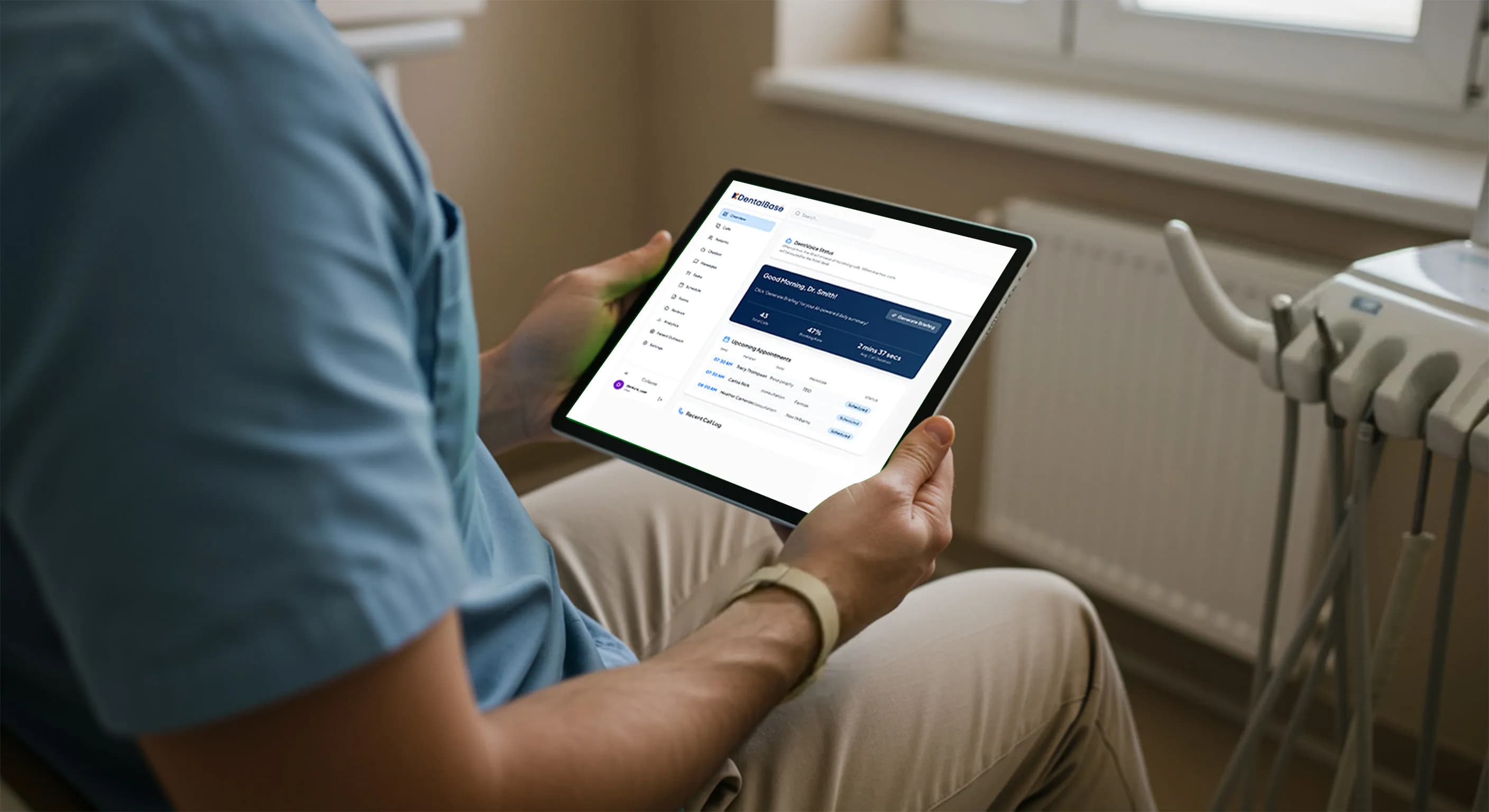
What Happens When an AI Receptionist Makes a Mistake?
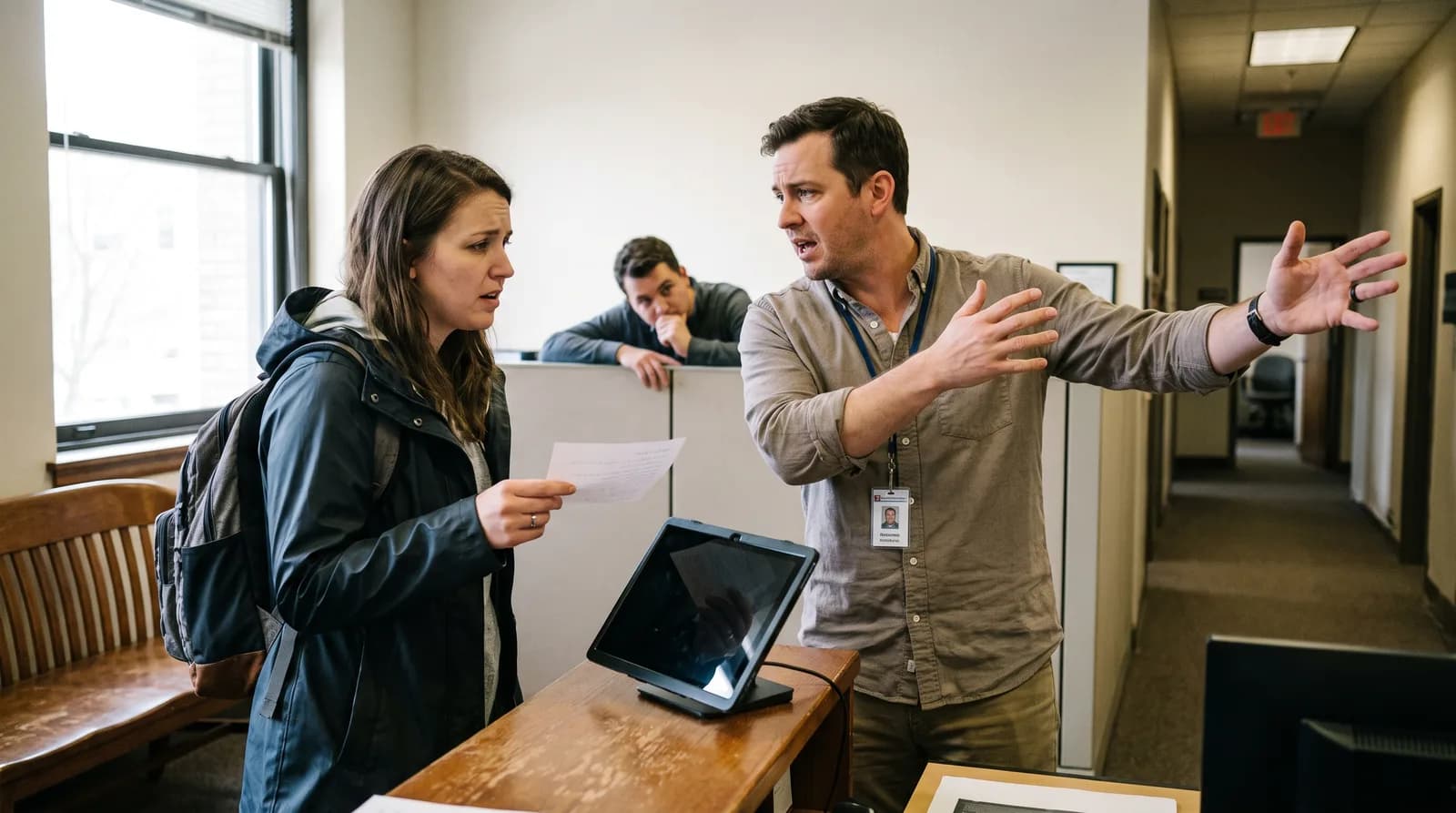
When an AI receptionist makes a mistake, most practices catch it fast: a misheard name or scheduling slip, not lost patient trust. See what happens next.
Share:
Table of contents
An AI receptionist makes a mistake the same way a new hire does: a misheard name, a double-booked slot, a skipped insurance question. The difference is what happens next. A front desk team new to voice AI often assumes one bad call means the system cannot be trusted. That is rarely how it plays out once the workflow is actually in place.
Practices researching an AI dental receptionist want to know what happens when the software gets something wrong, not just the marketing version. Office managers ask about this before they ask about pricing, because a scheduling error tied to a real patient feels riskier than any monthly fee ever could.
This article walks through the real mistake types and how staff should respond in the moment. It also covers whether one error undoes patient trust for good, and what a practice can do to make mistakes rarer over time.
What happens when an AI receptionist makes a mistake with a patient?
When an AI receptionist makes a mistake, the call still gets logged, reviewed, and in most cases corrected within the same business day. The system does not simply move on. Recorded transcripts flag the error, a staff member confirms the fix, and the correction gets documented in the scheduling record, following the same recordkeeping standards any HIPAA entity follows.

Why this mirrors how front desks already handle errors
That workflow matters because it mirrors how a well-run front desk already handles human error. A receptionist who mishears an insurance ID does not get fired on the spot. The office calls the patient back, corrects the record, and moves forward with the day. Voice AI needs the same safety net, not a free pass and not a death sentence for one missed word during a noisy call. What changes with AI is speed and consistency. A monitored system often surfaces the error before the patient even notices. Someone reviews calls outside expected patterns every day, not just when a patient complains.
Turning every flagged call into a training input
The practices that handle this well treat every flagged call as a training input, not just a fire to put out. Review the recording, note the failure pattern, and adjust the AI's prompts or escalation rules so the same mistake does not repeat next week. Skipping that step is how a small error becomes a recurring one.
What kinds of mistakes does an AI dental receptionist actually make?
Most AI receptionist mistakes fall into three buckets: mishearing a name or date, booking into the wrong provider's schedule, and misreading insurance details on a fast-talking caller. None of these are dramatic failures. They are the same errors a tired front-desk employee makes on a Monday morning after back-to-back calls all ringing at once.
Most of these errors trace back to the speech recognition and NLP layers that turn audio into structured data in the first place. See how an AI dental receptionist actually works for why dental-specific training reduces exactly this kind of mishearing.
A three-provider practice fielding 200 calls a week will see this play out in small ways. A patient named Kaitlyn gets logged as Caitlin, or a same-day emergency slot books against Dr. Patel instead of Dr. Osei because two providers share a similar-sounding schedule name. Background noise on a cell phone call raises the error rate too, since accents, speakerphone static, and cross-talk all make word recognition harder for any system, human or automated. That is also why phone accessibility for every caller has to stay part of the conversation, not an afterthought bolted on later.
- Name or spelling mismatches from unclear audio or unusual pronunciations
- Double-booked or misassigned appointment slots across multiple providers
- Insurance carrier or member ID errors on rushed, mumbled calls
- Misrouted urgent calls that should have triggered an immediate human transfer
None of these require abandoning the system. They require a review process that catches them fast, which is exactly what call quality monitoring is built to do, and why it should never be treated as optional add-on reporting. The same logic applies whether the practice runs on Eaglesoft or another scheduling system: the review step matters more than which software sits underneath it.
How should staff respond when an AI receptionist gets a call wrong?
Staff should treat an AI receptionist error like a scheduling mistake made by a coworker. Confirm the correct information, call the patient if the error affects their visit, and fix the record before the appointment date. Speed matters more than an apology script. A same-day correction rarely gets mentioned again.
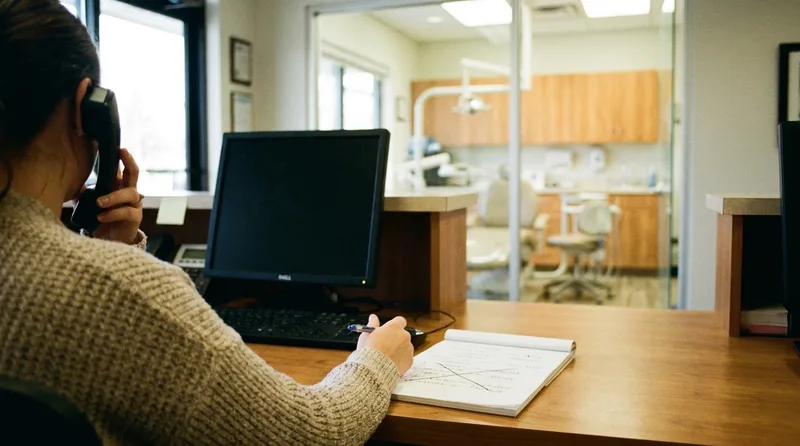
Set a 24-hour internal review rule
Set a simple internal rule: any flagged or disputed call gets reviewed by a designated staff member within 24 hours, not left sitting in a queue until Friday afternoon. That person checks the transcript against the scheduling system, corrects whatever is wrong, and calls the patient only if the error would have actually affected their visit or their bill. Silent fixes work fine for a minor spelling correction that changes nothing for the patient. A moved appointment time, however, always needs a phone call, because showing up to find no record of a visit is a far worse experience than a two-minute correction call.
Where a staff handoff workflow fits in
This is also where a clear staff handoff workflow earns its keep. Front desk teams that already know who owns error review do not scramble when something slips through, because the process was decided calmly before the first real mistake ever happened. That calm usually traces back to how the AI receptionist was rolled out in the first place. Our guide on introducing an AI receptionist to your dental team covers how to set that foundation before launch. Accurate scheduling and insurance records also support the continuity-of-care goals that CDC Oral Health guidance emphasizes for regular dental visits.
See how call review actually works
Every flagged call gets a transcript, a timestamp, and a clear record of what was corrected and when.
Read the monitoring guide →Does one AI receptionist mistake permanently damage patient trust?
No, a single AI receptionist mistake rarely damages patient trust on its own, because patients judge the recovery far more than they judge the error itself. What actually erodes trust is a mistake that goes uncorrected, or one the patient has to catch and report themselves after showing up to the wrong slot on the wrong day.
What patient comfort data actually shows
This lines up with what practices see in patient comfort data on AI receptionists: comfort splits by task and by outcome, not by a blanket verdict on the technology itself. A patient who has a booking error fixed before their visit tends to shrug it off entirely. A patient who arrives and finds no record of their appointment forms a very different opinion, and that opinion is much harder to undo with an apology after the fact. This tracks with how the American Dental Association frames patient communication generally: the response to a problem shapes perception more than the problem itself.
The flight delay comparison
Think of it like a flight delay. A 15-minute delay with a clear gate announcement barely registers with most travelers. A silent three-hour delay with no updates at all changes how a traveler feels about the entire airline, not just that one flight. The gap between those two outcomes is communication, not the mistake itself, and the same logic holds for a dental front desk.
How does call quality monitoring catch mistakes before patients notice?
Call quality monitoring catches most AI receptionist mistakes by flagging calls with low confidence scores, unusual pauses, or a caller repeating themselves, all signs the system struggled to understand something during the conversation. A staff member reviews those flagged calls daily, well before the patient's actual appointment date arrives.

The monitoring layer typically scores every call on a handful of signals. These include transcription confidence, repeated caller information, and whether the call ended in a clean confirmation or an abrupt disconnect. Calls that trip any of those flags get sorted into a review queue instead of disappearing into the general call log alongside hundreds of routine bookings. That queue is where most errors get caught and fixed before they ever reach the patient's actual appointment. It is also where a practice learns which callers or accents the system still struggles with.
According to the Dental Economics coverage of front-office technology, practices that review call data regularly tend to catch operational problems long before patients ever complain about them out loud.
| Mistake type | Likely cause | Recommended fix |
|---|---|---|
| Name misheard | Background noise or uncommon spelling | Confirm spelling verbally before ending the call |
| Wrong provider booked | Similar-sounding names or overlapping schedules | Daily schedule cross-check for flagged calls |
| Insurance detail wrong | Fast speech or unclear member ID | Text or email confirmation of details after the call |
| Urgent call misrouted | Escalation rule set too narrowly | Widen escalation triggers, review weekly |
Mistake rate is one of several signals worth tracking over time. Our guide to measuring AI receptionist success in dental offices shows how to fold it into a complete monthly performance review.
When should a mistake trigger a callback from a human instead of the AI?
A mistake should trigger a human callback whenever it affects the actual appointment date, time, provider, or anything tied to billing or insurance. Minor issues, like a misspelled name with no impact on the visit, can be corrected silently in the record without ever involving the patient directly at all. Errors touching insurance or billing records also fall under the vendor HIPAA obligations for AI receptionists your practice agreed to at onboarding.
Some errors escalate past a callback. When a misconfigured step exposes patient information rather than simply getting a detail wrong, the breach notification clock that starts when an AI receptionist exposes PHI governs what happens next, including the risk assessment and the documentation regulators expect to see.
Set the threshold by consequence, not severity
Set the threshold around consequence, not around how the AI itself rates the severity of its own mistake. A patient could show up on the wrong day. A claim could get submitted under the wrong plan. Either case is always a phone call, never just a note left in the file. Practices that skip this step save a few minutes of staff time up front. They lose far more in patient frustration when the error surfaces at the front desk instead of over the phone in advance.
The stakes are highest when the mistake happens on an urgent call rather than a routine one. What a worried patient needs to hear on a dental emergency call is exactly the script an escalation should fall back on when something goes wrong under pressure.
Drawing that line consistently is really a smaller version of the same question practices ask before adopting AI at all, addressed in a closer look at which front-desk tasks AI can safely take over.
The same judgment call as AI handoffs
This is the same judgment call practices already make with AI receptionist handoffs during a difficult or emotional call. Consequence decides when a human needs to step in, not staff convenience or a busy schedule that afternoon.
Consequence scales with the service line too. A scheduling slip on a hygiene visit is recoverable within a day. A missed detail on a medical-billing case can stall it for weeks, which is the risk mapped out in this guide to AI receptionist screening for sleep dentistry calls.
Consequence peaks in surgical specialties, where a misrouted post-operative call carries clinical risk rather than just an inconvenience. Why an AI receptionist should collect and route but never advise sets out the guardrail.
What steps reduce AI receptionist mistakes over time?
Practices reduce AI receptionist mistakes over time by training the system on real call data, tightening escalation rules, and reviewing flagged calls on a fixed weekly schedule instead of only after a complaint. The mistake rate on a properly maintained system should trend down month over month, not stay flat.
Most of this comes down to feeding the AI better information as the practice learns its own patterns. Say three patients a week get misrouted because of one provider's schedule quirk. That quirk needs to get written into the system's rules directly, not left as an annoyance the front desk works around. The same applies to unusual name spellings or a local accent the system consistently mishears. Every one of those is fixable once someone is actually looking for the pattern.
- Pull the flagged-call queue every week, not just when a patient complains
- Update the AI's provider and scheduling rules whenever a pattern repeats twice
- Add common name spellings and local pronunciations to the training data
- Re-test the escalation rules quarterly against real recorded calls
A practice that already runs staff through AI receptionist FAQ training tends to see this cycle move faster. The team already knows what good call data looks like and can spot a bad pattern early. Becker's Dental + DSO Review covers similar operational quality reviews across multi-location dental groups, where the same weekly-cadence logic applies. Most of these fixes are really prompt edits, and AI receptionist prompt management and version control basics covers how to make each one safely, with a saved previous version and a quick test call before it goes live.
Give staff a clear error-review process
Training your AI receptionist properly from day one cuts down how often review queues fill up.
See the training guide →Related: Patients judge the whole call experience, not just how a mistake gets handled. See what callers actually hear →
An AI receptionist mistake is rarely the moment that decides how a patient feels about your practice. The recovery is. Fast correction matters. So does a clear callback rule for anything touching the appointment or the bill. A review process that learns from flagged calls beats a system that only claims it never errs.
Start by defining your own callback threshold this week. Decide, in writing, which mistakes get a silent fix. Decide which ones always get a phone call. That way your team is not guessing the first time an error shows up on a Friday afternoon.
Who bears financial responsibility when the AI gets it wrong is a contract question, not just a policy one. See what a signed business associate agreement should say about vendor liability before an error becomes a dispute.
Related: The wrong appointment type is the most common version of this failure, and it has its own correction sequence. how to fix an AI receptionist that books the wrong appointment type →
Explore how DentiVoice handles call review
See the AI dental receptionist resources built for practices that want visibility into every call.
Browse the resources →Want the phone accessibility angle too?
Read how AI receptionists handle every caller →Want to see how recovery moments like this fit the bigger picture?
How technology improves the dental patient experience overall →Frequently Asked Questions
The call gets logged and reviewed, usually flagged automatically by quality monitoring. A staff member confirms the correct information and fixes the scheduling or insurance record, often within the same business day, before the patient's visit.
Often not, if the mistake is caught and corrected before their appointment. Patients tend to notice only when an error goes uncorrected, such as arriving to find no record of their visit on the schedule.
Mistakes cluster around misheard names, double-booked slots, and insurance detail errors, similar to the errors a busy human receptionist makes. Rates tend to drop as the system is trained on more of a practice's real call data.
A brief acknowledgment helps, but speed of correction matters more than an apology script. Patients who get a fast, same-day fix rarely bring up the mistake again during their visit.
No system catches every call perfectly, but call quality monitoring and regular training updates reduce the mistake rate significantly over time. The goal is a system that improves, not one that claims zero errors from day one.
Any mistake affecting the appointment date, time, provider, or billing details needs a callback. Minor issues with no effect on the visit, like a misspelled name, can be corrected silently in the record instead.
Sources & References
- 1
- 2
Topics
Was this article helpful?
Written by
DentalBase Team
Expert dental industry content from the DentalBase team. We provide insights on practice management, marketing, compliance, and growth strategies for dental professionals.