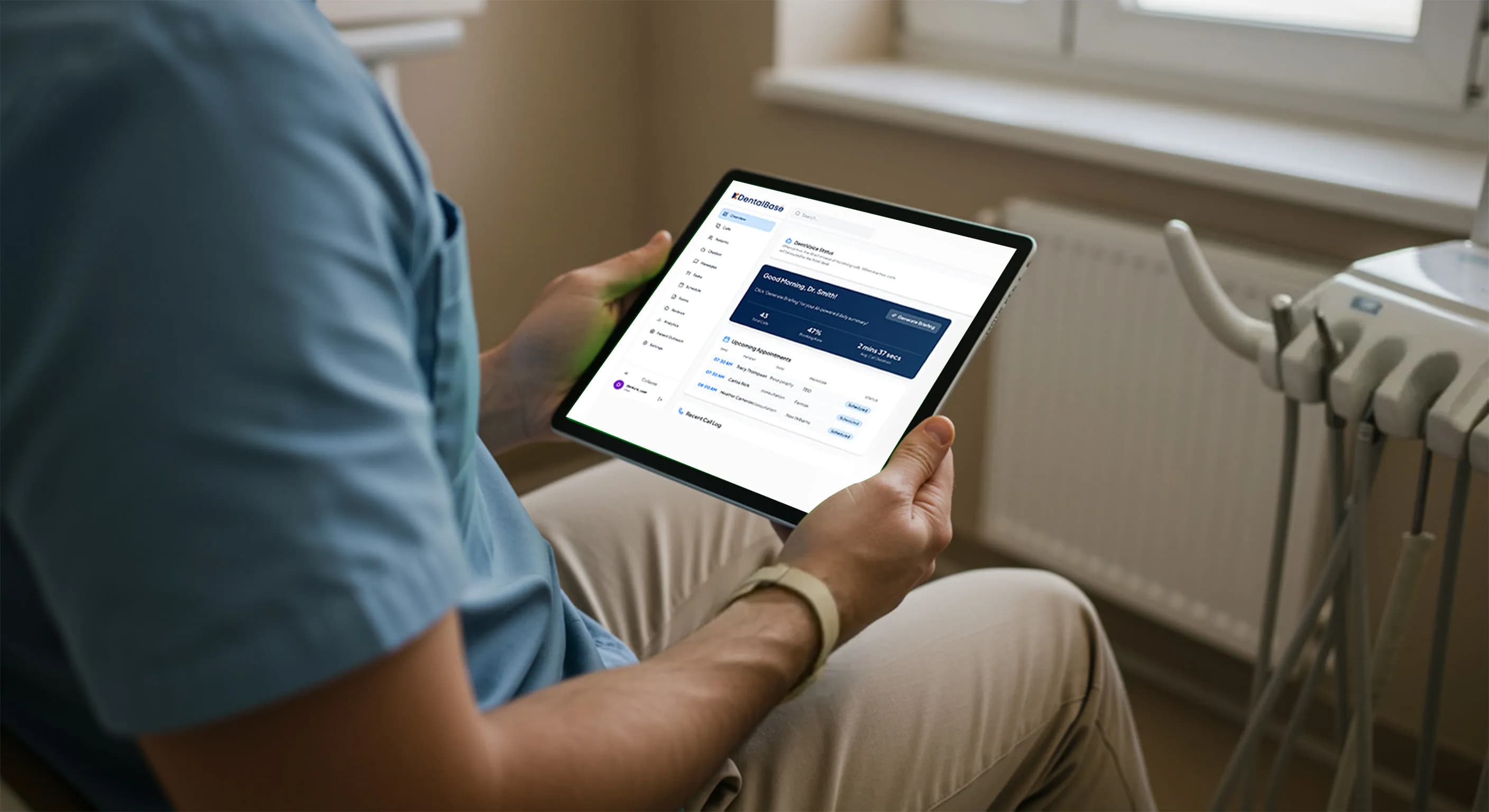
Dental Billing Question Phone Calls: Statements and Balances

Learn how to handle dental billing question phone calls about statements and balances, from identity checks to HIPAA rules and staff escalation.
Share:
Table of contents
Dental billing question phone calls are calls where a patient asks about a statement, a balance, or a payment rather than an appointment. They are one of the most common reasons patients contact your front desk, right behind scheduling. They want to know why their statement shows a balance, whether insurance already paid, or when a payment is due. Handled well, that call ends with a patient who trusts your office. Handled poorly, it turns into a callback, a complaint, or a payment that never comes in. This guide covers what a billing call actually involves. It also covers what an AI receptionist like Dentivoice can safely handle around payment questions, where staff still need to step in, and how to keep the whole process compliant.
Most practices never map this workflow. Front desk staff just improvise, and every caller gets a slightly different answer depending on who picks up. That inconsistency is what drives repeat calls and, occasionally, disputes over what a patient was told. Getting dental billing question phone calls right is a small operational fix with an outsized effect on both collections and patient trust.
What Are Dental Billing Question Phone Calls, Exactly?
A dental billing question phone call is any inbound call where the patient asks about charges, a statement, an outstanding balance, or a payment method rather than an appointment. It typically falls into one of four buckets: balance inquiries, statement disputes, insurance timing questions, and payment plan requests. Recognizing the type early determines how the call should be routed.
Balance inquiries are the simplest: the patient wants a number. Statement disputes are harder, because the patient believes a charge is wrong, and that usually requires someone who can see the treatment notes, not just the ledger. Insurance timing questions ("has my insurance paid yet?") sit in between. And payment plan requests, especially for larger treatment plans, often need a human conversation about terms. As the broader dental services market keeps growing, tracked by firms like McKinsey Healthcare, the sheer volume of these calls only grows alongside it.
Here's the practical distinction that matters for call handling, and it's worth training your whole front desk on it even before you automate any of it:
The Four Types of Billing Calls
- Balance and due-date lookups: a number the system already has, no judgment required
- Statement questions: "why is this charge here," which needs context from the chart or the biller
- Insurance status questions: often answerable from the claim record, sometimes not
- Payment plan or financing requests: needs a person who can discuss terms and options

How Should Staff and AI Split Billing Call Handling?
Staff and AI should split billing calls by complexity: AI verifies the caller, retrieves account facts, and routes anything requiring judgment to a team member. This is not about replacing your billing coordinator. It is about making sure she is not interrupted twelve times a day for questions the system can already answer on its own.
Think of it as a triage layer sitting in front of your billing staff, not a substitute for them. Tone matters from the first second, the same way it does on any other call your practice takes, as covered in The First Seven Seconds That Count. A well-configured AI dental receptionist can confirm identity, read back a balance, explain when a statement was generated, and note the account for follow-up. What it should never do is negotiate a payment plan, waive a fee, or make a judgment call about a disputed charge. Those decisions carry financial and relational weight that belongs with a person who knows the patient and the practice's policies.
The split looks different for every practice, but the general pattern holds across the board:
What AI Handles vs. What Goes to Staff
| Task | AI Receptionist | Front Desk / Billing Staff |
|---|---|---|
| Read back current balance | Yes, after identity check | Backup if system is down |
| Explain a specific line-item charge | No, routes the call | Yes |
| Confirm insurance claim status | Yes, if status is on file | Yes, for open or denied claims |
| Set up or adjust a payment plan | No, transfers or takes a message | Yes |
See the full billing and finance library
Statements and balances are one piece of the bigger billing picture. Browse more finance-focused articles for dental practices on running payment and insurance calls.
Browse Finance & Billing Articles →What Can an AI Receptionist Safely Say About a Balance or Statement?
An AI receptionist can safely share a patient's current balance, last payment date, and statement date once it has verified the caller's identity against two or more account details. Anything beyond that, such as explaining why a specific procedure was billed at a certain rate, needs a human who can see the clinical notes.
Verification matters here more than most practices realize. A billing balance is financial information tied to a patient's treatment, which means it deserves the same care as any other piece of protected account data. A caller claiming to be a patient, a spouse, or a parent should not get a number read to them just because they asked politely.
How to Verify a Caller Before Sharing Anything
A reasonable verification sequence before disclosing any balance or statement detail looks like this:
- Confirm the patient's full name and date of birth
- Confirm one additional identifier, such as the last four digits of the phone number on file or the last visit date
- Check that the caller is the patient or a listed guarantor on the account
- Only then share the balance, due date, or statement summary
- Log the call and the information shared for the billing team's records
If any step fails, the safe default is to take a message and have a team member call back rather than guess.
When Should a Billing Call Be Escalated to a Team Member?
A billing call should escalate to a team member the moment the patient disputes a charge, asks for a discount or write-off, or wants to negotiate payment terms. These are decisions that carry financial consequences and require someone with authority over the account, not just access to it.
Watch for Tone, Not Just Words
There is also a softer signal worth training for: tone. A patient who sounds frustrated or confused about a bill often needs empathy and explanation more than a fast answer. That is genuinely difficult to automate well, and trying to force it usually makes the caller more annoyed, not less. Good call routing recognizes frustration early and gets a person on the line before the situation escalates further.
How AI Triages Urgent vs. Routine Calls covers the broader logic behind these routing decisions, including how urgency and sentiment factor into what gets escalated immediately versus queued for a callback.

What Privacy and Payment Rules Apply to Billing Calls?
Dental billing calls fall under HIPAA because account balances and statements are tied directly to a patient's treatment record, which makes them protected health information. Any system, human or automated, that handles these calls needs to disclose only the minimum information necessary to answer the question asked.
HIPAA and the Minimum Necessary Standard
HIPAA's Privacy Rule sets the baseline for how much billing detail can be shared and with whom, and any AI vendor touching patient billing data should be operating under a signed business associate agreement. Payment collection over the phone adds a second layer. If your practice takes card numbers verbally, that call needs to meet PCI DSS handling standards. In practice, that usually means the payment step routes through a secure, recorded, or tokenized process rather than a plain phone conversation. The American Dental Association's guidance on dental benefits and claims is a useful reference here. It gives staff a plain-language explanation of insurance terminology that comes up on these calls. Coverage from Becker's Dental + DSO Review has tracked how closely billing compliance and revenue protection are linked for growing practices.
The No Surprises Act and Billing Transparency
The federal No Surprises Act, in effect since January 2022, added another layer of protection around unexpected medical and dental billing, and it reinforces the same principle: patients deserve clear, upfront cost information rather than a surprise on their statement.
None of this needs to slow a call down. It just needs to be built into the workflow before the phone rings, not improvised mid-conversation. Practices that write their verification and disclosure rules down once, and then apply them consistently on every dental billing question phone call, rarely run into compliance problems later.
Keep every billing call on the right side of HIPAA
Read more on compliance and legal requirements for dental practices handling patient calls and data.
Read Compliance & Legal Articles →How Do You Reduce Repeat Calls About Balances and Statements?
You reduce repeat billing calls by making the statement itself clearer and by giving patients a way to check their balance without calling at all. Most repeat calls happen because the first statement was confusing, not because the patient is trying to avoid paying.
Rewrite the Statement in Plain Language
A statement that lists a procedure code with no plain-language description, or shows an insurance adjustment without explaining it, almost guarantees a follow-up call. Practices that rewrite their statement language in plain English see fewer billing calls hit the front desk. Adding a patient portal or text link to check a balance helps too. It is not a dramatic fix, closer to fifteen minutes of reworking a template.

A practice that adds even a short line under each charge, something as plain as "cleaning, per insurance estimate," cuts down on the "what is this for" call almost immediately. Pair that with an automated text or email when a statement goes out, and patients start checking balances before they ever pick up the phone. Many practice management platforms, including Dentrix, support this kind of automated statement and claims communication without extra software.
Hold Time Makes a Bad Statement Worse
Hold time compounds the problem. A patient who calls about a $40 balance and waits eight minutes on hold is far more likely to leave a frustrated review. That's true even if the eventual answer is identical to what a thirty-second call would have gotten. Why Patients Hang Up and Quit breaks down exactly how hold time erodes patience on calls like these. Billing calls are especially sensitive to it, since the patient is often already a little annoyed before you pick up.
How Do You Set Up a Billing Call Workflow for Your Practice?
Setting up a billing call workflow starts with writing down the four call types from earlier. Assign each one to AI, staff, or a shared handoff, then test it against real calls before rolling it out practice-wide. Skipping the test step is the most common reason these workflows fail in the first month.
A three-provider practice fielding forty or fifty billing calls a week does not need an elaborate system. It needs a short, written decision tree that any new hire could follow on their first day, plus a system that actually enforces it on every call rather than relying on memory. That is where automation earns its keep: consistency, not cleverness. Industry coverage from Dental Economics has repeatedly pointed to this kind of front-desk standardization as one of the cheapest operational fixes a practice can make.
A Five-Step Setup Checklist
- Document the four billing call types and the exact information needed to resolve each
- Define the verification steps required before any balance is disclosed
- Decide which calls the AI receptionist handles end to end versus routes
- Set escalation triggers for disputes, discounts, and payment plan requests
- Review a sample of recorded or transcribed calls monthly and adjust the routing rules
Practices that skip the monthly review tend to see the workflow quietly drift out of date as billing software or insurance partners change.
Handling dental billing question phone calls well is less about scripts and more about knowing exactly which questions a system can answer on its own and which ones need a person with context. Get that split right, verify identity before sharing anything, and keep statements clear enough that fewer calls happen in the first place. Start by mapping your own four call types this week, then decide where the line between automated and human sits for your practice.
Protect Revenue on Every Billing Call
See how an AI dental receptionist catches billing and payment calls your team would otherwise miss.
See How AI Recovers Revenue →Wondering what else an AI receptionist can take off your plate?
Read the full FAQ →Frequently Asked Questions
A dental billing question phone call is any call where a patient asks about a statement, balance, insurance payment status, or payment plan rather than an appointment. Most fall into one of four categories that determine how the call should be routed.
Yes, once it verifies the caller's identity against two or more account details on file. Without that verification step, the safe response is to take a message rather than disclose any balance or statement information.
Yes. Billing and statement details are tied to a patient's treatment record, which makes them protected health information under HIPAA's Privacy Rule, including the minimum necessary standard for phone disclosures.
No, payment plan negotiations should always route to a staff member. These decisions involve financial terms and account-specific judgment calls that require a person with real authority over the practice's billing policy.
Repeat calls usually come from confusing statements, not from patients avoiding payment. Plain-language line items on the statement and a self-service balance option resolve most of this before the phone ever has to ring.
Only through a process that meets PCI DSS handling standards, such as a secure or tokenized payment step. A plain, unrecorded phone conversation for card numbers creates unnecessary compliance risk.
Sources & References
- 1
- 2
- 3
- 4
- 5
Topics
Was this article helpful?
Written by
DentalBase Team
Expert dental industry content from the DentalBase team. We provide insights on practice management, marketing, compliance, and growth strategies for dental professionals.