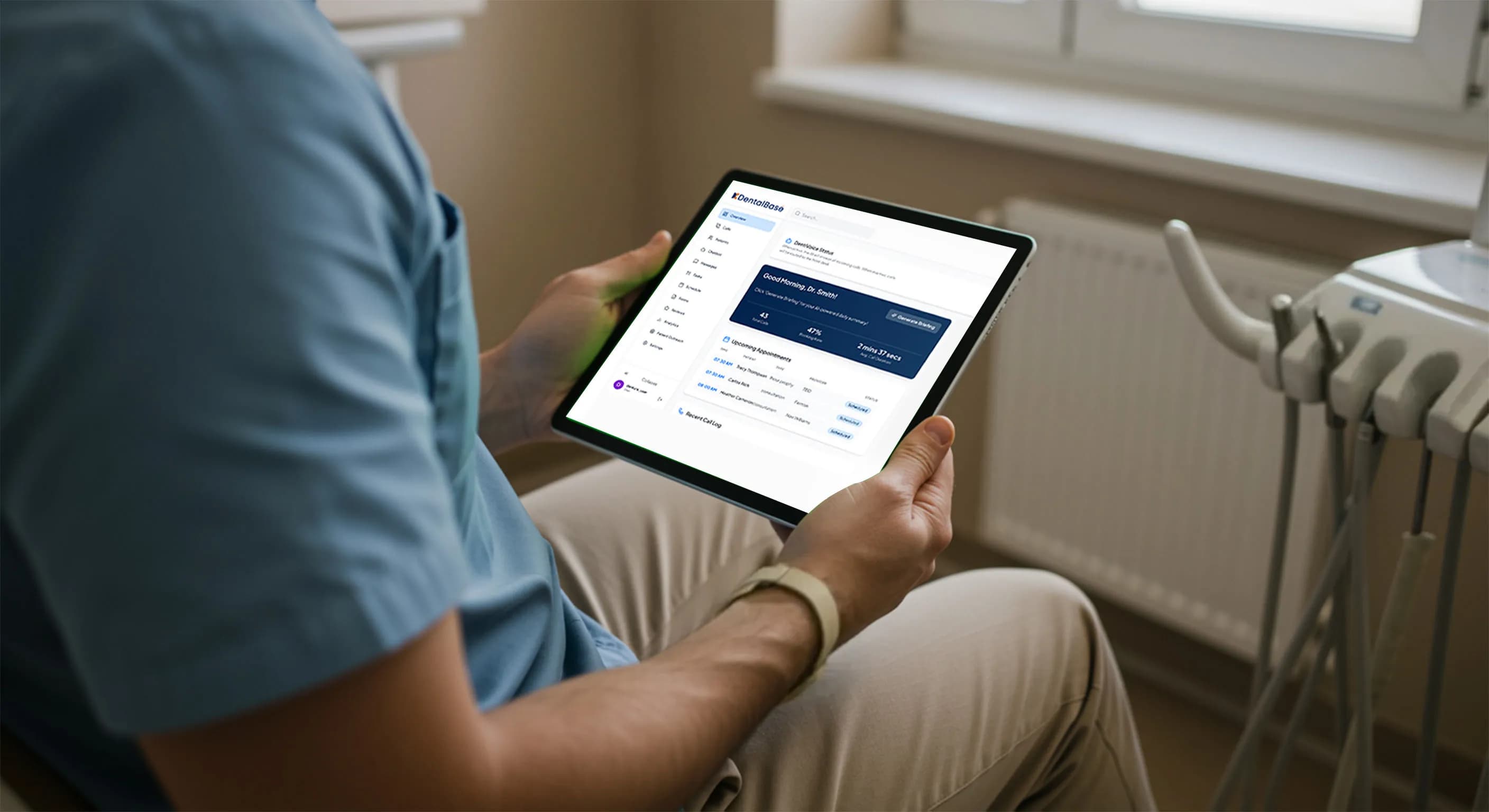
Why Dental Voicemail Loses Patients (And What to Use)
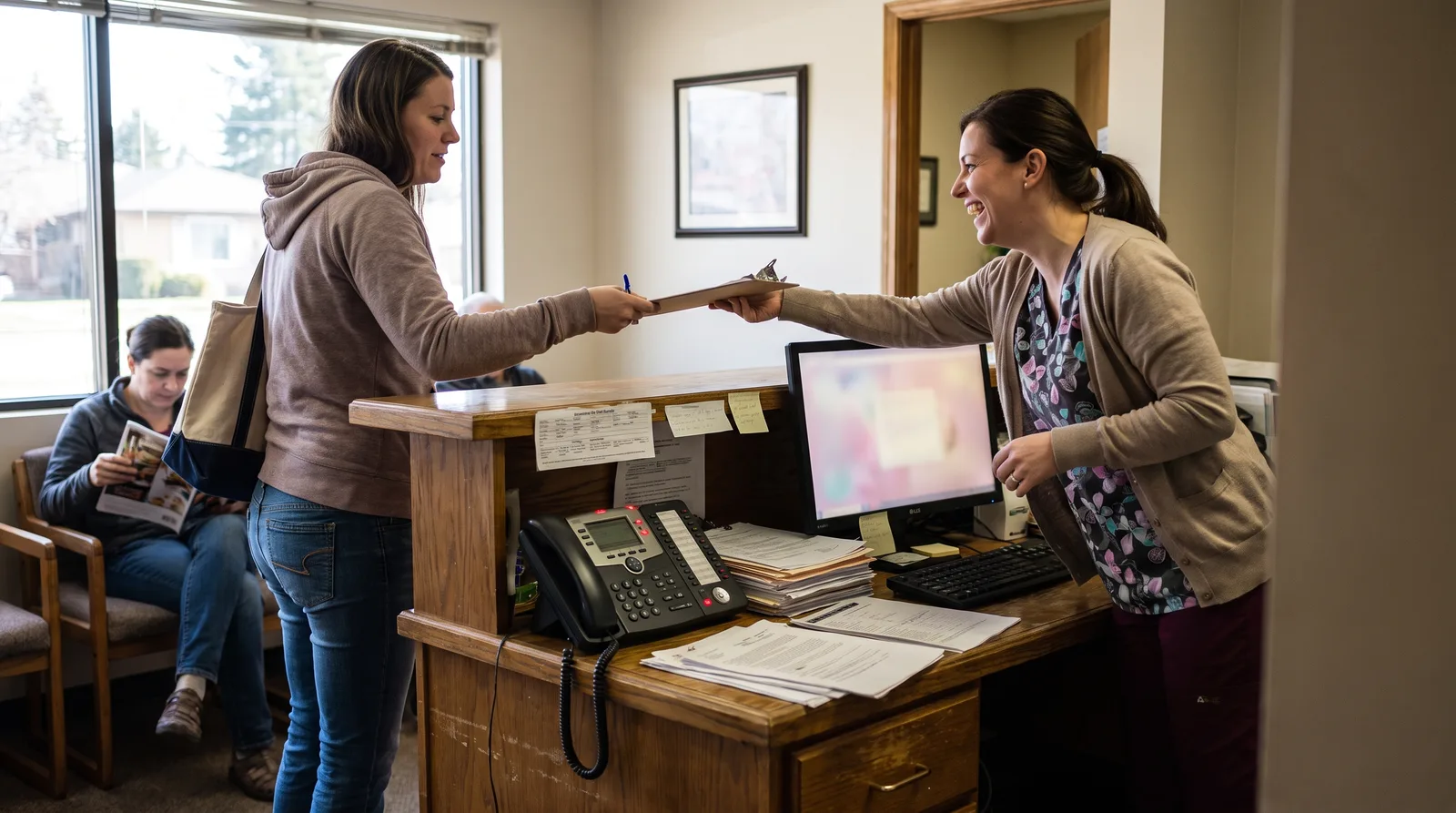
Dental voicemail quietly costs you new patients every week. Here is why voicemail fails and what to use instead to capture every call.
Share:
Table of contents
Every dental practice has lost a new patient to dental voicemail without ever knowing it happened. The phone rings during a busy hygiene block, nobody can grab it, and the call rolls to a recorded message. Most callers hang up. A few leave a name. Almost none wait for a return call that competes with three other practices they are dialing the same afternoon. Nobody on your team is failing here. One person can't check in a patient and answer every ring, which is why a plan for dental phone coverage matters.
That silent leak rarely shows up in a report. According to Dental Economics, 87% of new patients sent to voicemail without a proper greeting hang up and don't call back. It shows up in slow new-patient growth, in schedule gaps, and in the nagging sense that the phone should be producing more.
This article breaks down why voicemail fails as a capture tool, what really happens when a prospective patient hits your recording, and what to use instead so fewer calls slip away.
Why does dental voicemail lose patients?
Dental voicemail loses patients because callers rarely leave messages and rarely wait for a callback. A prospective patient who reaches a recording usually hangs up and dials the next practice. The call is gone, and it never registers as a missed opportunity in your day.
Why callers choose the next practice
Think about how you behave as a caller. When you reach a recording for a business you have never used, you weigh the effort. Leaving a message feels like a delay. Calling the next name on the list feels like progress. New dental patients make that same calculation, often in seconds.
When voicemail picks up most often
The damage compounds during the exact moments voicemail is most likely to pick up: peak hygiene hours, lunch coverage, and after closing. Those are also prime calling windows for working adults. So your recording answers the phone precisely when the highest-intent callers are trying to reach you. A front-desk guide on DrBicuspid cites a study in which a typical North American dental office loses 35% of incoming calls to voicemail. That means a lot of first-time callers are meeting your recording, not your team.
Overloaded teams are also why voicemail piles up before the doors open. Call overload and front desk fatigue explain how that backlog builds. Monday is when that pile peaks, and the plan for the Monday morning voicemail backlog shows how to rank and return those calls.
What voicemail does to referrals
There is also a referral angle. A patient referred by a friend already trusts you, yet still has to call to book. If that call lands in voicemail, the warm referral cools fast, and the goodwill your existing patient earned you goes to waste. The recording doesn't know the difference between a cold lead and a gift.
Here's the part that stings. A missed live call is recoverable. A caller who quietly chose a competitor is not. If your phone stays busy or rolls to voicemail during the day, you are training high-value callers to look elsewhere.
What happens when a new patient hits your voicemail?
When a new patient hits your voicemail, they make a snap judgment about your practice and usually move on. Unlike existing patients, prospects have no loyalty to wait on. They want an answer about availability, insurance, or a toothache, and a recording gives them none of it.
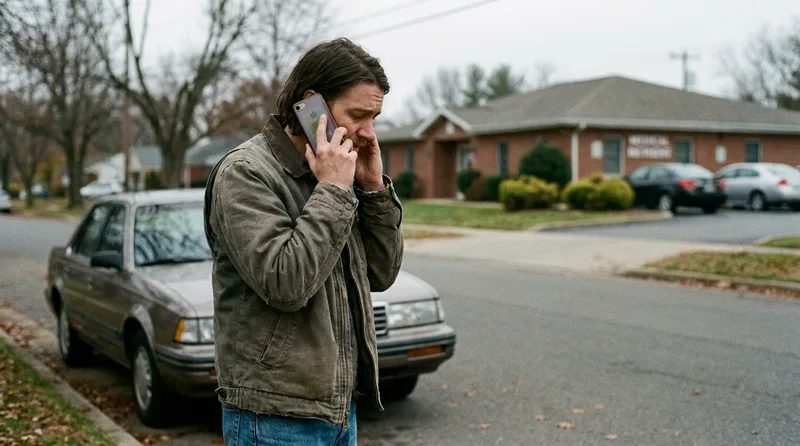
Why new patients react differently from existing ones
Existing patients tolerate voicemail because they already trust you. They will leave a message about rescheduling and assume you will call back. A first-time caller has no such patience. To them, the recording is the first impression, and it signals that reaching a human here takes effort. Callers who do leave a message get faster callbacks with a short voicemail script that helps patients reach the front desk.
A first-time caller usually wants one of three answers right away:
- Availability. Can they be seen this week?
- Insurance. Do you take their plan?
- Urgent relief. Is there a same-day opening for a toothache or a cracked tooth?
Why urgent calls lose the most
The stakes are highest for urgent calls. Someone with pain or a cracked tooth isn't screening practices for fit. They want the soonest opening. According to Dental Economics, roughly one in four new-patient calls (about 25%) goes straight to voicemail, so access starts at the phone. A recording can't triage urgency, confirm whether you take their plan, or offer a Tuesday slot. It can only ask them to wait. For emergencies, the first thirty seconds of the call decide whether a patient stays on the line or hangs up.
For the urgent slice of those calls, an emergency call plan that never drops to voicemail shows who answers, how the call is tiered, and who gets paged.
So the new-patient call, the one your marketing paid to generate, hits a wall. That's the failure mode worth fixing first, because a front desk that is busy with patients simply can't cover every ring.
Why typical dental voicemail scripts make the problem worse
Most voicemail scripts make the problem worse by asking callers to do the work. The standard message requests a name, number, and reason for calling, then promises a vague callback. It offers nothing the caller actually needs in the moment, so it gives them no reason to stay on the line.
What the typical recording is missing
Walk through the typical recording. It opens with the practice name. It states that all team members are busy or the office is closed. It asks for details and ends with "we will return your call as soon as possible." Notice what is missing: your hours, your address, whether there is any way to reach someone for an emergency, or a sense of when a callback actually happens.
A few common script problems show up again and again:
- No urgency path. A patient in pain gets the same message as someone asking about teeth whitening. There is no way to flag an emergency.
- No expectation setting. "As soon as possible" means nothing. Callers can't tell if that's ten minutes or tomorrow.
- No useful information. The recording rarely states office hours or when the practice reopens, so the caller learns nothing actionable.
You can rewrite the script to be warmer and clearer, and you should. But a better recording still can't book an appointment or answer a question. It only makes the dead end more pleasant. Even a warm script is still a recording, and a recording is where those unanswered calls end up.
How does AI call handling replace dental voicemail?
AI call handling replaces voicemail by answering live instead of recording a message. An AI receptionist picks up overflow and after-hours calls, holds a real conversation, answers common questions, and books appointments directly into your practice management system. The caller gets a resolution, not a recording.
What the caller experiences
Voicemail
Ring → no answer
Recording → leave a message
Caller hangs up
Result: call lost, dials next practice
AI Call Handling
Ring → answered live
Question answered → plan, hours, urgency
Appointment booked in the PMS
Result: caller resolved, slot filled
The same call, two very different outcomes.
How the handoff works
The mechanics are straightforward. When a call would normally roll to voicemail, because every line is busy or the office is closed, it routes to the AI instead. The system greets the caller, understands what they need, and acts on it. It can confirm whether you accept a plan, offer open slots, and book the appointment in your dental software while the caller is still on the line.
If calls roll to voicemail because one person is covering both desks, separating front desk tasks by channel addresses the cause.
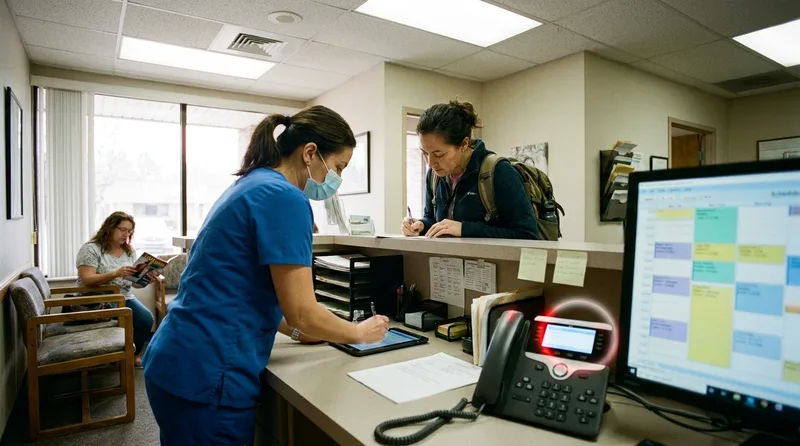
How urgent calls get handled
It also handles the triage that a recording cannot. Urgent calls get flagged or escalated, while routine requests get resolved on the spot. That kind of call routing between urgent and routine is exactly what a voicemail box was never built to do.
None of this removes your front desk. It covers the calls your team physically can't reach in the moment, and answering after-hours calls without adding staff extends that coverage past closing. Your staff keeps the relationships. The AI keeps the line from going dead.
Voicemail vs AI call handling: what is the real difference?
The real difference is capture. Voicemail records a fraction of callers and resolves nothing. AI call handling answers live, resolves common requests, and books appointments around the clock. One is a passive message box. The other is an active extension of your front desk.
Where the two differ most
Put them side by side and the gap is obvious. A recording asks the caller to wait. A live system gives the caller what they came for. Here is how the two compare across the moments that matter most.
| Capability | Voicemail | AI Call Handling |
|---|---|---|
| Answers the caller | Records a message only | Holds a live conversation |
| Books appointments | No | Yes, directly into the PMS |
| Handles urgent calls | No triage | Flags and escalates |
| After-hours coverage | Passive box | Active, round the clock |
| New-patient experience | Often a dead end | Immediate resolution |
Why voicemail still falls short
The voicemail column isn't broken technology. It's doing exactly what it was designed to do decades ago. The problem is that patient expectations moved on. For a fuller side-by-side, see AI vs voicemail for dental practices.
What should you use instead of dental voicemail?
Instead of voicemail, use a live-answer system that covers the calls your team can't reach. The goal is simple: stop sending high-intent callers to a recording. Match your coverage gaps to a tool that answers, triages, and books during overflow and after hours.
Start by finding your gaps. Pull your call logs and look for the windows where calls go unanswered most often. For most practices it's the midday rush and the hours right after closing. The same DrBicuspid guide suggests fewer than 5% of calls should go unanswered, a mark most offices miss. Dentaltown's podcast episode Never Miss a New Patient digs into how often practices miss calls during the day and how rarely callers leave a voicemail.
If midday is your gap, a script built for the lunch hour gives callers a reopening time and an emergency path instead of a recording.
What to look for in a replacement
When you evaluate a replacement, look for a few essentials:
- Live answering, not recording. The system should talk to callers and resolve requests, not just capture a message.
- Direct booking. It should write appointments into your existing software so your schedule stays accurate.
- Urgency handling. Emergencies need a path to a human, fast.
What are the options besides voicemail?
Coverage options run from least to most complete:
- A better greeting. The lowest effort, but it's still a recording.
- A live answering service. A person picks up and takes a message or books from a script.
- Missed-call text-back. It reaches the caller after they hang up, which beats silence but trails a live answer.
- AI call handling. It answers live, triages urgency, and books into your practice management system.
You don't have to replace your team to fix this. You need to close the gaps where the phone currently goes dead.
See how live answering compares to your current setup
Find out what an AI receptionist handles and where it fits alongside your front desk.
Explore AI call handling →How much does dental voicemail actually cost you?
Dental voicemail costs you the lifetime value of every prospective patient who hangs up and books elsewhere. A single new patient can mean years of recurring care, so even a handful of lost calls each week adds up quickly.
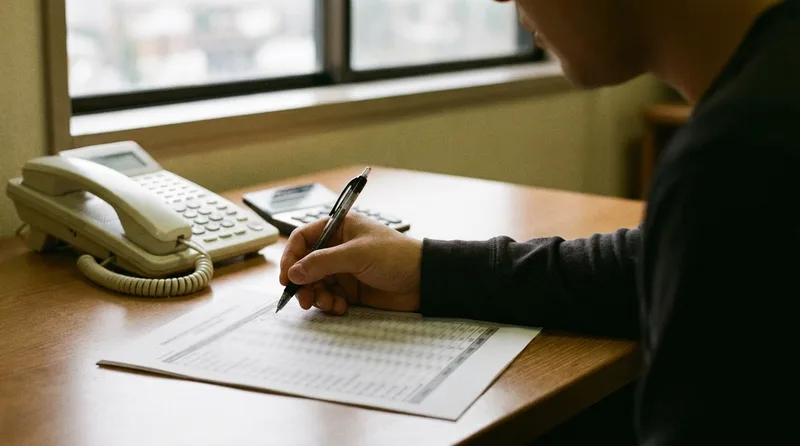
The cost never appears on an invoice. For the revenue side in detail, read how AI recovers dental revenue from missed calls.
How to estimate the cost in four steps
- Count the calls that roll to voicemail in a typical week, using your phone system's call log.
- Estimate the new-patient share. A Dental Economics analysis assumes 60-65% of missed calls at a typical practice are new-patient related.
- Assume a conservative share of those callers never call back.
- Multiply the result by your average new-patient value.
Scale matters. According to the same analysis, a practice taking 300 to 500 calls a month at a 35% miss rate leaves 105 to 175 calls unanswered. The number is usually larger than owners expect, because the losses are invisible until you add them up.
This is why tracking matters. Measuring answer rates, missed calls, and conversion gives you a baseline to improve against. A framework for measuring AI receptionist success and ROI helps you turn fuzzy frustration into numbers you can manage. Once you can see the leak, you can close it.
The quiet truth about dental voicemail is that it answers your most important calls at your worst possible moments, then asks those callers to wait. New patients don't wait. They book with whoever picks up.
You don't need to overhaul your office to fix this. You need to find the windows where your phone goes dead and put live answering in those gaps. Start by pulling one week of call logs and counting how many calls roll to your recording.
Stop sending new patients to a recording
Learn how AI call handling answers the calls your front desk can't reach, so fewer patients slip away to voicemail.
See which calls an AI receptionist handles →Frequently Asked Questions
Patients hang up on dental voicemail because leaving a message feels like a delay when they want an immediate answer. Prospective patients have no loyalty to wait on, so they simply dial the next practice on their list.
Yes. Dental voicemail is especially costly for new patient acquisition because first-time callers will not wait for a callback. The recording becomes a dead end for the exact high-intent calls your marketing paid to generate.
A dental voicemail greeting should state your hours, when you reopen, and a path for emergencies, plus a realistic callback window. Even a strong greeting cannot book appointments or answer questions, which limits its value.
AI call handling can replace dental voicemail for overflow and after-hours calls by answering live, resolving questions, and booking appointments. It handles the calls your front desk cannot reach without removing your staff from patient relationships.
Yes. An AI receptionist answers calls that would roll to voicemail and books appointments directly into your practice management system. It can confirm plan acceptance and offer open slots while the caller is still on the line.
According to Dental Economics, a 35% miss rate on 300 to 500 monthly calls leaves 105 to 175 unanswered. The cost equals the lifetime value of every new patient who hangs up and books elsewhere, and few callers leave a message.
Sources & References
- 1
- 2
- 3
- 4
- 5
Topics
Was this article helpful?
Written by
DentalBase Team
Expert dental industry content from the DentalBase team. We provide insights on practice management, marketing, compliance, and growth strategies for dental professionals.