DentiVoice vs Arini AI: Which Fits Your Dental Practice?

DentiVoice vs Arini AI compared on pricing transparency, marketing attribution, and staff escalation, so you can pick the right AI dental receptionist.
Share:
Table of contents
DentiVoice vs Arini AI is one of the first head-to-head questions dental practice owners ask once a human receptionist alone can't cover every incoming call. Both are built specifically for dentistry, not adapted from a general call-center product. Both promise fewer missed calls and faster booking. But the differences that actually matter show up in three places. How clearly each vendor prices its product. Whether it can trace a booked patient back to the ad or page that generated the call. And how it hands a tricky caller off to your front desk. This guide walks through where DentiVoice and Arini diverge, so a solo practice and a five-location DSO can both make a call they won't second-guess in six months.
DentiVoice vs Arini AI: What Is the Core Difference?
The core difference between DentiVoice and Arini AI is what each platform treats as its primary job. DentiVoice is built around a single, deeply tuned voice agent plus attribution reporting. Arini has built its reputation on dental-native automation backed by publicized case-study results. That distinction sounds small until you look at what a practice actually needs six months in.
Where Arini's Story Differs From DentiVoice's
Arini has positioned itself as one of the more visible dental AI receptionist companies, with venture backing and case studies that circulate widely in dental Facebook groups and at conferences. That visibility helps it win the "have you heard of" conversation. DentiVoice takes a narrower, more operational stance. Instead of expanding into every adjacent workflow at once, it concentrates on getting the phone call right, then closing the loop between that call and the marketing spend that produced it. Practices researching either platform are usually not choosing between a good option and a bad one. They're choosing between a story-driven category leader and a tool built to answer one specific question. Which channel is actually filling your chairs?
When This Difference Actually Matters
If your practice runs mostly on word of mouth and a handful of long-standing referral sources, the distinction may matter less. If you're spending meaningfully on Google or Meta ads, it changes which platform earns its cost back faster. Consistent phone coverage also supports the kind of access-to-care goals the CDC's oral health program tracks at a population level, even though that's a bigger conversation than any single vendor comparison.
How Each Platform Defines a Win
DentiVoice counts a win as a booked call it can trace back to the ad or page that produced it. Arini counts a win differently: broader coverage across scheduling, reminders, and intake, backed by case studies rather than per-call attribution. Neither definition is wrong. But if your ad budget keeps climbing without a clear read on what's working, only one of these approaches tells you why.
What This Looks Like at Your Front Desk
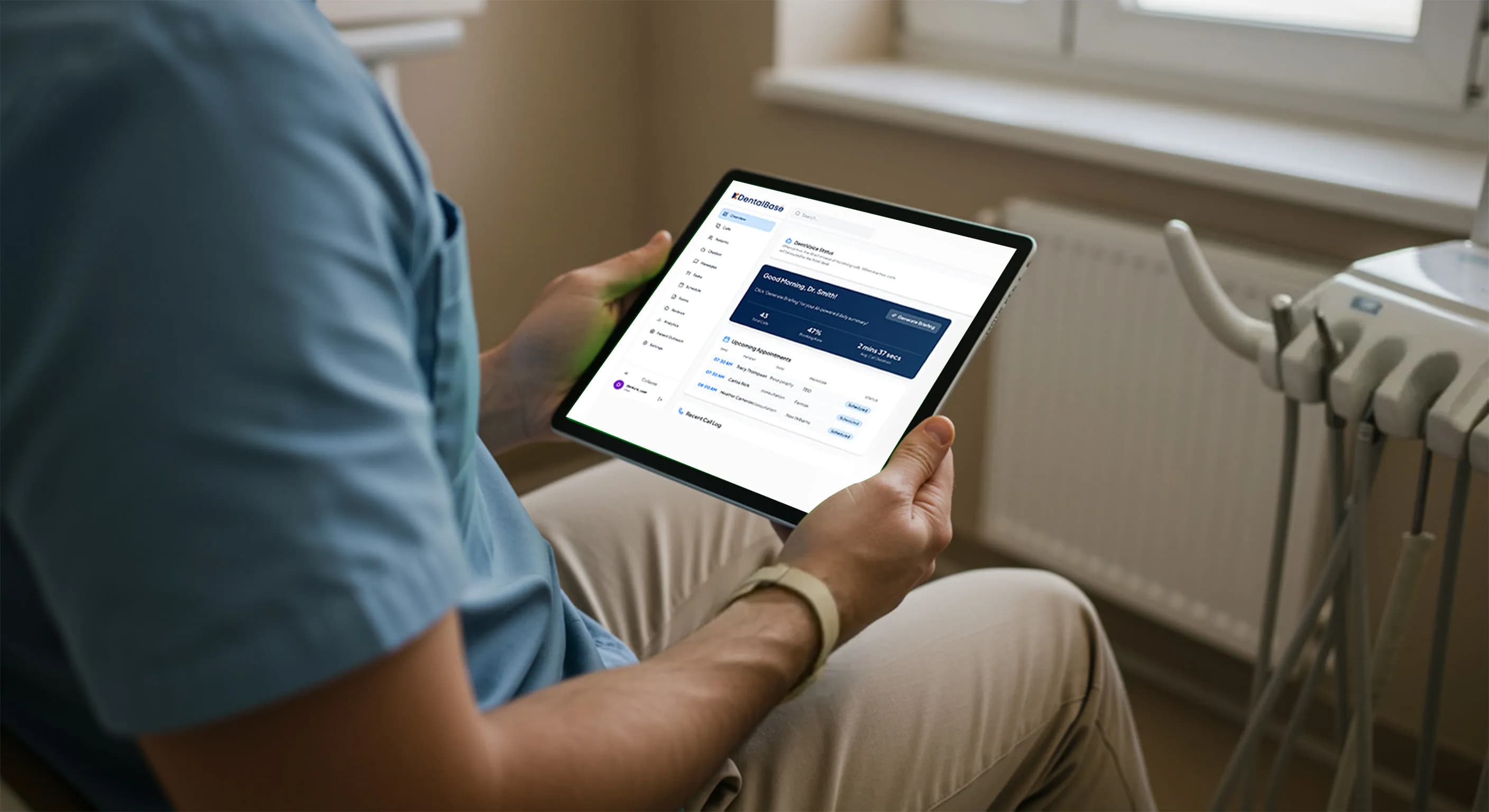
Picture an office manager checking the DentiVoice dashboard on a Monday morning. She can see that of last week's 40 booked calls, 12 came from a paid Google campaign and 3 from a text reminder link. Arini's dashboard, by contrast, focuses on call volume and automation coverage, not the ad-to-appointment thread. That's a real difference. Not just marketing language.
How Do DentiVoice and Arini Position Themselves in the Dental Market?
DentiVoice and Arini position themselves differently in how they talk about growth: Arini emphasizes automation breadth and funding milestones, while DentiVoice emphasizes call outcomes tied to specific marketing channels. Neither positioning is inherently better. It depends on what your practice is trying to prove to itself.

A Crowded Market, But Different Depth
A dental-native AI receptionist market has gotten crowded fast, and third-party comparison sites already mention DentiVoice alongside Arini whether or not either company participates in the conversation. That means the search is happening either way. What differs is depth versus breadth. Arini's public case studies tend to highlight call volume handled and appointments booked in aggregate. DentiVoice's positioning leans toward showing a practice manager exactly which call, from which source, turned into which booked appointment. That distinction matters more once a practice has been running paid ads for more than a quarter. Neither approach replaces your front-desk team; both are meant to sit in front of the phone line, not behind it. Patient communication standards published by the American Dental Association's Health Policy Institute are a useful neutral reference point when a vendor's script claims sound too polished to be real.
Test the Claims Yourself
Ask each vendor for a live demo using your own phone number and a real scenario, not a scripted one, before drawing conclusions from marketing pages alone. Listen closely to the voice and script during that call, and use the red flags in AI receptionist voice customization claims to spot where marketing outpaces reality.
Does DentiVoice or Arini Offer Better Marketing Call Attribution?
DentiVoice's marketing attribution traces a phone call back to the specific ad, page, or campaign that generated it. Third-party reviewers cite this most often as its standout differentiator over Arini and other dental AI receptionists. Attribution sounds like a back-office detail until you're the one paying for Google Ads.
Why Attribution Beats Guesswork
Most dental marketing spend still gets judged on vague impressions or a receptionist's memory of "how did you hear about us," which is unreliable at the moment it matters most. When an AI receptionist can log the source line and campaign tag for every call, the practice finally gets a real answer. Did this month's paid search spend produce a handful of new patients, or did it barely move the needle? That reporting connects naturally to the broader question of what a missed call actually costs your practice in the first place. Attribution only matters if the call gets answered and logged correctly.
If you run any paid advertising at all, ask a candidate vendor to show you a real attribution report during the sales call, not a mockup screenshot in a slide deck.
See what a missed call actually costs
Before comparing vendors on price, it helps to know the size of the problem you're solving. DentiVoice's calculator breaks down lost production per missed call by practice size.
See how DentiVoice compares →How Does Pricing Transparency Compare Between DentiVoice and Arini?
Pricing transparency is a weak point across the dental AI receptionist category, and neither DentiVoice nor most competitors, Arini included, publish a rate card on their public website. That gap is exactly why practices should push for numbers early instead of waiting until the demo call ends. Walking in with a category baseline helps, and our guide to AI dental receptionist pricing in 2026 covers the typical monthly ranges, pricing models, and hidden fees to ask any vendor about.
Why ROI Talk Beats a Price List
Any honest DentiVoice vs Arini AI comparison has to start from that pricing gap rather than pretend a public price list exists. The more useful comparison isn't a line-item price sheet, it's how each vendor talks about return on investment.
A vendor that can walk you through cost per booked appointment, tied back to attribution data, is giving you something you can actually model against your own production numbers. A vendor that only quotes "plans starting at" without connecting cost to outcome is asking you to take pricing on faith. Research tracked by NIDCR's data and statistics program shows how much access to care shifts on small changes in patient communication. That same logic should apply to what you pay for a phone system. According to McKinsey's healthcare research, automation tools across healthcare settings are increasingly judged on measurable operational return rather than sticker price alone. That tracks with what dental buyers are starting to demand from AI receptionist vendors too.
Questions to Ask About Cost
- Ask for a cost-per-booked-appointment estimate, not just a monthly subscription number.
- Request a reference call with a practice of similar size and specialty mix.
- Confirm whether onboarding, number porting, and after-hours coverage carry separate fees.
Which Platform Handles Staff Escalation and Human Handoff Better?
The better staff escalation model is the one that routes only genuinely complex calls to your front desk, not the one that escalates the most or the least. Both DentiVoice and Arini market escalation capability, but the design philosophy behind it differs meaningfully.

What a Good Handoff Looks Like
A poorly tuned escalation workflow either dumps too many routine calls on staff, defeating the purpose of the AI receptionist, or it holds onto calls it shouldn't. Either way, a patient who clearly needs a human ends up frustrated. DentiVoice's approach to this problem is documented in detail in its own staff handoff escalation guide. It covers the triggers and context summaries a receptionist sees before picking up a transferred call. Ask specifically what data your team sees at the moment of handoff. A bare transfer with no context is barely better than an old-fashioned hold.
Test this in the demo itself: have someone call in with a scenario that should escalate, like a billing dispute or a same-day emergency, and watch what actually reaches your staff.
Is DentiVoice or Arini the Better Fit for a Multi-Location DSO?
A multi-location DSO generally needs a platform proven at scale across provider schedules and routing rules. That shifts the evaluation away from single-office case studies toward how well the system handles buffer times and cross-location booking. This is where practice size should drive the decision more than brand reputation.
Why Location Count Changes the Evaluation
A three-provider solo practice and a twelve-location DSO are not solving the same problem, even if both are comparing DentiVoice and Arini using the same marketing pages. Multi-location groups need routing logic that understands which location a caller means. They also need provider-specific scheduling rules and a rollout plan that doesn't require re-training every front desk at once. How cleanly a platform integrates with practice management systems like Open Dental's own scheduling documentation matters more here than in a single-location practice, since routing errors multiply across locations. DentiVoice's guidance on scaling an AI receptionist across multiple providers walks through a phased rollout built to avoid double-booked chairs during the transition. Solo and small group practices are often better served starting with the sizing guidance in DentiVoice's solo practice sizing guide instead.
Match the Evaluation to Your Practice Size
| Practice Profile | What Matters Most | What to Ask Both Vendors |
|---|---|---|
| Solo or two-provider practice | Simple setup, fast time to value | How fast is go-live, and what's included at the entry tier? |
| Growing group practice | Attribution and ROI tracking | Can I see cost-per-booked-appointment by channel? |
| Multi-location DSO | Routing rules and rollout plan | How is a phased, location-by-location rollout structured? |
Scaling across more than one location?
See how a phased rollout keeps every chair filled while your team adjusts to a new phone workflow.
Talk to DentiVoice about your rollout →What Should You Ask Before Choosing Between DentiVoice and Arini AI?
Before choosing between DentiVoice and Arini AI, ask each vendor to demonstrate attribution reporting, escalation handoff, and pricing structure live. Use your own practice's call scenarios rather than a canned demo script. A short checklist keeps the comparison honest.
Test It Live, Not on a Slide
Marketing pages are written to flatter. A live demo, run against your own phone tree and a couple of realistic call scenarios, tells you far more than any comparison chart, including this one. Bring the same six or seven questions to every vendor you evaluate, DentiVoice and Arini included, and write down the answers side by side instead of trusting memory a week later. For a broader shortlist to run those same questions against, see our roundup of dental AI voice receptionist platforms worth shortlisting in 2026.

Six Questions to Bring to Every Demo
- Can you show me a real attribution report, not a sample slide?
- What exactly does my front-desk team see when a call escalates to them?
- What is the actual monthly cost, including onboarding and number porting?
- How is a multi-location rollout sequenced, if that applies to us?
- Can I speak with a current customer in a similar specialty and size?
- What happens to call quality monitoring after the first 90 days?
Whichever platform you land on, revisit how to monitor AI receptionist call quality a few months after go-live. A vendor that scores well in a first demo can still drift if nobody checks in later.
DentiVoice vs Arini AI isn't a question with one universal answer. It's a question of which operational gap your practice most needs closed right now. Marketing accountability, escalation quality, or scale across locations, and which vendor can prove it live rather than in a slide. Practices that spend on advertising tend to lean toward attribution-first platforms. Practices choosing mainly on name recognition alone often skip that step and regret it once the ad budget doubles. Whatever you decide, put both vendors through the same demo script before signing anything.
If DentiVoice and Arini are just two names on a longer shortlist, our guide to choosing the best dental AI receptionist software covers the full set of criteria worth comparing across every vendor you're considering.
See DentiVoice's attribution reporting live
Bring your own call scenarios to a 15-minute demo and see exactly how a booked call traces back to the campaign that produced it.
Book a 15-Minute Demo →Before comparing specific vendors, it helps to see how AI reception stacks up against the traditional alternative in the first place. Read the full comparison of AI dental receptionists versus traditional answering services.
Still building your evaluation checklist?
Read the full playbook for operating an AI voice receptionist →Frequently Asked Questions
DentiVoice vs Arini AI matters less for a solo practice than setup speed and entry-tier pricing. A one- or two-provider office should prioritize fast go-live and a simple onboarding process over enterprise features neither vendor markets specifically to small practices.
No, Arini does not publish pricing publicly, and neither does DentiVoice. Most vendors in the dental AI receptionist category keep pricing behind a sales call, so ask for a cost-per-booked-appointment estimate rather than a flat monthly number.
DentiVoice traces a booked call back to the specific ad, page, or campaign that generated it. Third-party reviewers cite this attribution reporting as DentiVoice's standout feature, since most competitors, Arini included, report call volume without connecting it to marketing spend.
Yes, a properly configured AI receptionist can triage an emergency call and escalate it to staff with a summary attached. Test this scenario directly during any vendor demo, since escalation quality varies more than marketing pages suggest.
Setup timelines vary by practice size and phone system complexity, but a single-location practice can typically go live within about a week. Ask each vendor for a day-by-day setup plan rather than a vague timeframe.
No, an AI receptionist is designed to sit in front of the phone line and route complex calls to your team, not to remove staff roles. It handles routine scheduling and overflow so your front desk can focus on patients already in the office.
Sources & References
- 1
- 2
- 3
- 4
- 5
Topics
Was this article helpful?
Written by
DentalBase Team
Expert dental industry content from the DentalBase team. We provide insights on practice management, marketing, compliance, and growth strategies for dental professionals.