Bilingual Dental Receptionist: How AI Handles Spanish Calls
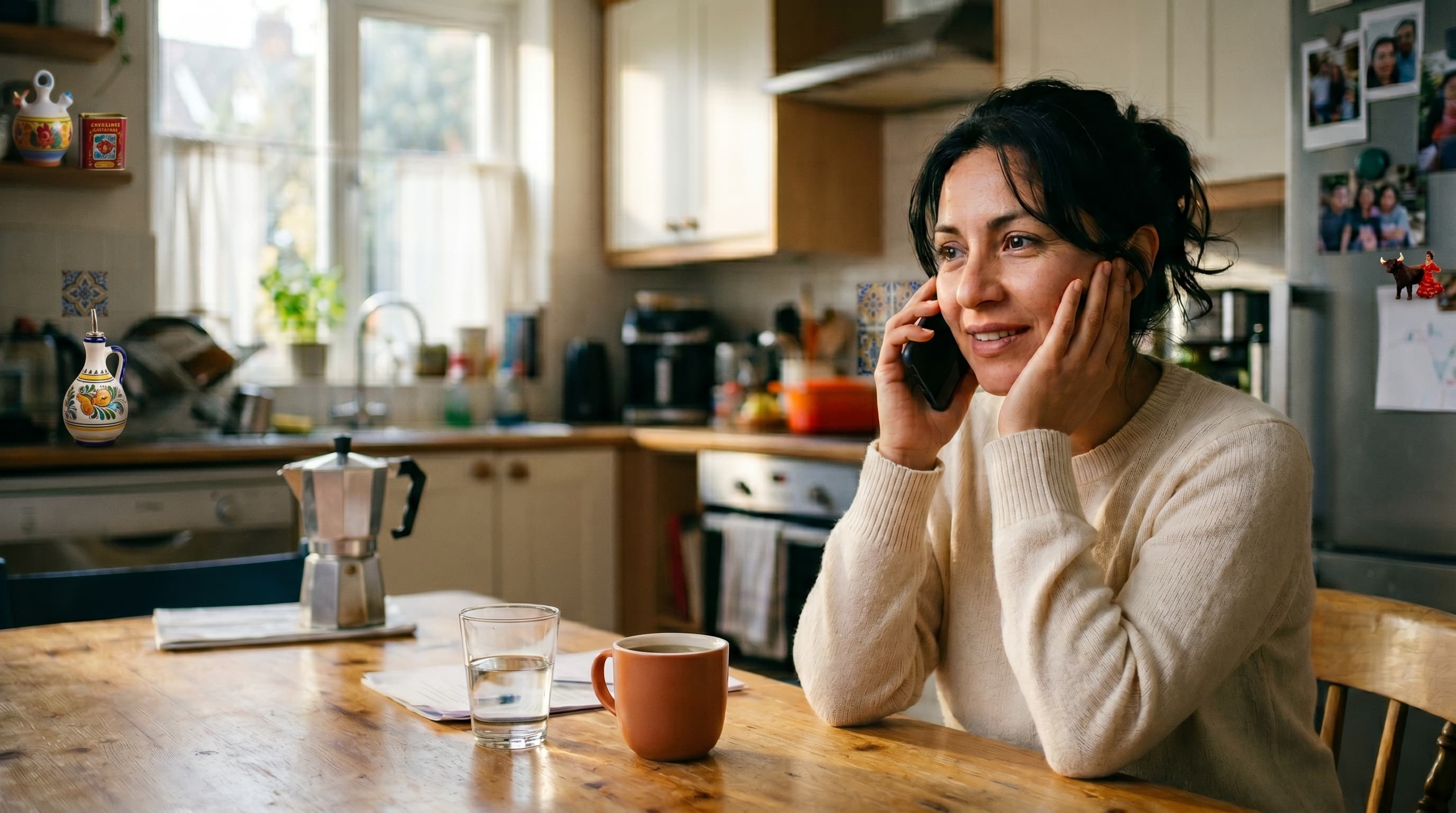
A bilingual dental receptionist powered by AI detects Spanish on the first ring, switches mid-call, and books patients without a new hire.
Share:
Table of contents
Nearly one in eight inbound dental calls in Hispanic-majority markets ends in silence. A bilingual dental receptionist powered by AI changes that math by answering Spanish and English calls automatically, with no extra hire and no language test on the front desk.
This article covers how Spanish-speaking patient calls slip through traditional dental front desks, what AI-powered bilingual reception actually does on the call, where it pays off most across Texas, Florida, California, and Arizona, and how to roll it out without disrupting staff. We'll also cover what to look for during vendor evaluation, including HIPAA requirements that apply equally in any language.
Why Spanish-speaking calls slip through most dental front desks
Roughly 13% of inbound dental calls in Hispanic-majority ZIP codes go unanswered or mishandled. The caller hits a voicemail in a language they don't speak, or the front desk apologizes and hangs up. Most of those patients never call back. They search again and book the next practice that picks up in Spanish.
The issue is staffing math, not effort. A typical three-provider practice receives 180 to 240 calls per week. Hiring a fluent bilingual front desk employee costs $42,000 to $55,000 per year plus benefits in the Texas, Florida, and California markets, according to ADA Health Policy Institute workforce data. One bilingual hire still can't cover lunch, breaks, vacation, and after-hours, which is exactly when many working patients call.
The downstream impact shows up in patient access. NIDCR oral health research documents persistent care gaps in Hispanic populations, driven in part by language barriers at the point of scheduling. CDC oral health data shows higher rates of untreated decay in the same group. A practice that can't answer a Spanish call isn't just losing revenue. It's reinforcing a disparity in care.
Already losing Spanish calls? See where the revenue goes.
Most practices underestimate their language-gap loss by 4 to 6x. Read our breakdown of missed-call revenue recovery before evaluating any vendor.
Read the revenue recovery guide →What does a bilingual dental receptionist actually do?
A bilingual dental receptionist answers calls in two languages, books appointments, takes messages, and handles routine questions in whichever language the caller speaks first. AI-powered versions do this without a human pickup. The system identifies the caller's language, responds in that language, and only escalates to a human when the call requires clinical judgment.
On a typical Spanish call, the receptionist greets the patient, confirms whether they are a new or existing patient, captures basic intake details, offers available appointment slots, and books the visit directly into the practice management system. The patient receives a confirmation text in Spanish. The front desk sees a structured summary in English when they arrive the next morning.
The job description is the same as a human receptionist. The difference is coverage. A bilingual employee answers calls during their shift. A bilingual AI dental receptionist answers every call, every hour, in both languages, with no drop in quality at 7pm or on a Saturday. That's why practices use it for overflow and after-hours rather than replacing existing staff.
Common tasks handled in Spanish without escalation:
- New patient scheduling, including insurance capture and treatment-area intake
- Existing patient appointment changes and confirmations
- Hygiene recall outreach and rebooking
- Pre-screening for emergency calls before routing to the on-call provider
- Basic FAQ: hours, address, accepted insurance, parking, payment plans
For deeper context on how AI handles the full call workflow, see our AI receptionist FAQ for dental offices and the breakdown of what these systems will and will not do in our guide on whether AI can replace dental receptionists.
How does AI detect language and switch between Spanish and English?
Language detection happens in the first one to two words. The speech recognition model listens to the audio, identifies the language with high confidence in under 500 milliseconds, and locks the response language for the rest of the call. Quality systems also handle mid-call switching when the patient changes language voluntarily.
The detection model is trained on dental-specific vocabulary in both languages, which matters more than it sounds. Generic voice AI confuses "cita" (appointment) with "city" or "filling" with "feeling." Dental-trained models recognize the context immediately. They also recognize regional Spanish variations across Mexican, Puerto Rican, Cuban, and Central American patient populations, which differ in vocabulary and pronunciation.
Mid-call switching is the harder problem. Many bilingual households call from a single phone, and the patient may switch mid-sentence. A grandmother might call in Spanish, then hand the phone to her grandchild who answers a clarifying question in English. The receptionist needs to follow without restarting. Systems that force the caller to "press 2 for Spanish" feel transactional and lose calls in this scenario.
The flow looks like this on a typical call:
Typical bilingual call flow
- 0.0s: Patient says "Hola, quería hacer una cita."
- 0.4s: Language model classifies input as Spanish with 98% confidence.
- 0.6s: Receptionist responds in Spanish, identifies the patient, and asks about treatment need.
- Mid-call: If the patient switches to English, the model re-classifies and continues in English without restarting.
- End of call: Confirmation text sent in the language used most during the call.
This kind of language-aware dental call routing is what separates a real bilingual receptionist from a voicemail with a Spanish prompt.
Where a bilingual dental receptionist delivers the biggest wins in TX, FL, CA, and AZ
Texas, Florida, California, and Arizona contain the four largest Hispanic and Latino patient pools in the United States. Combined, they account for roughly 60% of the national Hispanic population, according to U.S. Hispanic demographic data from Statista. McKinsey Healthcare insights identify these states as among the fastest-growing patient access markets in the country. A bilingual dental receptionist pays back fastest in these four states because the underlying demand is highest.
The opportunity is not evenly distributed. Practices in ZIP codes above 40% Hispanic population see the strongest revenue lift because so many competing offices still operate English-only phones. Below 20%, the volume is lower and the return is slower, though still positive when the practice is in growth mode and trying to differentiate.
Here is what the demand picture typically looks like across the four states:
| State | Hispanic Share of Population | Highest-Demand Metros | Typical Bilingual Call Share |
|---|---|---|---|
| Texas | ~40% | Houston, San Antonio, Dallas, El Paso, Rio Grande Valley | 25-55% of total call volume |
| Florida | ~26% | Miami-Dade, Orlando, Tampa, Hialeah | 30-65% in South Florida |
| California | ~39% | Los Angeles, Inland Empire, Central Valley, San Diego | 30-60% of total call volume |
| Arizona | ~32% | Phoenix, Tucson, Mesa, Yuma | 20-45% of total call volume |
DSOs operating across multiple states benefit from a single bilingual configuration that runs identically in every office. The standardization removes the regional staffing problem of finding bilingual hires in markets where the wage premium is steepest. For multi-location operators, the DSO call management approach applies directly here, and the workflow for standardizing calls across 50 or more locations covers how to roll out a language layer uniformly.
Related: For after-hours coverage in any language, see our guide on how to answer dental calls after hours without hiring.
What should practices look for in a bilingual dental receptionist?
Five capabilities matter more than the rest: native-quality Spanish voice, mid-call language switching, dental-specific vocabulary, direct PMS booking, and a signed Business Associate Agreement. Vendors that lack any of these will fall short in real patient calls, even if their demos look impressive in English.
Native-quality voice is the first filter. A robotic accent makes Spanish-speaking callers hang up faster than English speakers because they assume the call is a scam. Listen to the Spanish demo before signing anything. Have a native speaker on your team listen too. Regional accent matters in Florida (Cuban Spanish), Texas and California (Mexican Spanish), and Arizona (mixed). The model should sound natural in the dominant regional variant for your market. The same listening test applies in English, and a demo checklist for testing AI receptionist voices covers what else to check on the call.
The second filter is whether the system books directly into your practice management software. A bilingual receptionist that takes a message and emails it to the front desk is a glorified answering service. A real bilingual dental receptionist reads the schedule in Dentrix, Eaglesoft, Open Dental, Curve Dental, or CareStack and books the slot live during the call.
Use this checklist when evaluating vendors:
Bilingual AI Receptionist Vendor Checklist
Check each item the vendor has confirmed in writing.
The third filter is data handling. Spanish calls fall under the same HIPAA rules as English calls. Verify that recordings are encrypted at rest, that the vendor signs a Business Associate Agreement, and that call summaries are transmitted securely. For deeper detail on what to verify, see our guide on evaluating AI receptionist HIPAA compliance.
How to roll out bilingual AI reception without disrupting your team
The cleanest rollout starts with overflow and after-hours, not full call replacement. Route only the calls your team cannot answer to the AI for the first 30 days. This builds confidence with front desk staff, lets you tune the Spanish voice, and produces real call data to measure before any workflow change. Easing into automation this way is also good burnout prevention, and this guide to reducing burnout at the dental front desk covers the broader strategy.
Phase the rollout in three steps. First, route calls that ring more than three times to the AI as overflow. Second, route all calls outside business hours to the AI. Third, after two to four weeks of clean call data, add a Spanish-only routing rule that sends Spanish callers directly to the AI even during business hours. By the time you reach step three, the front desk sees the AI as a helper, not a threat.
Compliance matters from day one. HHS Office for Civil Rights guidance on Limited English Proficiency requires that healthcare providers offer meaningful language access to patients with limited English. Bilingual AI reception is one way to demonstrate that access. Document the rollout, including how Spanish calls are handled, recorded, and routed.
Train the front desk on what they will see. The AI passes structured summaries into the practice management system: caller name, language used, reason for call, appointment booked, and any flags for follow-up. Staff need 15 minutes of training to read the summary and confirm the booking the next morning. That is the entire change-management cost in most practices.
For a step-by-step setup walkthrough, see our guide to implementing an AI receptionist in your dental office and the related workflow for automating dental appointment scheduling. Both apply directly to bilingual deployment.
The bigger picture: language access is patient access
A bilingual dental receptionist isn't a marketing feature. It's a patient access tool that determines whether Hispanic and Latino patients in your service area can book care at your practice or have to keep searching. The competitive gap closes when every nearby office offers bilingual reception, and that gap is closing fast in Texas, Florida, California, and Arizona.
Spanish is usually the first language practices cover, but it's rarely the last. For callers who speak Tagalog, Vietnamese, Arabic, or Chinese, see how to plan multilingual call coverage beyond Spanish.
Start with the data you already have. Pull your missed-call report for the last 30 days and ask the front desk how many of those calls were Spanish. Most practices are surprised by the number. That's your starting baseline. The next call you miss in Spanish is one you can recover with the right system in place this quarter.
See DentiVoice handle a Spanish call live
Book a 15-minute demo and listen to a real bilingual call flow from your area code. We'll show language detection, mid-call switching, and direct PMS booking in your dental software.
Request a demo →Not ready for a demo? Compare options first.
Read AI receptionist vs. traditional answering services →The voice and setup side of bilingual support connects to: the qualities that make a voice sound conversational rather than robotic, how accuracy holds up across different accents, and the one-week path to getting this running.
Frequently Asked Questions
A bilingual dental receptionist answers patient calls in two languages, most commonly Spanish and English. AI-powered versions detect the caller's language automatically and book appointments, take messages, and answer questions without needing a human bilingual hire on the front desk.
The AI analyzes the first one to two words the caller speaks and identifies the language using a speech recognition model trained on dental vocabulary. Detection usually happens before the caller finishes their first sentence, then the system locks into that language for the call.
Yes. Quality systems handle mid-call language switching, which is common with bilingual households. If a patient starts in Spanish and asks a follow-up in English, the receptionist continues in English without forcing the caller to restart or re-explain.
Usually yes. One bilingual employee covers limited hours and cannot answer every call. Lunch, breaks, after-hours, and overflow calls still default to English-only voicemail, which most Spanish-speaking new patients abandon rather than leave a message.
It can be, but verify the vendor. The provider must sign a Business Associate Agreement, encrypt call recordings in transit and at rest, and apply the same protections to Spanish conversations as English. Language does not change HIPAA obligations under HHS rules.
A bilingual front desk hire typically adds $42,000 to $55,000 in annual salary plus benefits in the Texas, Florida, and California markets. AI-powered bilingual reception runs $300 to $800 per month per location, depending on call volume and features.
Practices in Hispanic-majority ZIP codes across Texas, Florida, California, and Arizona, plus DSOs operating multiple offices in those states. Solo practices in smaller markets with growing Spanish-speaking populations also use it to test demand before hiring.
Sources & References
- 1
- 2
- 3
- 4
Topics
Was this article helpful?
Written by
DentalBase Team
Expert dental industry content from the DentalBase team. We provide insights on practice management, marketing, compliance, and growth strategies for dental professionals.