AI Receptionist Oral Surgery Practice: Referral Calls
How an AI receptionist oral surgery practice setup handles referral intake, pulpal pain triage, records chasing, sedation questions and post-op calls.
Share:
Table of contents
An AI receptionist oral surgery practice deployment has to answer a call type most dental phone systems were never built for: another office's front desk, calling about a patient who hasn't arrived yet. That's the referral. It arrives with a tooth number, a diagnosis, and sometimes a panoramic film, and it needs a different script than a whitening inquiry.
Most vendor demos show general dentistry booking. Fine for a family practice. But surgical specialties run on referral volume, and the intake failure points are different, which is worth understanding before you evaluate anything. Start with how an AI dental receptionist works, then read the rest of this guide.
Below is how referral intake, acute pain triage, records collection, sedation questions, and after-hours post-op calls actually get handled. Plus the routing matrix and the vendor questions that matter for a surgical office.
How are referral calls different from new patient calls?
Referral calls come from a clinician, not a shopper. The caller already knows the diagnosis, the tooth, and the urgency, so there's nothing to sell and no objection to handle. What matters is capture accuracy. A dropped tooth number or a misspelled referring dentist creates rework that lands on your surgical coordinator two days later.
A general practice call opens with a question. Is the office taking new patients, what does a cleaning cost, does it accept a plan. Referral calls skip all of that. The referring office assistant wants to know one thing: when can you see this person.
How referral relationships actually work
That changes the whole conversation shape. According to AAOMS practice management resources, oral and maxillofacial surgery runs on a referral relationship model, and residency in the specialty takes 4 to 6 years beyond dental school, which is roughly 2 to 3 times a general practice residency. Endodontics works the same way. According to the American Association of Endodontists, endodontists average roughly 25 root canal treatments per week, while general dentists average about 2.
Why the intake priority flips
So the intake priority inverts. In general dentistry you qualify the caller. A specialty intake script has to qualify the case instead, then get the referring office off the phone in under 90 seconds.
Related: Elective surgical cases in a general practice follow a different intake path than referral-driven ones. AI receptionist for a dental implant practice →
What should an AI receptionist capture on an inbound referral?
Capture six fields on every referral, in this order: referring dentist and office, patient name and callback number, tooth number or quadrant, reason for referral, urgency level, and whether records are coming. Anything past those six can wait for the confirmation call. Missing any one of them forces a callback.

Why field order matters more than field count
Order matters more than people expect. Ask for the referring dentist first and the whole record threads correctly from the start, even if the call drops halfway through. Ask for it last and a disconnected call leaves you with an orphan patient name and no way to close the loop.
- Referring dentist and practice name. This is the field that gets misspelled most. A good system reads it back and matches against your existing referrer list rather than free-texting it.
- Patient name and a direct callback number. Not the referring office's number.
- Tooth number or quadrant. Universal numbering, read back for confirmation.
- Reason for referral. Impacted third molar, failed previous treatment, suspected fracture, biopsy.
- Urgency. Routine, same-week, or same-day.
- Records status. Coming by portal, by email, by fax, or not yet sent.
Feeding the intake record without retyping
Those six fields map cleanly onto a digital intake record, which is why practices that already run digital dental intake forms tend to see faster referral setup. The AI populates the structured fields, and the coordinator reviews rather than retypes.
Referral intake is an operations problem before it is a technology one.
Map your current referral call path first. Find where capture breaks, and who ends up fixing it two days later.
Read practice management guides →How does an AI receptionist triage acute pulpal pain against a booked surgical block?
Triage works by scoring the call against fixed clinical criteria your surgeon sets, then matching the score to a slot type. The system doesn't diagnose. It collects pain duration, swelling, fever, and trauma history, then either holds an emergency slot, books routine, or pages the on-call clinician immediately.

The guardrail: collect and route, never advise
This is the section where the guardrail matters most. The AI collects and routes. It never advises on symptoms, never suggests a cause, and never tells a caller whether something can wait. That line has to be written into the script explicitly, not assumed.
Surgical offices can turn that rule into paperwork. A worked example of a post-operative call script that keeps AI within safe limits shows how a clinician signs off on each line the AI is allowed to say.
Guardrails do fail sometimes, and it's worth knowing what happens when an AI receptionist gets something wrong before you write yours.
Why acute pain volume is predictable
Untreated decay is common enough that acute presentations stay a steady share of specialty call volume. According to NIDCR, about 26% of adults aged 20 to 64 have untreated dental caries. A share of those cases eventually presents as pain rather than as a scheduled visit.
The approach isn't new to dentistry. A validated oral health reception and risk classification protocol developed and tested in a hospital dental emergency service uses the same logic: fixed criteria, scored at the point of reception, mapped to urgency tiers rather than to a clinician's judgment in the moment.
The routing matrix
Every surgical office needs a written version of this table before any AI receptionist goes live. Yours will differ. The structure shouldn't.
| Caller | Urgency | AI action | Escalation trigger |
|---|---|---|---|
| Referring office front desk | Scheduled | Log referring dentist, tooth number, procedure requested, and preferred window | Records missing or urgent same-day request |
| Self-referred patient | Routine | Confirm which dentist sent them, verify insurance, book a consult | Caller reports swelling or trauma |
| Acute pulpal pain | Same-day | Score pain, duration, and swelling, then hold an emergency slot | Any facial swelling, fever, or trouble swallowing |
| Post-operative concern | Urgent | Identify the surgery date and the surgeon, then page the on-call clinician | Bleeding that will not stop, or uncontrolled pain |
| Sedation question | Routine | Read back the practice-approved pre-op instruction sheet only | Any question about the patient's own medications |
| Insurance or financial | Routine | Capture the plan, subscriber, and estimate request for the coordinator | Caller asks for a binding quote |
Notice the escalation column. Facial swelling, fever, trouble swallowing, and bleeding that won't stop are not judgment calls. They're hard triggers that move the caller to a human immediately, and the handoff to a human should be instant rather than a hold queue.
The mechanics of that transfer sit in the staff handoff escalation workflow, which is the piece an AI receptionist oral surgery practice build most often gets wrong.
Can an AI receptionist collect records and imaging from a referring office?
It can request and track records, but it can't receive imaging over the phone. The practical role is chasing: the system logs what was promised, sends the referring office a secure upload link, and flags the case as incomplete until the film and chart notes actually land in your system.
The bottleneck is the records, not the call
Here's the thing about specialty referral workflow. The call takes 90 seconds. The records take 4 days. And most of the front desk time spent on referrals isn't the call at all, it's the three follow-ups asking where the panoramic went.
- Secure upload link by text or email. Sent during the call, while the referring assistant is still at the computer. This is where most of the time savings come from.
- An incomplete-records queue. Cases sit here with a timestamp until imaging arrives, so nothing gets scheduled blind.
- Automated chase at 48 and 96 hours. Two nudges close most of the gap. Polite, short, and addressed to the referring office rather than the patient.
- Caller recognition. When the same referring office calls back, the system already knows which case they mean.
Why caller recognition saves the most time
That last point does more work than it looks like. A referral coordinator calling about a patient shouldn't have to re-explain who they are on the third call.
Insurance questions follow the same pattern once captured, and clearinghouse integration decides how far the system can take them.
Related: Records chasing gets easier when the system already knows who is calling and about which case. caller ID and screen pop context →
How should post-operative calls be routed after hours?
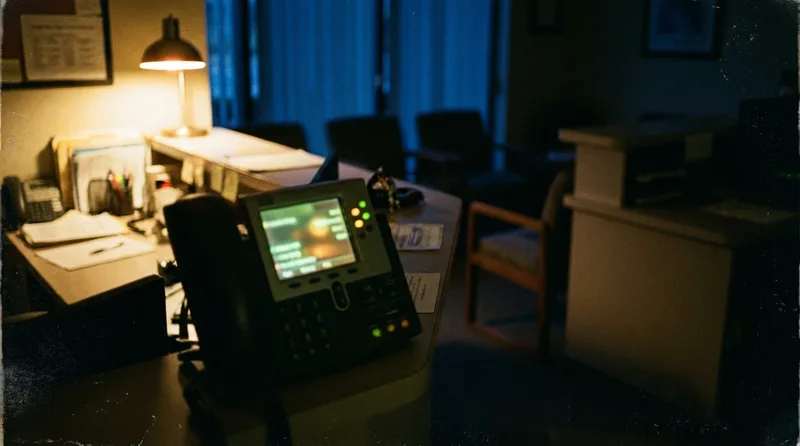
Post-op calls need their own path, separate from the booking flow entirely. The first question identifies the surgery date and the operating surgeon. Anything involving uncontrolled bleeding, spreading swelling, or fever goes straight to the on-call clinician. Everything else gets logged for a morning callback.
A post-op caller is not a scheduling call
A patient three days out from a third molar extraction at eleven at night is not a scheduling conversation. They're worried, possibly medicated, and often calling because they read something on their instruction sheet that scared them. Tone matters as much as routing.
What the caller hears in that moment matters as much as the routing, and dental emergency call handling covers the wording.
Oral health conditions drive a large share of after-hours and emergency presentations in the United States. According to the CDC, more than 40% of U.S. adults report having had pain in their mouth within the past year, and a lot of those calls land after 6 p.m. For a surgical practice, most of that volume is manageable with a clear post-op path and a clinician who's actually reachable.
Two design choices that decide the outcome
Two design choices make the difference. First, never let a post-op caller sit in a general voicemail box. Second, teach the system to recognize distress and hand off early rather than complete the script. Practices that have tuned their difficult patient calls handling generally find the same pattern: earlier handoff, fewer complaints.
Both assume real overnight coverage exists, so build the after-hours call strategy before you tune the post-op script.
Referral-heavy call volume isn't unique to oral surgery. Pediatric offices face a comparable triage problem from the opposite direction, worried parents instead of referring dentists, which is why this guide to AI call handling for pediatric dental practices is worth a look. And if the category itself is still new, start with a complete walkthrough of what an AI dental receptionist does.
Post-op calls don't follow a script.
They follow a person's anxiety. Design the after-hours path around escalation speed rather than around containment rate.
Read patient care guides →What should an AI receptionist tell patients about sedation and pre-op instructions?
Only what your practice has already approved in writing, read back verbatim. The system can confirm fasting windows, escort requirements, and arrival times from your standard sheet. It should not answer anything about a specific patient's medications, medical history, or whether they're a candidate for a given sedation level.
Reading policy versus giving advice
The distinction is between reading policy and giving advice. "You should stop eating eight hours before your appointment, per the instructions your surgeon provided" is policy. "You can probably keep taking that" is advice, and no AI receptionist should ever produce it.
Why the script has to be practice-specific
According to American Dental Association Health Policy Institute data, roughly 20% of practicing U.S. dentists work in a recognized specialty, and sedation protocols vary widely between them. That variance is exactly why the script has to be practice-specific. There's no universal pre-op sheet.
Borrowing structure from sedation-heavy scripts
Sedation-adjacent workflows already exist elsewhere in dentistry, and the patterns transfer. If you want a sense of how a sedation-heavy phone script gets structured, the approach used for sleep dentistry phone handling is a reasonable template. Same principle: confirm logistics, escalate anything clinical.
How do you keep referring dentists informed without adding front desk work?
Automate the two touchpoints that referring offices actually care about: confirmation that the patient booked, and notification after treatment is complete. Both can fire from the scheduling record without anyone typing a letter. The clinical report still comes from the surgeon, but the status updates don't need a human.
The referral void, from the other side
Ask any general dentist what frustrates them about referrals and you'll hear the same answer. They send a patient into a void. Weeks pass. Sometimes the patient comes back and mentions it, sometimes not.
Loop closure beats referral marketing
Closing that loop is the cheapest referral marketing a surgical practice can do. And it's structural, not promotional. A short automated note saying the patient was seen on Tuesday keeps you top of mind more reliably than a lunch-and-learn.
Referring dentists notice tone
The wording of those notifications belongs in your control, which is why script customization matters for specialty offices more than for general practices. Referring dentists notice tone. A message that reads like a marketing blast gets ignored.
Related: Referring-office notifications live in the same script layer as your patient-facing language. how to verify vendor ROI claims →
What should you ask an AI receptionist oral surgery practice vendor?
Ask whether the system handles referral intake as a distinct call type, not as a variation on new patient booking. Most can't. Then ask about escalation latency, records chasing, post-op routing, and whether the script can be locked down so it never gives clinical guidance.
Why the standard demo misses all of this
Vendor demos are built around the general dentistry use case because that's the larger market. That's reasonable. It also means the demo you'll be shown probably won't cover a single thing on this list, so you have to steer it.
- Can it recognize a call from a referring office? Caller identification against your referrer list, not just a generic greeting.
- How fast is a hard escalation? Ask for the measured time from trigger phrase to a ringing human phone. Under 10 seconds is a reasonable bar.
- Can it send a secure records upload link mid-call? If not, your coordinator still does the chasing.
- Does it have a separate post-op path? With its own after-hours on-call routing.
- Can clinical guidance be hard-blocked? Not discouraged by prompt. Blocked.
- What happens to a referral if the call drops at second twenty? Partial capture or nothing.
Pressure-test every answer you get
Push for specifics on every answer. When a vendor cites results from another practice, ask whether that practice was a specialty office or a general one, because the call mix is not comparable. Running their claims through a payback period analysis is worth the hour.
Score your vendor before you sign
Referral intake
Check each item the vendor can demonstrate live, not describe.
Escalation and after-hours
Check each item the vendor can demonstrate live, not describe.
Your score: count your checks out of 8. Below 5 and you are looking at a general dentistry product with a surgical label on it.
Is an AI receptionist the right fit for a surgical specialty office?
An AI receptionist oral surgery practice fits well when referral volume is high, predictable, and currently handled by a coordinator who's also doing treatment plans and insurance. It fits poorly when your call volume is low enough that a single person answers every call on the first ring and knows every referring dentist by voice.
When it fits, and when it doesn't
Be honest about which one you are. A 2-surgeon practice taking 40 referrals a week has a real capacity problem during surgical blocks, when nobody is free to answer. A newer solo endodontic office with 12 referrals a week probably doesn't.
Routing to the correct surgeon is its own problem once you pass two providers, which scaling across multiple providers works through. For the broader rule set behind that kind of routing, from new-patient defaults to insurance-tied provider assignments, see our guide to teaching an AI receptionist provider scheduling preferences.
Start with the coverage gap
The strongest case for automated phone coverage is the hours when clinical staff are unavailable by definition. Surgery is in progress. The coordinator is chairside. That's when the referring office calls, and that's the gap worth closing first.
If you're still weighing the alternatives, in-house versus answering service versus AI compares them side by side for an AI receptionist oral surgery practice decision.
Conclusion: referral workflow is the real test
Every AI receptionist oral surgery practice evaluation eventually comes down to one question, and it isn't about voice quality or booking accuracy. It's whether the system treats a referral as its own call type with its own fields, its own urgency scale, and its own escalation rules.
Ask for that specifically in your next demo. Hand the vendor the routing matrix above and ask them to build it. If they can configure all six rows without custom development, you're looking at something built for specialty work. If they can't, you're looking at a general dentistry product with a surgical label on it.
See how DentiVoice handles referral-driven call volume
Built for dental practices that need referral intake, clinical escalation, and after-hours post-op routing to work as three separate paths.
Explore DentiVoice →Still working out whether the budget makes sense for a two-surgeon office?
See AI receptionist cost and ROI guides →Frequently Asked Questions
Yes. A referral call from another office's front desk is a distinct call type, and a well-configured system recognizes the caller, skips the new patient qualification script, and captures the referring dentist, tooth number and urgency directly.
It scores the call against fixed criteria the surgeon sets: pain duration, swelling, fever and trauma history. The system doesn't diagnose. It matches the collected answers to a slot type or pages the on-call clinician.
Booking confirmation and treatment-complete notifications can fire automatically from the scheduling record. The clinical report still comes from the surgeon. Automating just the status updates closes the referral loop without adding front desk work.
Only by reading back practice-approved pre-op instructions verbatim, such as fasting windows and escort requirements. Anything involving a specific patient's medications, medical history or sedation candidacy must escalate to clinical staff immediately.
It follows a separate after-hours path. The system identifies the surgery date and operating surgeon, then pages the on-call clinician for bleeding, spreading swelling or fever. Lower-urgency concerns are logged for a morning callback.
Not over the phone. It sends a secure upload link during the call, logs what was promised, and holds the case in an incomplete-records queue with automated follow-ups at 48 and 96 hours until the film arrives.
It depends on volume. A solo office taking twelve referrals a week that are always answered on the first ring gains little. A two-surgeon practice taking forty a week during surgical blocks has a real coverage gap.
Sources & References
- 1
- 2
- 3
- 4
- 5
- 6
Topics
Was this article helpful?
Written by
DentalBase Team
Expert dental industry content from the DentalBase team. We provide insights on practice management, marketing, compliance, and growth strategies for dental professionals.